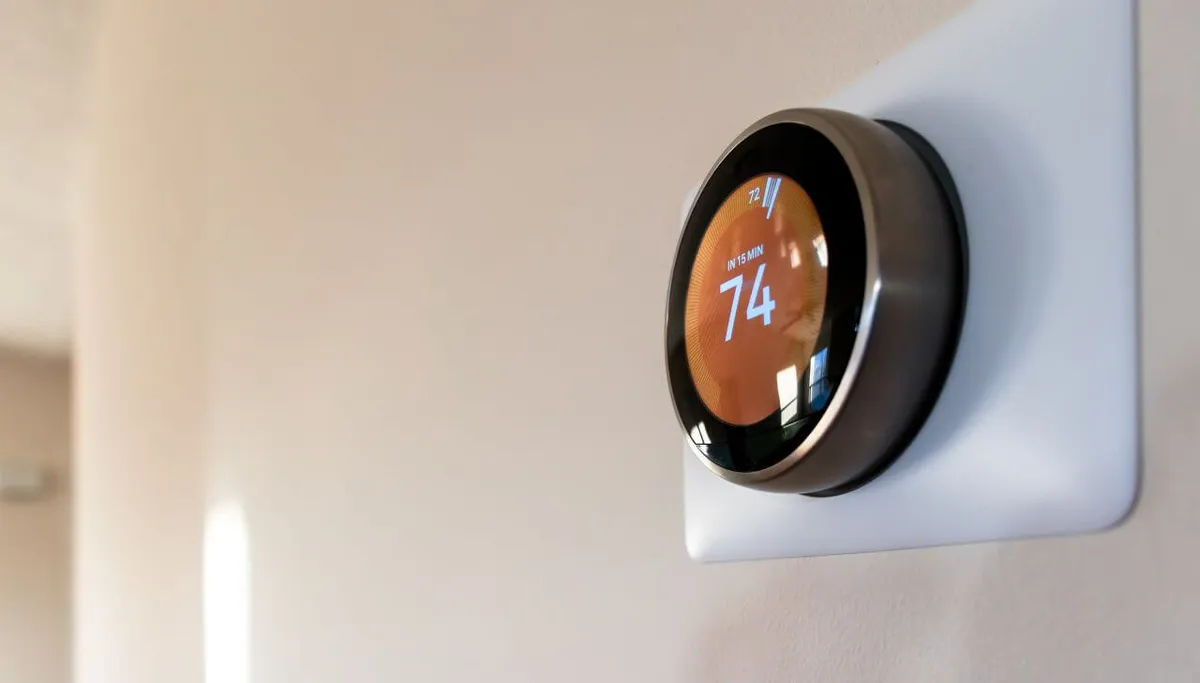
A modern thermostat can set its own schedule. It notices when you change the temperature, checks whether anyone is home, and then heats or cools to match. The result is less energy spent on empty rooms.
Three inputs drive all of it: your manual changes, room sensors, and your phone's location. This guide explains each one, compares Nest and ecobee, and shows what the savings look like in real homes.
What Does a Smart Thermostat Actually Learn?
It learns patterns, not language. Most of the "AI" here is pattern matching on small amounts of data. It is not a chatbot.
Your routine. When you wake up, leave, return and sleep.
Your comfort. The temperatures you pick again and again.
Your home. How fast it heats, cools and holds temperature.
The weather. Outdoor temperature changes how early it must start.
That is why a programmable thermostat is different. It follows a fixed schedule until you edit it. A learning model changes the schedule for you.
How Does It Learn Your Schedule?
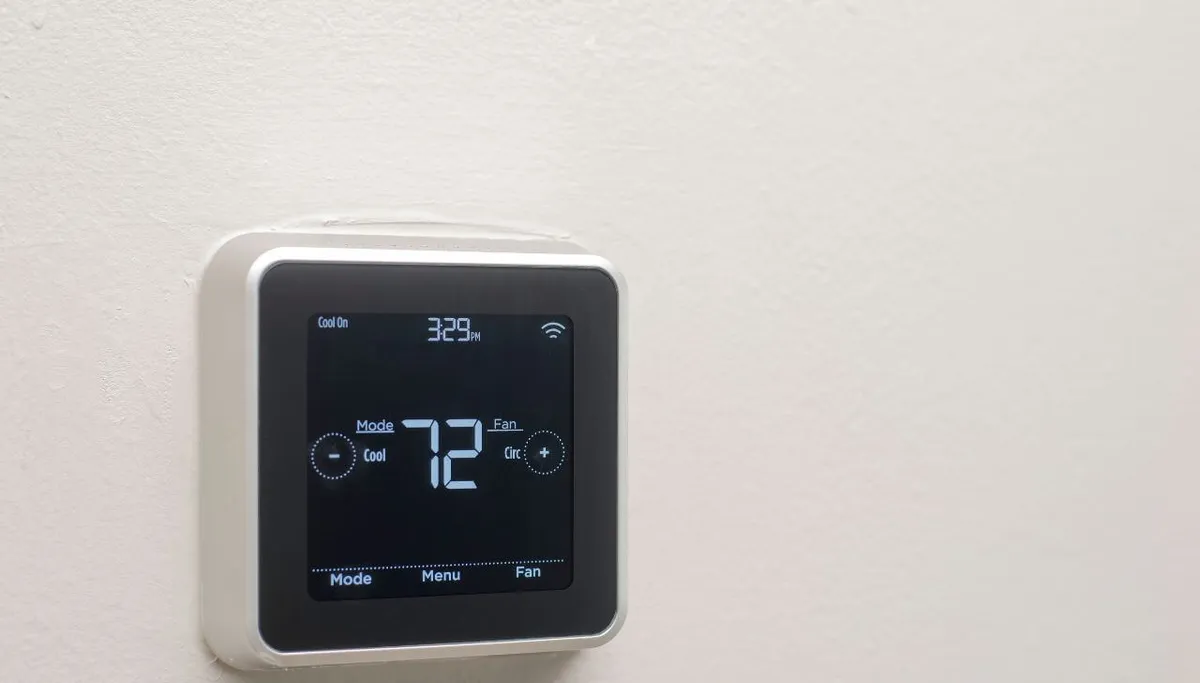
Google says its Nest thermostats can either learn your routine and build a schedule automatically, or walk you through making an efficient one yourself. The learning loop usually works like this:
You adjust the dial. Each change tells the thermostat what you want at that time.
It spots repeats. If you lower the heat at 10 p.m. most nights, that becomes a pattern.
It writes the schedule. Repeated habits turn into timed temperature targets.
It keeps adjusting. Features like Seasonal Savings fine-tune the schedule as the weather shifts.
Nest also has Savings Finder. It suggests small changes, such as a slightly different sleep temperature, and you accept them to start saving.
How Does It Know Nobody Is Home?
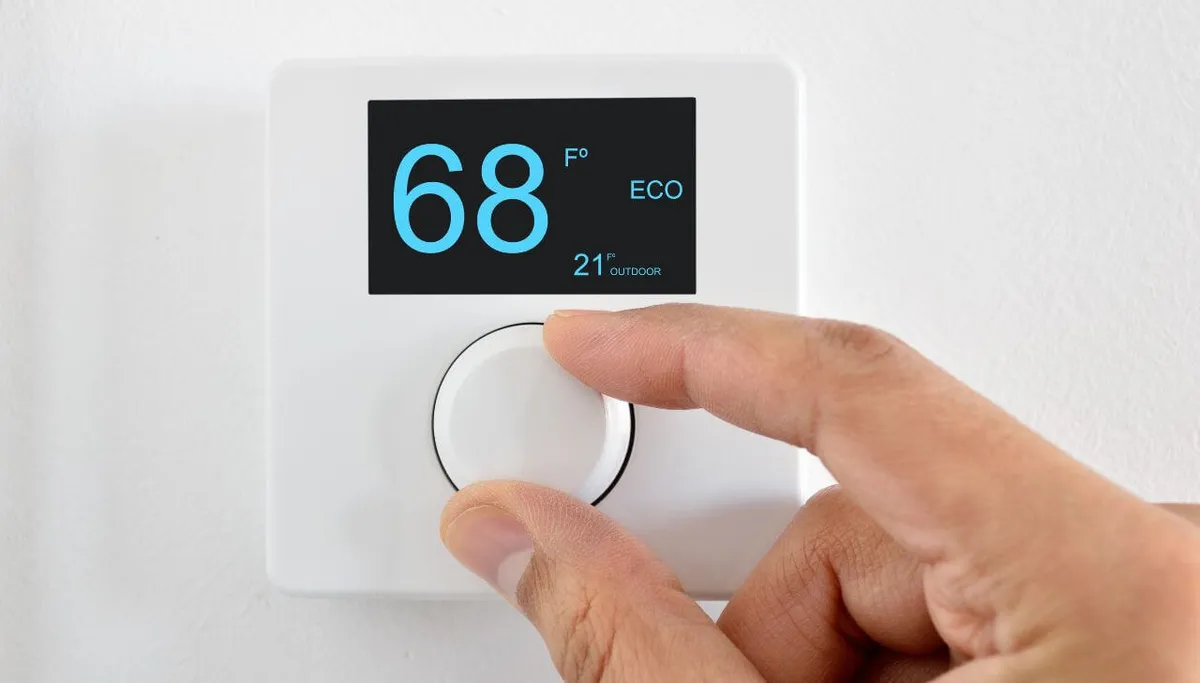
The thermostat combines two signals. Built-in sensors and add-on sensors detect motion. Your phone's location shows when everyone has left. If you opt in, Nest uses both to detect that you are gone and switches to an Eco temperature.
Room sensors fix a different problem. A thermostat on a hallway wall only reads the hallway. The ecobee SmartSensor reads temperature and occupancy in other rooms:
Occupancy range: up to 20 ft from the sensor.
Wireless range: up to 60 ft from the thermostat.
Battery: a CR2477 cell that lasts up to 5 years.
Pack size: 2 sensors per package, no wiring needed.
This lets the thermostat favor the rooms you actually use and reduce hot and cold spots elsewhere.
How Do Nest and Ecobee Compare?
Feature | Google Nest | ecobee |
|---|---|---|
Main learning method | Learns from your manual changes | Reads each room with sensors |
Away detection | Sensors plus phone location | Sensors help when you are away |
Extra rooms | Separate temperature sensor | SmartSensors, 2 per pack |
In short, Nest leans on learning your habits. ecobee leans on measuring your rooms. Many homes benefit from both ideas.
How Much Can a Smart Thermostat Really Save?
Independent numbers are smaller than headline claims. The EPA's ENERGY STAR program says certified smart thermostats save about 8% of heating and cooling bills, or roughly $50 per year, on average. Savings can be higher in some climates. EPA bases this on a year of real-world data from homes, not lab tests.
Google reports 12% on heating and 15% on cooling from bill reviews in 41 US states. It also advertises savings of up to 31%, but that compares against a thermostat held at 72°F all day. Google itself says that may not match a typical customer.
Your results depend on your climate, your HVAC system and how much you were wasting before. A home that already turns the heat down at night gains less.
Does It Run on the Device or in the Cloud?
Both play a part. The unit controls your HVAC locally, while the app, phone location and suggestions depend on cloud services. For the full trade-off, read On-Device AI vs Cloud AI, and see what edge AI means for devices like this.
Conclusion:
A smart thermostat is a learning scheduler plus occupancy sensing. It watches your habits, detects when rooms are empty, and trims runtime. Expect modest, real savings, not magic.
If you already manage your schedule well, the gain may be small. Check Are AI Gadgets Worth It? before buying, and review the AI gadget privacy guide to see what data location features collect.
FAQs:
Q1: Is a learning thermostat really AI?
A: Mostly it is pattern learning and rules, not a conversational model. It finds repeated habits and turns them into a schedule.
Q2: Will it work without Wi-Fi?
A: Basic heating and cooling control usually keeps working. Remote control, phone-based away detection and app suggestions need a connection.
Q3: How long does it take to learn?
A: It varies by model and household. Expect a few days to a couple of weeks of regular adjustments before the schedule feels right.
Q4: Do I need room sensors?
A: No. They help most in larger or multi-floor homes where one wall reading misses uneven rooms.