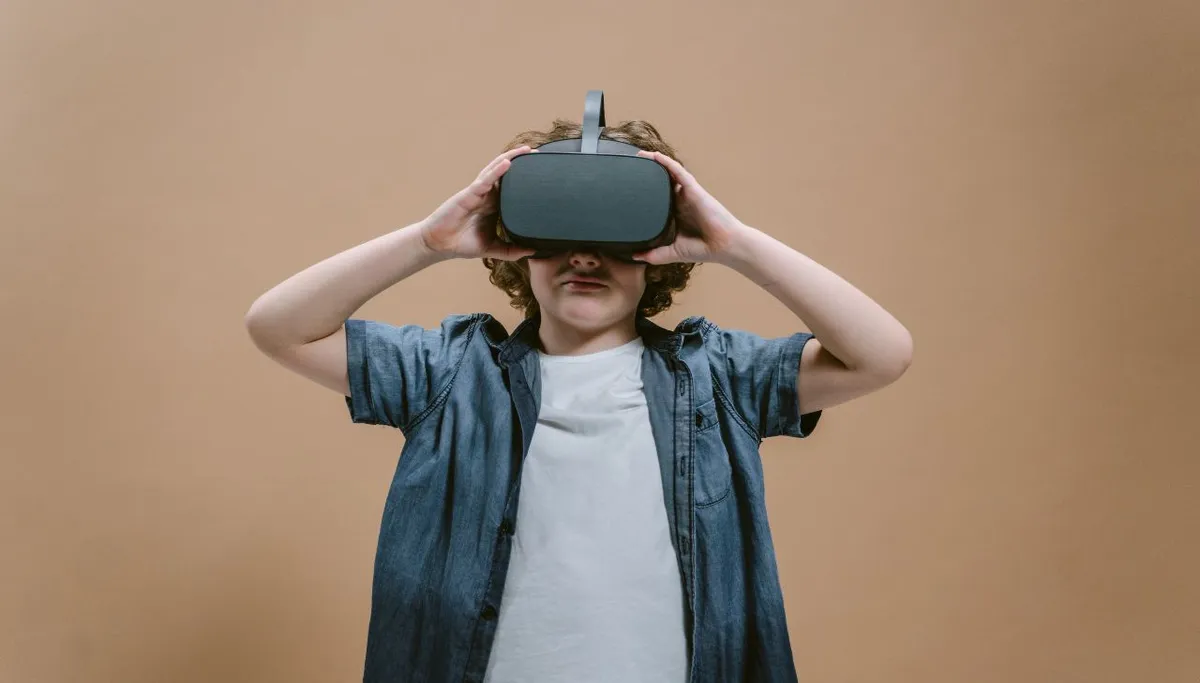
Spatial computing is technology that understands the space around you. It does not treat everything as a flat screen. Apple used the term for Vision Pro. Meta and Google use it for their own headsets too, but each means something slightly different.
Here is what it means, how AI makes it work, and which devices count.
What Makes Computing "Spatial"?
Regular computing treats the world as flat. You look at a screen. You tap or click to move around. The room you sit in does not matter to the computer at all.
Spatial computing changes that. It knows where you are in a room. It can anchor digital content to one exact spot. It can track your hands, eyes, and head as inputs. The digital world starts to sit right on top of the real one.
Why Does It Need AI?
None of this works without AI running in the background all the time. The device has to understand surfaces, objects, and distances around it. That takes computer vision running right on the chip, in real time.
It also has to track your head many times a second, so content stays locked in place as you move. That takes AI sensor fusion, blending cameras with motion sensors.
It also has to read input that is not a keyboard: your eyes, a hand gesture, a spoken command. Each one needs AI to make sense of it.
The Spectrum: AR to VR:
Augmented reality (AR) keeps the real world visible and adds digital content on top, like directions drawn onto the road ahead or a restaurant's name floating above its door.
Mixed reality (MR) goes further. The digital content reacts to the real world, a virtual ball bounces off a real table. Apple Vision Pro works this way: its cameras film your room, and virtual apps sit inside that live view.
Virtual reality (VR) replaces the real world entirely. Meta Quest 3 and Quest 3S are mainly VR, though both also offer a passthrough mode closer to MR.
What Devices Count in 2026?
Device | Price | Type |
|---|---|---|
Apple Vision Pro (M5) | $3,499+ | Mixed reality |
Samsung Galaxy XR | $1,799 | Mixed reality (Android XR) |
Meta Quest 3 | $499 (128GB) | VR with passthrough MR |
Meta Quest 3S | $349 | VR with passthrough MR |
AR smart glasses | $299 to $799 | Audio AR |
Apple Vision Pro is still the high end. It tracks eyes as a cursor, reads hand gestures with no controller, and runs on the M5 chip, up to 2x the AI power of the older model. It starts at $3,499.
Samsung Galaxy XR costs $1,799, less than half of Vision Pro, running Android XR with Gemini-powered spatial AI built in.
Meta Quest 3 and 3S use color cameras to capture your room and layer content on top. At $349 for the 3S, this reaches far more people, trading precision for price.
Why Does Eye Tracking Matter?
In a spatial computer, where you look works like a mouse cursor. Vision Pro tracks this accurately enough to know which button you are looking at, and with a light finger pinch, it feels natural fast.
It also enables foveated rendering: full detail where you look, less detail elsewhere, which saves power and helps battery life.
What Does This Look Like Day to Day?
The honest picture: useful in some moments, not practical in others. AR glasses for a private screen on a flight? Useful. Vision Pro for a virtual cinema? Immersive. Quest 3 for a fitness game in your room? Fun.
Wearing any of today's devices all day? Not there yet. Weight, battery life, and public comfort mean it gets used in sessions, not all day.
Apple, Meta, Google, and Samsung all want the same thing: normal-looking glasses with all-day battery. Still a distance away.
Conclusion:
Spatial computing is a shift from screens that show you information to systems that understand the space around you. AI makes this possible, reading your environment and keeping digital content locked in place in real time. The category spans Apple's premium headset, Meta's mass-market VR, and Samsung's Android answer, and none has nailed the all-day, normal-looking glasses yet. That part is still coming.
(FAQs):
Q1: Is spatial computing the same as the metaverse?
A: No. The metaverse means connected virtual worlds for socializing. Spatial computing is the broader tech behind real 3D understanding, which covers much more than that.
Q2: How is it different from a VR headset?
A: A VR headset is one type of spatial computing hardware. The bigger idea includes AR devices, tracked surroundings, and AI input like gaze and gesture instead of a keyboard.
Q3: Do I need it for everyday tasks?
A: For most everyday tasks, no. Writing, browsing, and video calls are still better on a normal screen. It adds value for entertainment, fitness, design, and a private large display.
Q4: Will the glasses ever look normal?
A: That is the goal for Apple, Meta, Google, and Samsung. Audio-only glasses already got there. A real spatial display at that same small size is the harder problem still being solved.