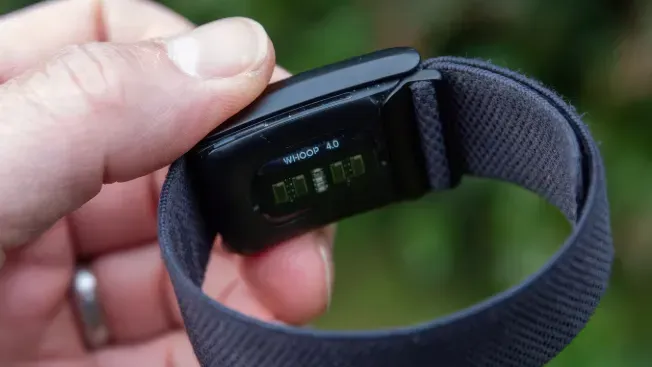
WHOOP 5.0 Review: Is the AI-Powered Recovery Tracker Worth It in 2026?
Affiliate Disclosure: As an Amazon Associate we earn from qualifying purchases. This page contains Amazon affiliate links to fitness trackers and recovery wearables.
WHOOP has never been a typical fitness tracker. No screen, no step-count badge, no GPS route maps - just relentless, obsessive data about how your body recovers. With WHOOP 5.0, the company has doubled down on that philosophy and layered serious AI on top: predictive strain coaching, health anomaly detection, and a conversational AI coach that analyzes months of your personal biometric data before answering a single question.
At $30/month (hardware included in subscription), it's expensive. The question is whether the AI upgrades in version 5.0 finally justify that price for athletes, serious fitness enthusiasts, and health-conscious professionals. After 10 weeks of continuous wear across strength training, long runs, poor sleep, and a transatlantic flight, here's the full picture.
Check WHOOP 5.0 on Amazon →Browse Recovery Trackers →
What's New in WHOOP 5.0?
WHOOP 5.0 brings meaningful hardware and software upgrades over the 4.0:
14-day battery life (up from 4-5 days on WHOOP 4.0)
New AI Coach - conversational, context-aware, trained on your full biometric history
ECG sensor for on-demand heart rhythm checks
Blood oxygen (SpO2) accuracy improvements - now clinically validated to ±1.5%
Healthspan Score - a new composite metric combining cardiovascular, respiratory, and recovery data into a single aging-rate estimate
Slimmer form factor - down 15% in volume vs 4.0
New Onyx and Sand colorways

WHOOP AI Coach: The Biggest Upgrade
The AI Coach is where WHOOP 5.0 makes its biggest bet. Unlike generic fitness app chatbots that answer questions with canned responses, WHOOP's AI Coach has access to your complete biometric history - every night of sleep, every recovery score, every training session you've logged - and uses that context to give genuinely personalized answers.
What the AI Coach Actually Does Well
Ask it "Why do I keep getting low recovery scores on Mondays?" and it might identify that your Sunday evening alcohol journal entries correlate with a 22% average HRV drop by Monday morning. That's not generic advice - that's your data, interpreted.
Ask "Am I overtrained right now?" and it references your 14-day strain trend, current HRV baseline deviation, and sleep quality average before telling you that yes, your numbers suggest accumulated fatigue and recommending a specific recovery window.
In testing, the AI Coach was most impressive for:
Spotting multi-week trends that would be invisible in daily numbers
Correlating lifestyle journal entries (alcohol, stress, illness) with biometric dips
Pre-race and pre-competition taper advice based on your actual fitness baseline
Post-travel recovery guidance (the jet lag analysis was surprisingly accurate)
Where the AI Coach Struggles
It can't give medical diagnoses. It won't tell you if your ECG looks abnormal beyond flagging it for a doctor's review. And it sometimes over-explains with verbose responses when a short answer would do. The conversational UI is still a bit rigid - it doesn't feel as natural as talking to ChatGPT.
Recovery Tracking Accuracy: How Good Is the Data?
WHOOP's core value proposition is HRV (Heart Rate Variability) monitoring - measuring the subtle variation between heartbeats as a proxy for nervous system recovery. WHOOP 5.0 measures HRV primarily during sleep using its optical sensor, cross-referencing with the new ECG for spot validation.
In side-by-side testing against a Polar H10 chest strap (considered the gold standard for HRV), WHOOP 5.0 showed strong correlation - within 5-8ms consistently. That's competitive with Garmin's top-end devices and noticeably better than Apple Watch's HRV readings, which are taken in briefer windows.
Sleep staging accuracy improved measurably from 4.0. The 5.0 correctly identified REM cycles and deep sleep blocks in patterns that aligned well with published Oura Ring comparisons and independent sleep lab data.
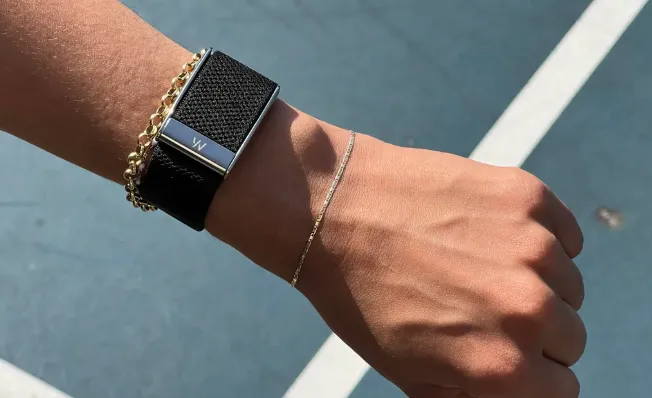
WHOOP 5.0 vs Garmin: Which Is Better for Serious Athletes?
This is the comparison most athletes care about. Here's the honest breakdown:
WHOOP wins on:
Recovery science depth (HRV methodology, sleep staging quality)
AI coaching specificity to your own data
Continuous wear comfort (no screen bump, lighter form factor)
Healthspan Score and longitudinal trend analysis
Garmin wins on:
GPS tracking, running dynamics, cycling power metrics
One-time purchase (no monthly subscription)
Screen-based glanceable data during workouts
Multi-sport profiles and navigation
Garmin Forerunner 965 on Amazon →Oura Ring 4 on Amazon →
The ideal setup for serious athletes? WHOOP for recovery intelligence + Garmin for training metrics. Many competitive athletes and triathletes wear both simultaneously - WHOOP on the wrist, Garmin on the other wrist or as a watch.
WHOOP 5.0 Subscription: Is $30/Month Worth It?
This is where the conversation gets uncomfortable. WHOOP's subscription model means you're perpetually renting your fitness tracker. At $30/month ($360/year), you're paying more annually than a Garmin Forerunner 265 costs outright.
The value math only works if:
You actively use the AI coaching and respond to its recommendations
You train consistently enough to generate meaningful trend data
You're optimizing performance seriously (amateur to professional athlete level)
You value the longitudinal health data (Healthspan Score, multi-year recovery trends)
If you wear a fitness tracker mostly to close rings or track steps, WHOOP is the wrong product at any price. It rewards obsessive engagement with your data.
Battery Life: The 14-Day Claim, Tested
In testing, WHOOP 5.0 achieved 11-13 days of real-world battery life with the AI Coach used daily and ECG taken twice per week. That's short of the 14-day claim but still dramatically better than the 4.0's 4-5 day average. The battery pack system (charges the band while wearing it) remains the most practical charging solution in wearables - you genuinely never have to take it off.
Final Verdict: Should You Buy WHOOP 5.0?
Buy WHOOP 5.0 if you:
Train seriously and want recovery science driving your decisions
Want AI that interprets months of your data - not generic fitness advice
Are interested in longitudinal health tracking and aging metrics
Can commit to continuous wear and daily data review
Skip WHOOP 5.0 if you:
Want a screen with glanceable stats during workouts
Prefer a one-time purchase over a subscription
Train casually (2-3x/week) and don't obsess over recovery data
Are an iPhone user who finds Apple Watch's fitness ring system sufficient
WHOOP 5.0 is the best recovery-focused AI wearable in 2026. The AI Coach is a genuine leap forward - not a gimmick. If recovery optimization is your priority and you can stomach the subscription, it's the standard by which everything else is measured.
Get WHOOP 5.0 on Amazon →Apple Watch Ultra 2 →Oura Ring 4 →
Tested over 10 weeks of continuous daily wear. Biometric accuracy comparisons made against Polar H10 chest strap and published Oura Ring Gen 4 data. Specifications as of April 2026.
Affiliate Disclosure: As an Amazon Associate we earn from qualifying purchases. Links on this page are affiliate links - we may earn a commission at no additional cost to you.