Home / AI Productivity / What Is an NPU?
Affiliate Disclosure: As an Amazon Associate we earn from qualifying purchases. This page contains Amazon affiliate links to AI laptops, phones, and related hardware.
🧠 Educational Hub · Hardware Deep Dive
What Is an NPU? Neural Processing Units Explained Simply
Your phone has been secretly running an AI supercomputer for years. Your new laptop has a chip you've never heard of. Both are powered by an NPU - and once you understand what it does, you'll see AI hardware completely differently.
📅 Updated April 2026 ⏱ 12 min read 🔧 Beginner-Friendly · Technical 📊 3,800 monthly searches
Quick Summary
An NPU (Neural Processing Unit) is a dedicated chip built specifically for AI inference - running neural network models faster and far more efficiently than a CPU or GPU. It's why your phone can blur video backgrounds at 60fps on battery, and why Copilot+ laptops run real-time transcription without ever touching the cloud.
This guide covers: what an NPU is, how it works under the hood, what TOPS means, which chips have the best NPUs in 2026, and what the NPU actually does on your phone and laptop day-to-day.
Shop AI Laptops on Amazon → Jump to FAQ
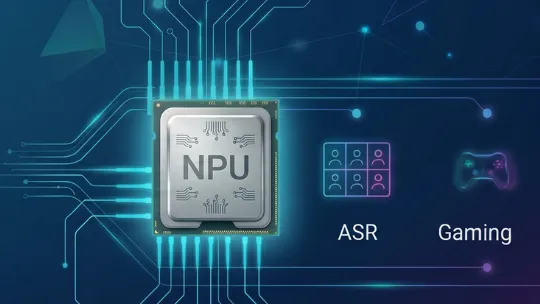
NPU chip diagram / architecture infographic - CPU vs GPU vs NPU die layout side-by-side
Source options: Qualcomm NPU explainer → · NotebookCheck chip photos →
⚡ What Is an NPU? The Short Answer
An NPU - Neural Processing Unit - is a specialized processor designed to accelerate artificial intelligence and machine learning tasks. The "neural" refers to neural networks: the mathematical framework behind virtually all modern AI, from face recognition to voice transcription to text generation.
Think of it in terms of chips you already know:
CPU (Central Processing Unit) - the general-purpose workhorse. Handles everything from running apps to loading web pages. Few but very powerful cores.
GPU (Graphics Processing Unit) - originally built for graphics, now used for parallel math. Thousands of smaller cores. Great for AI training.
NPU (Neural Processing Unit) - purpose-built for AI inference only. Runs trained neural network models with extreme efficiency and minimal power draw.
Because it's purpose-built, an NPU runs AI workloads dramatically faster and more efficiently than a CPU or GPU - often at a fraction of the power. That's why it now appears in everything from flagship phones to mid-range laptops.
🔧 Under the Hood: How Does an NPU Actually Work?
To understand an NPU's design, you need to understand what neural networks actually compute. Almost every AI task - image recognition, voice transcription, background blurring, text prediction - reduces to one extremely repetitive mathematical operation: multiply two numbers, add the result to a running total. Repeat billions of times per second.
This operation is called a Multiply-Accumulate (MAC), and it's the heartbeat of every neural network layer. An NPU is fundamentally a chip designed to execute as many MACs as physically possible per clock cycle, per watt of power.
The MAC Array: An NPU's Engine Room
At the heart of most NPUs sits a systolic array - a grid of MAC units that pass data between each other like a conveyor belt. Input data and model weights flow in from two sides simultaneously, get multiplied and accumulated as they cross the grid, and emerge as output at the other end. No round-trips to main memory required.
This is architecturally very different from a CPU, which fetches operands from memory → executes → writes back → starts over. The NPU's systolic array keeps data moving in a continuous stream - eliminating most of the memory bottleneck that general-purpose chips pay dearly for.
Why NPUs Use Low-Precision Arithmetic (INT8 / INT4)
Another key trick: NPUs typically work with INT8 or INT4 arithmetic - much lower precision than the 32-bit floating-point CPUs and GPUs default to. AI researchers discovered that once a model is trained, you can aggressively round its weights to 8-bit or 4-bit integers without meaningfully hurting output quality. The payoff is massive: smaller data, faster transfers, far less power, and less heat.
This is why an NPU can run voice recognition continuously in the background for hours without noticeably affecting battery life. Running the same workload on the CPU would drain it in minutes.
📊 TOPS Explained: What Does "38 TOPS" Actually Mean?
When manufacturers describe an NPU, they almost always lead with a TOPS number. TOPS = Tera Operations Per Second - one trillion mathematical operations completed every second. It's the standard yardstick for NPU performance, and it's useful - but frequently misunderstood.
The key nuance: a TOPS rating assumes those operations are integer (INT8). The same chip might deliver half the figure for INT16 and far less for FP32. Manufacturers don't always volunteer which precision their TOPS figure is quoted at - and that matters a lot for direct comparisons.
📊 NPU TOPS Comparison - Real Chips (2024-2026)
AMD Ryzen AI 300Strix Point · XDNA 2
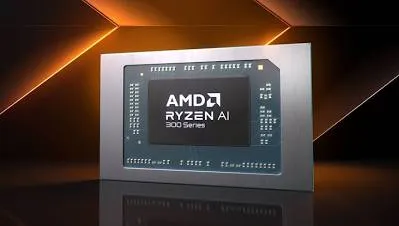
50 TOPS
Intel Core Ultra 200VLunar Lake · NPU 4
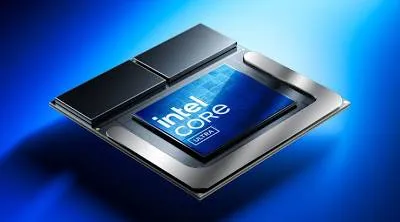
48 TOPS
Qualcomm Snapdragon X EliteCopilot+ Laptops · Hexagon NPU
45 TOPS
Apple M4MacBook Pro · Neural Engine
38 TOPS
Apple A18 ProiPhone 16 Pro · Neural Engine
35 TOPS
Google Tensor G4Pixel 9 Pro · TPU
~17 TOPS*
⚠️ TOPS Reality Check
Higher TOPS doesn't automatically mean better real-world AI performance. Software support, memory bandwidth, model compatibility, and quantization precision all matter just as much as raw throughput. A 45-TOPS NPU with immature software can easily feel slower than a well-optimized 35-TOPS chip.
📱 What Is an NPU in a Phone?
Mobile NPUs have been around longer than laptop versions. Apple quietly introduced the first consumer Neural Engine in the A11 Bionic (iPhone X, 2017), and every major mobile platform has followed since. On your smartphone, the NPU runs continuously - handling tasks you probably take for granted:
Computational photography - night mode, portrait blur, Smart HDR, object detection, real-time video stabilization. All NPU-driven.
Always-on voice wake words - "Hey Siri," "OK Google," and "Hey Snapdragon" listen through a tiny, ultra-low-power NPU wake-word engine. The full CPU would drain your battery in hours.
Face unlock - 3D face recognition processes depth map data against your enrolled face template thousands of times per second, fast enough to unlock the phone mid-raise.
Live translation - On-device real-time translation in messaging and camera apps, no internet required on modern flagship phones.
📸 Image - NPU in Phone
Apple A18 Pro chip die shot highlighting Neural Engine block · Qualcomm Snapdragon SoC diagram
Source: AnandTech chip analysis → · Notebookcheck SoC coverage →
iPhone 16 Pro on Amazon → Google Pixel 9 Pro →
💻 What Is an NPU in a Laptop?
Laptop NPUs are newer and far more visible in marketing, largely thanks to Microsoft's Copilot+ PC program, which requires a minimum of 40 TOPS of dedicated NPU performance. This threshold was set to ensure laptops can run real-time AI features locally - without sending your data to the cloud.
On a Copilot+ PC, the NPU handles Windows Studio Effects - AI background blur, eye contact correction, auto-framing, voice focus in any video call app - at 60 frames per second while consuming only a few watts. The GPU stays free for graphics; the CPU stays free for everything else.
Perhaps more significantly, modern laptop NPUs are now powerful enough to run 7-billion-parameter language models locally - compressed versions of the same class of AI powering cloud chatbots - enabling private, offline AI without any subscription.
📱
NPU in Phones
Computational photography Always-on
Wake-word detection μW power
Face / scene recognition <20ms
Video effects (blur, HDR) Real-time
Live translation On-device
First consumer NPU 2017 (A11)
💻
NPU in Laptops
Live captions / transcription Local
AI video call effects 60fps
On-device LLMs 7B+ params
Windows Studio Effects Copilot+
Background removal No GPU load
Min. requirement 40 TOPS
Shop Copilot+ Laptops → MacBook M4 on Amazon →
🆚 NPU vs GPU: Why Not Just Use the GPU?
GPUs have been running AI workloads for years - they're what trained the models in the first place. So why add a separate chip for inference?
The answer is efficiency at inference scale. A GPU is versatile and powerful in bursts, but draws significant power and takes time to spin up from idle. An NPU is different in three key ways:
Always-ready - powers up from near-zero idle in microseconds, making it practical for continuous background tasks like wake-word detection.
Radically more efficient for fixed workloads - neural network inference always follows the same computational pattern, so the NPU's fixed-function design eliminates enormous control-logic overhead that a GPU carries around.
Physically smaller - occupies far less die area than equivalent GPU inference performance, critical in the constrained silicon budget of a mobile SoC.
The simplest analogy: using a GPU for always-on AI inference is like using a bulldozer to park a car. It works, but it's absurd overkill. The NPU is the parking valet - purpose-built, fast for this specific job, far cheaper to run.
📌 Key Distinction
GPUs are for AI training (building models) and heavy creative tasks. NPUs are for AI inference (running models) efficiently in real-time, all day, on battery.
✅ NPU Advantages and Limitations
✅ Advantages
Dramatic energy efficiency vs CPU/GPU
Always-on capability at near-zero power
Real-time AI at 60fps on battery
On-device, private AI - no cloud needed
Frees CPU + GPU for other work
Compact enough for mobile SoCs
INT8 / INT4 support for quantized models
Zero cloud latency
❌ Limitations
Only useful for AI inference workloads
Not suitable for AI model training
Software must explicitly target the NPU
TOPS figures vary by precision - hard to compare
Memory bandwidth still a bottleneck for large models
Ecosystem maturity varies by platform
Limited to quantized / compressed models
🏭 Who Makes NPUs? Major Players in 2026
Company | Brand Name | Latest Chip | TOPS | Best For |
|---|---|---|---|---|
Apple | Neural Engine | M4 / A18 Pro | 35-38 | macOS + iOS ecosystem, best software integration |
Qualcomm | Hexagon NPU | Snapdragon X Elite | 45 | Leading Copilot+ Windows platform |
AMD | XDNA / Ryzen AI | Ryzen AI 300 | 50 | Highest TOPS for laptop NPUs in 2026 |
Intel | Intel NPU | Core Ultra 200V | 48 | x86 compatibility, wide OEM laptop support |
Tensor TPU | Tensor G4 | ~17 | Deep Gemini Nano / Google Assistant integration | |
MediaTek | APU | Dimensity 9400 | ~35 | Mid-range to flagship Android phones |
🛒 Should You Care About TOPS When Buying?
Here's the practical buying advice for 2026:
✅ TOPS Matters If You...
Want Copilot+ PC features (need 40+ TOPS)
Plan to run local LLMs on a laptop
Do real-time AI video or audio work
Build or test AI applications locally
Care about offline, private AI workflows
⛔ TOPS Doesn't Matter If You...
Just use ChatGPT / Claude in a browser
Buy any current flagship phone (all have enough)
Don't run local AI models
Prioritize GPU gaming over AI tasks
Rely primarily on cloud AI services
AI Laptop Comparison by NPU Performance
Laptop | Chip / NPU | TOPS | Copilot+ | Est. Price |
|---|---|---|---|---|
Surface Pro 11 (Snapdragon X) | Qualcomm Hexagon | 45 TOPS | ✅ Yes | ~$1,299 |
Dell XPS 13 (Core Ultra 200V) | Intel NPU 4 | 48 TOPS | ✅ Yes | ~$1,399 |
ASUS ROG Zephyrus (Ryzen AI 300) | AMD XDNA 2 | 50 TOPS | ✅ Yes | ~$1,799 |
Apple MacBook Pro M4 | Apple Neural Engine | 38 TOPS | N/A (macOS) | ~$1,999 |
ThinkPad X1 Carbon (Core Ultra 5) | Intel NPU | 34 TOPS | ⛔ No | ~$1,499 |
Shop Copilot+ AI Laptops on Amazon → MacBook Pro M4 →
🚀 The Future: Where NPUs Are Headed
The NPU arms race is accelerating. Every major semiconductor roadmap points toward 100+ TOPS for laptop-class chips within two years. More importantly, the software is catching up - frameworks like Microsoft's DirectML, Apple's Core ML, and Qualcomm's AI Hub are making it increasingly automatic for applications to route AI workloads to the NPU without developers having to do anything special.
On the horizon: NPUs capable of running 13 to 30-billion-parameter models locally - models competitive with today's cloud services in quality - with full privacy, zero latency, and no subscription fee. Devices like the Tiiny AI Pocket Lab (160 TOPS NPU, 80GB RAM) are already pushing the boundary of what edge AI hardware can do.
The NPU is not a marketing checkbox. It's the hardware foundation for an era of AI that is fast, private, and doesn't require a data center. Understanding what it is and what it does is the first step toward understanding where personal computing is going.
⚡ TL;DR - Key Takeaways
An NPU is a dedicated chip for AI inference - purpose-built for the matrix math that powers neural networks
It differs from CPUs (general purpose) and GPUs (parallel graphics) by being hyper-optimized for AI at very low power draw
TOPS (Tera Operations Per Second) measures NPU throughput - higher is generally better, but software support matters equally
Mobile NPUs (Apple Neural Engine, Qualcomm Hexagon) have been handling camera AI, face unlock, and voice since 2017
Laptop NPUs now power real-time AI features like live captions and background blur, locally, without cloud dependency
Microsoft's Copilot+ PC requires 40+ TOPS - the meaningful minimum threshold for current Windows AI features
The future: local LLMs, private AI, and on-device intelligence that doesn't need OpenAI or Anthropic's servers
❓ Frequently Asked Questions
What does NPU stand for?
Neural Processing Unit. It's a dedicated chip inside a smartphone, laptop, or tablet that accelerates AI and machine learning workloads - specifically running (inferring with) trained neural network models. Also known as Neural Engine (Apple), Hexagon NPU (Qualcomm), or AI accelerator (generic).
What is an NPU in a phone and what does it do?
The NPU in your phone handles computational photography (night mode, portrait blur, HDR), always-on voice wake-word detection, face recognition, real-time video processing, and on-device translation. It does all of this continuously and efficiently - often at fractions of a watt - while your CPU handles apps and your GPU handles the display.
What is an NPU in a laptop and why does it matter?
A laptop NPU runs AI features like real-time live captions, background blur in video calls, and small on-device language models locally, without cloud connectivity. It's especially relevant for Copilot+ PCs, which require at least 40 TOPS of NPU performance to unlock Microsoft's full AI feature suite.
What does TOPS mean for an NPU?
Tera Operations Per Second - one trillion mathematical operations per second. It measures how fast an NPU can process AI workloads. Always check what data precision (INT8, INT4, FP16) the TOPS figure is quoted at, since that significantly affects real-world performance comparisons between chips.
Is an NPU the same as a GPU?
No. A GPU is a versatile parallel processor for graphics and general parallel math. An NPU is a fixed-function chip built only for AI inference - specifically the matrix multiplications powering neural networks. NPUs are far more power-efficient for inference; GPUs remain superior for AI training and graphics rendering.
Do I need 40 TOPS for a Copilot+ PC?
Yes - Microsoft's Copilot+ PC certification requires a minimum of 40 TOPS of dedicated NPU performance. Chips meeting this bar include the Qualcomm Snapdragon X Elite (45 TOPS), AMD Ryzen AI 300 (50 TOPS), and Intel Core Ultra 200V (48 TOPS). Apple Silicon doesn't use the Copilot+ program but has comparable NPU performance under macOS.
Which phone has the best NPU in 2026?
As of 2026, the Apple A18 Pro (iPhone 16 Pro/Pro Max) and Qualcomm Snapdragon 8 Elite lead for raw inference performance. Apple's Neural Engine benefits from exceptional iOS + Core ML software integration; Qualcomm's Hexagon NPU leads Android performance in flagship devices.
Can an NPU run ChatGPT or Claude locally?
Not those specific cloud models. But modern laptop NPUs can run open-source models in the 7B-13B parameter range (Llama 3, Phi-3, Mistral) locally, providing strong capability for many tasks. Tools like Ollama, LM Studio, and Microsoft's Phi Silica leverage the NPU for exactly this purpose.
Is NPU good for gaming?
No. NPUs are optimized for AI inference - matrix multiplication for neural networks - not graphics rendering. Gaming performance is determined by your GPU and CPU. An NPU has no impact on frame rates or graphics quality.
Article sources: Qualcomm developer documentation, Apple Silicon technical overview, Microsoft Copilot+ PC requirements (docs.microsoft.com), AnandTech chip analyses, Notebookcheck benchmark database, AMD XDNA architecture white paper, Intel NPU developer guide. Specifications reflect publicly announced figures as of April 2026 and are subject to change. Amazon links are affiliate links - we earn a commission at no cost to you.
what is npu neural processing unit npu in phone npu in laptop TOPS explained Copilot+ PC AI hardware 2026 Apple Neural Engine Qualcomm Hexagon on-device AI