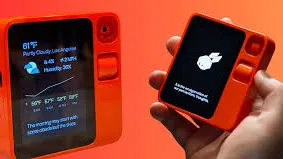
Rabbit R1 Review 2026: Has It Finally Improved Enough to Be Worth Buying?
Affiliate Disclosure: As an Amazon Associate we earn from qualifying purchases. This page contains Amazon affiliate links to the Rabbit R1 and AI gadget alternatives.
Let's be honest about what the Rabbit R1 was at launch in early 2024: a $199 device that promised to replace your apps with AI but launched as an expensive, buggy novelty that couldn't do much your phone already did - better. The scathing reviews were earned.
Now it's 2026. Rabbit has shipped multiple firmware updates, redesigned the LAM (Large Action Model) architecture, added new actions and integrations, and quietly built a loyal user base who stuck around. The question isn't whether R1 was a disaster at launch - it was. The question is: is Rabbit R1 in 2026 actually worth buying?
This is the honest, engineering-informed take - not a PR-friendly softening of hard truths.
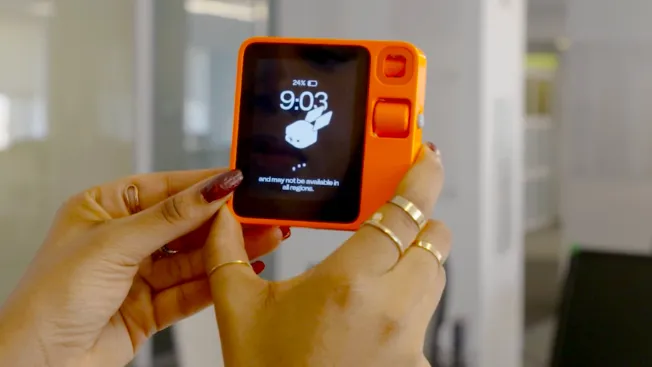
Check Rabbit R1 on Amazon →Browse AI Gadgets →
Rabbit R1 in 2026: What's Changed Since Launch
To evaluate R1 fairly, you have to acknowledge how much has changed via firmware. Rabbit's OTA update cadence has been aggressive - major updates shipped roughly every 6-8 weeks throughout 2024 and 2025. Key improvements include:
LAM v2.1: Faster, more accurate app action execution - Spotify, Uber, DoorDash, and Gmail now work significantly more reliably than at launch
Vision Mode expansion: R1 can now analyze photos, read text in images, and identify objects with improved accuracy
Rabbit OS 2.0: Improved context persistence - R1 now remembers mid-session context between queries instead of treating each question as isolated
Web browsing actions: Basic web task automation added (form filling, information retrieval from sites)
Teach Mode: Users can demonstrate new workflows and R1 learns to replicate them - the feature that always sat at the theoretical heart of the LAM concept

What Is the LAM (Large Action Model)?
The R1's core technology is the Large Action Model - Rabbit's proprietary AI that learns to operate apps and services the way a human would, by watching and replicating user interactions rather than using traditional APIs.
The Promise
In theory, the LAM can learn any app interface without the app developer doing anything. You teach it, it replicates it. No SDK, no API integration required. That's genuinely novel - if it worked at scale.
The Technical Reality
LAM operates by running app interfaces in a cloud environment and executing simulated interactions. This creates several fundamental limitations that firmware updates can improve but not eliminate:
Cloud-dependent latency: Every action routes through Rabbit's cloud infrastructure. Any network hiccup causes failure.
Interface fragility: When Spotify, Uber, or Doordash updates their app UI, LAM's learned model breaks until Rabbit retrains it. This caused multiple service outages throughout 2024.
No offline capability: Without Rabbit's cloud, R1 is essentially non-functional for its core features.
Privacy concern: Your service credentials are stored and operated by Rabbit's cloud. The company's March 2024 security controversy (a vulnerability exposed API keys for core services) was a serious trust issue that Rabbit has since addressed - but it revealed the risk inherent to the model.
Rabbit R1 Review: Tested in 2026

What Works Well Now
Music control: Rabbit → Spotify integration is genuinely smooth. "Play something like Radiohead but more upbeat" works. "Skip this album and find something I haven't heard" works. The natural language music control is one of R1's best features in 2026.
Food ordering: DoorDash and Uber Eats integration now works reliably for standard orders. "Order my usual from [restaurant]" completes in one step once a "usual" is established. Edge cases (menu changes, items out of stock) still break the flow.
Vision queries: Pointing the camera at something and asking about it - identifying plants, reading labels, describing scenes - works well and leverages a genuinely capable vision model. This is arguably more impressive than it sounds in day-to-day use.
Teach Mode (finally functional): Teaching R1 a new workflow now works for simple, repetitive tasks - logging into a specific site and retrieving information, for example. Complex multi-step workflows with conditional logic still fail frequently.
What Still Doesn't Work
It's slower than your phone. Executing the same task on your phone takes 5-15 seconds. On R1 via LAM, it takes 20-45 seconds with cloud roundtrips. The fundamental value proposition of "faster than reaching for your phone" hasn't materialized.
Integration breadth is still thin. Rabbit has partnered with a limited set of apps. If the app you want to use isn't officially supported, Teach Mode works inconsistently. Daily workflows that aren't Spotify/Uber/DoorDash/Gmail remain hit-or-miss.
Battery life: Around 4-5 hours of active use. Not enough for a full day as a primary device.
The phone comparison still isn't favorable. Everything R1 does, a flagship phone with ChatGPT, Claude, or Gemini installed does faster, more reliably, with more integration, and without carrying a second device.
Rabbit R1 Price: Is $199 Worth It in 2026?
At $199, R1 is priced as an impulse gadget for curious tech enthusiasts - not as a serious phone replacement. And honestly, that's the honest positioning now. Rabbit has quietly shifted messaging away from "phone killer" toward "AI companion device."
At $199, it's worth it if:
You're fascinated by the LAM architecture and want to follow the technology's development
You want a dedicated AI device that's separate from your phone (fewer distractions)
You use Spotify, DoorDash, and Uber heavily and want voice-first control for those specifically
It's not worth it if:
You expect it to replace meaningful app functionality from your phone
You're not willing to tolerate occasional failures in critical tasks
You want privacy for your service credentials
Rabbit R1 on Amazon →Humane AI Pin (Alternative) →
Rabbit R1 vs Humane AI Pin vs Phone AI: The Real Comparison
Feature | Rabbit R1 | Humane AI Pin | Phone + ChatGPT |
|---|---|---|---|
Price | $199 | $699 + sub | $0 (app) |
App integration | LAM-based, limited | Very limited | Full ecosystem |
AI quality | Good | Average | Best in class |
Speed | Slow (cloud LAM) | Slow | Fast |
Battery | 4-5 hours | 2-3 hours | All day |
Standalone use | Yes (own SIM) | Yes (own SIM) | Yes |
Final Verdict: Should You Buy Rabbit R1 in 2026?
Rabbit R1 in 2026 is no longer the complete disaster it was at launch. It's a genuinely interesting device with meaningful improvements - especially in vision AI, music control, and food ordering. Teach Mode is finally functional enough to be useful for simple workflows.
But the core technical limitation of the LAM architecture - cloud-dependent latency, fragile UI-mirroring, limited app support - hasn't been solved, because it's an architectural constraint, not a bug. R1 is still slower and less reliable than your phone for most tasks it claims to do better.
Our honest take: Buy R1 if you're a technology enthusiast who enjoys the experiment and the LAM concept genuinely interests you. Skip it if you're hoping it will meaningfully simplify your digital life - in 2026, your phone still does that better.
Rabbit R1 on Amazon →Browse AI Gadgets 2026 →
Tested on Rabbit OS 2.0 firmware with LAM v2.1. Specifications and performance reflect testing as of April 2026. Rabbit continues to ship OTA updates - capabilities may have changed.
Affiliate Disclosure: As an Amazon Associate we earn from qualifying purchases. Links are affiliate links - we may earn a commission at no additional cost to you.