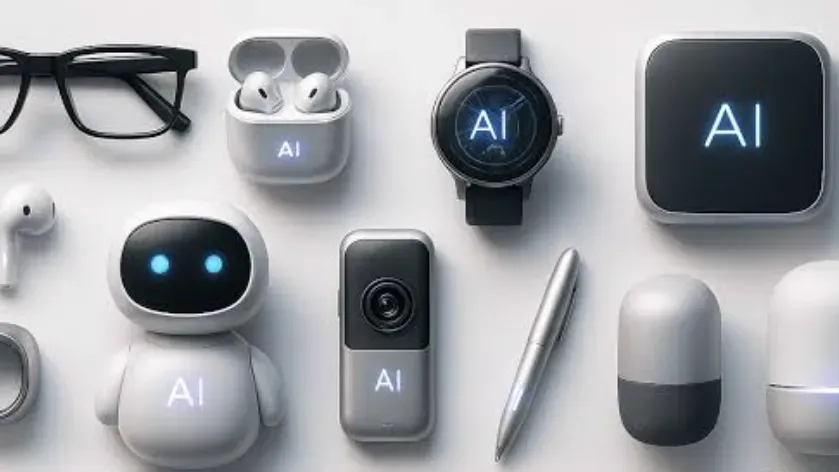
Who Makes AI Gadgets? The Companies Behind Smart Tech in 2026
A guide to the companies, startups, and chip-makers powering the AI gadget revolution - from the consumer wearables you can buy today to the silicon running inside them.
Affiliate Disclosure: As an Amazon Associate we earn from qualifying purchases. Some product links in this guide are Amazon affiliate links.
Walk into a tech store or scroll Amazon in 2026 and you'll see dozens of AI-powered devices - smart glasses, wearable recorders, AI doorbells, voice pendants, ambient computers. But who actually makes them? Behind every ai gadgets companies headline is a layered ecosystem of established giants, pivoting startups, and chip-makers who together define what "smart hardware" even means.
This guide breaks down that ecosystem into four layers: the consumer AI hardware brands you actually buy, the AI startups shaping the category, the chip companies providing the silicon, and the big tech giants quietly owning most of it.
📋 In This Guide
📸 Image: Montage of AI gadgets (Ray-Ban Meta, Plaud NotePin, Limitless Pendant, Ring doorbell, eufy camera)
The Four Layers of the AI Gadget Industry
Before listing companies, it helps to understand the stack. When you buy a smart device in 2026, you're not buying from one company - you're buying a bundle of components from four different layers:
The AI Gadget Stack
Consumer Brand Layer: The name on the box (Plaud, Eufy, Ray-Ban, Ring)
AI Model Layer: The brain - often OpenAI's GPT, Google's Gemini, or Anthropic's Claude running via API, or a proprietary model
Silicon Layer: The chip (Qualcomm AR1, NVIDIA Jetson, Apple Neural Engine, a Chinese ARM derivative)
Manufacturing Layer: Where it's physically built (usually Taiwan's TSMC for chips, China for final assembly)
A "Humane AI Pin" (RIP) was designed by Humane, powered by OpenAI models, built on a Qualcomm chip, manufactured in Asia. A "Ray-Ban Meta" smart glass is designed by Meta + EssilorLuxottica, powered by Meta's own Llama models + Qualcomm AR1 silicon, assembled in EU and Asia. Understanding this layering is the key to understanding who makes ai devices at all.
AI Wearables & Pins: Who Makes Them
The AI wearables category is the newest and most volatile. Many of the companies here didn't exist five years ago - and several have already been acquired or shut down.
Plaud (Plaud.ai)
🏢 Founded: 2022🌍 HQ: Shenzhen, China📦 Products: Plaud Note, NotePin, Note Pro
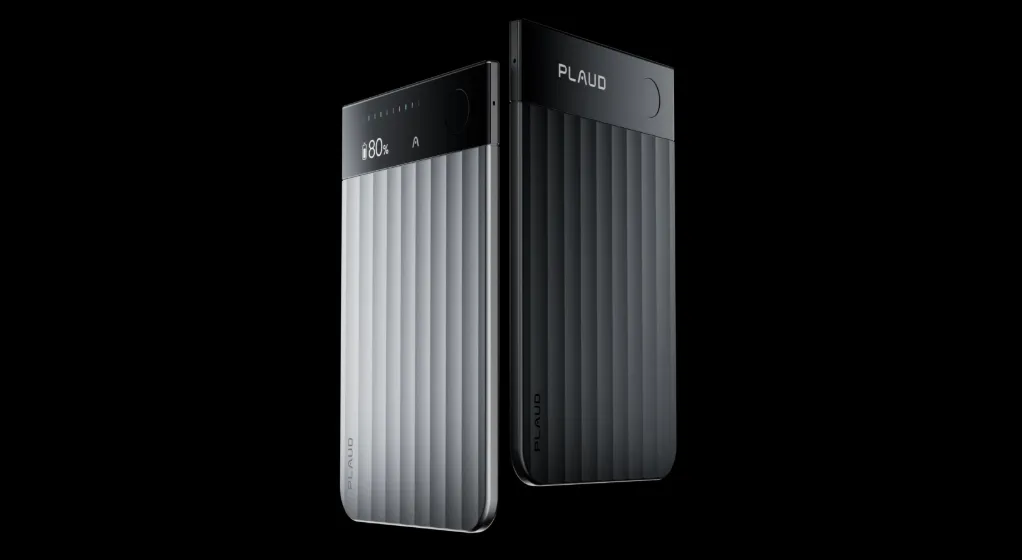
Plaud has emerged as the most successful independent AI hardware startup of the 2020s, shipping over 1 million units and claiming 50%+ subscription conversion. Tom's Guide named the NotePin "Best Wearable" in its 2025 AI Awards. Plaud targets professionals with card-sized and pin-shaped AI recorders rather than trying to replace phones.
Limitless (formerly Rewind AI)
🏢 Founded: 2020 (as Rewind)🌍 HQ: San Francisco, CA📦 Product: Limitless Pendant🔄 Acquired by Meta (Dec 2025)
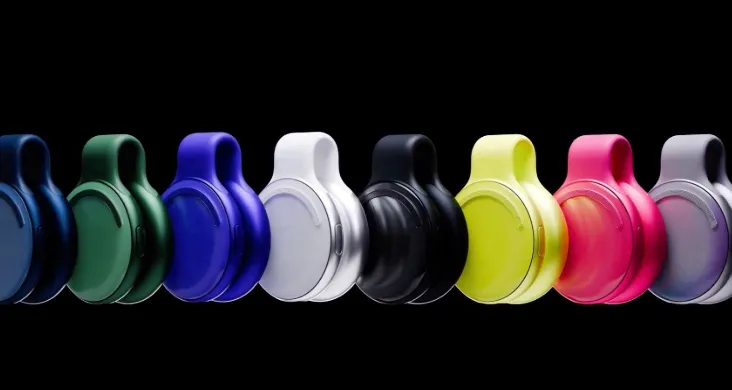
Founded by Dan Siroker (former Optimizely CEO), Limitless pivoted from a Mac recording app into a dedicated AI pendant. Raised $33M+ from Andreessen Horowitz, Sam Altman, and First Round Capital. Acquired by Meta in December 2025 to accelerate Meta's wearable AI work under Reality Labs.
Bee Computer
🏢 Founded: 2024🌍 HQ: San Francisco, CA📦 Product: Bee Pioneer wristband🔄 Acquired by Amazon (July 2025)
Founded by Maria de Lourdes Zollo and Ethan Sutin (former Squad, Twitter execs). Launched the $49 Bee Pioneer AI wearable that clips to your wrist and logs your day. Acquired by Amazon in July 2025 to integrate with Alexa and Amazon's broader AI ecosystem.
Humane (Shut Down 2025)
🏢 Founded: 2018🌍 HQ: San Francisco, CA📦 Product: AI Pin (discontinued)❌ Acquired by HP (Feb 2025)
Founded by ex-Apple designers Imran Chaudhri and Bethany Bongiorno, Humane raised $240M+ from Sam Altman, Microsoft, and others. The AI Pin launched to catastrophic reviews (MKBHD called it "the worst product I've ever reviewed"), and HP acquired the remains for $116M - half of what Humane raised. Every AI Pin was remotely bricked February 28, 2025. The talent and CosmOS tech now lives inside HP's new "HP IQ" division.
Rabbit Inc.
🏢 Founded: 2021🌍 HQ: Santa Monica, CA📦 Product: Rabbit R1
Jesse Lyu's pocket AI device that launched in early 2024 with an orange Teenage Engineering-designed form factor. Like Humane, early reviews were harsh. Unlike Humane, Rabbit has pivoted via software updates and expanded into new hardware, keeping the company alive (as of early 2026).
Even Realities
🏢 Founded: 2023🌍 HQ: Hong Kong / Berlin📦 Products: G1, G2 display smart glasses
Founded by former executives from luxury eyewear brands Lindberg and Mykita. Even Realities takes the opposite approach of most ai hardware companies - instead of trying to replace your phone, they make prescription-ready smart glasses with a subtle HUD for navigation, translation, and teleprompter.
AI Smart Glasses Companies
Smart glasses went from fringe to the hottest category in tech between 2023 and 2026. Here's who's building them.
Meta (Reality Labs)
🏢 Founded: 2004 (Facebook)🌍 HQ: Menlo Park, CA📦 Products: Ray-Ban Meta, Oakley Meta, Meta Ray-Ban Display
Meta's partnership with EssilorLuxottica (parent of Ray-Ban, Oakley, Gucci) has produced the most commercially successful smart glasses to date. Meta sold 2M+ Ray-Ban Meta units by February 2025, plans to scale production to 10M units annually by end of 2026. In December 2025, Meta acquired Limitless AI to accelerate its wearables ambition.
Google (Android XR Team)
🏢 Founded: 1998🌍 HQ: Mountain View, CA📦 Products: Android XR platform, Google Glass (discontinued), upcoming AI glasses with Samsung/Warby Parker/Gentle Monster
Google is the platform layer for the next wave of smart glasses. Rather than ship its own branded glasses in 2026, it's building Android XR - an operating system that partners (Samsung, XREAL, Warby Parker, Gentle Monster, Kering) use to build hardware. The Samsung Galaxy XR headset launched October 2025 at $1,799 as the first Android XR device.
Samsung Electronics (MX Division)
🏢 Founded: 1969🌍 HQ: Suwon, South Korea📦 Products: Galaxy XR headset, Galaxy Glasses (late 2026)
Samsung is Google's primary hardware partner for Android XR. Launched the Galaxy XR headset in October 2025 and confirmed Galaxy Glasses for 2026 during its Q4 2025 earnings call. Samsung brings scale, retail reach, and manufacturing muscle that startups like Humane couldn't match.
XREAL (formerly Nreal)
🏢 Founded: 2017🌍 HQ: Beijing, China📦 Products: XREAL 1S, One Pro, Project Aura (upcoming)
The leading independent smart glasses brand. Focuses on media-first glasses that project a virtual screen for watching video and gaming. Launched the XREAL 1S at $449 in early 2026, and is working on "Project Aura" - an Android XR-powered pair of glasses expected later in 2026.
Apple
🏢 Founded: 1976🌍 HQ: Cupertino, CA📦 Products: Vision Pro, rumored AI smart glasses (2026-2028)
Apple shipped the Vision Pro headset in 2024 at $3,499 - a premium bet that hasn't yet found mainstream traction. Reports suggest Apple is 2-3 years behind Google and Meta on lightweight smart glasses, with a rumored launch window between 2026 and 2028.
AI Home & Security Companies
Smart home AI is the largest consumer AI gadget category by revenue, dominated by a mix of Big Tech and hardware-first specialists.
Amazon (Ring, Blink, Echo)
🏢 Amazon founded: 1994 · Ring acquired: 2018📦 Products: Ring cameras + doorbells, Blink, Echo Show
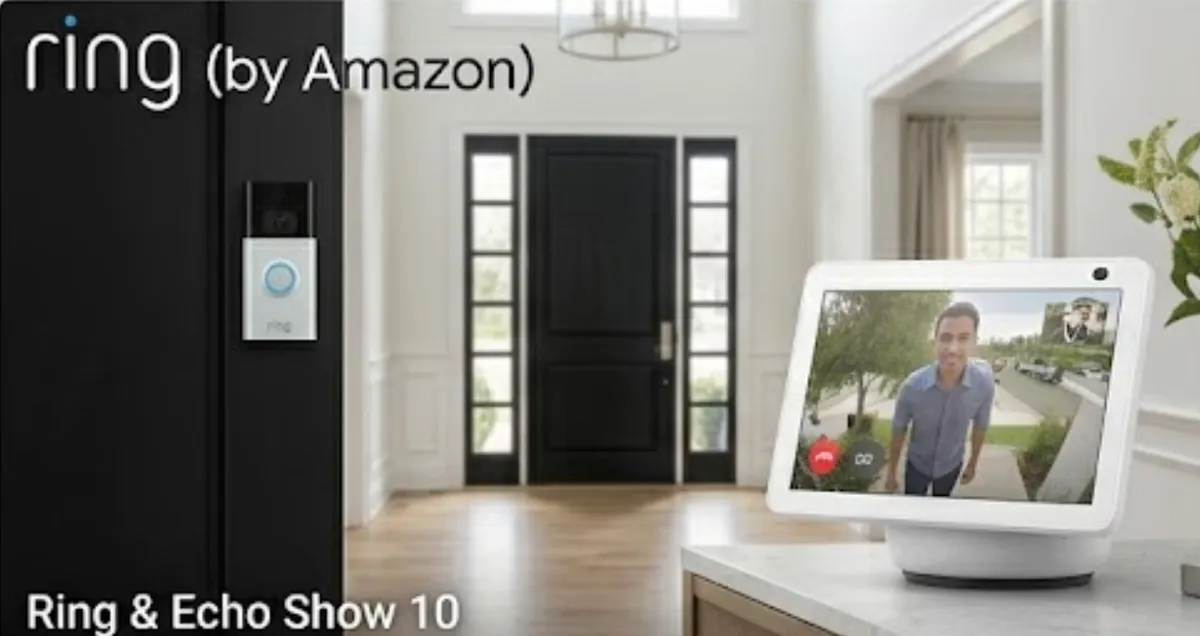
Amazon dominates the mass-market AI doorbell and camera categories through Ring and Blink. Ring's tight Alexa integration and aggressive pricing have made it the US market leader, though the brand carries ongoing privacy baggage. Amazon also acquired Bee Computer in 2025 to expand into wearable AI.
Google (Nest)
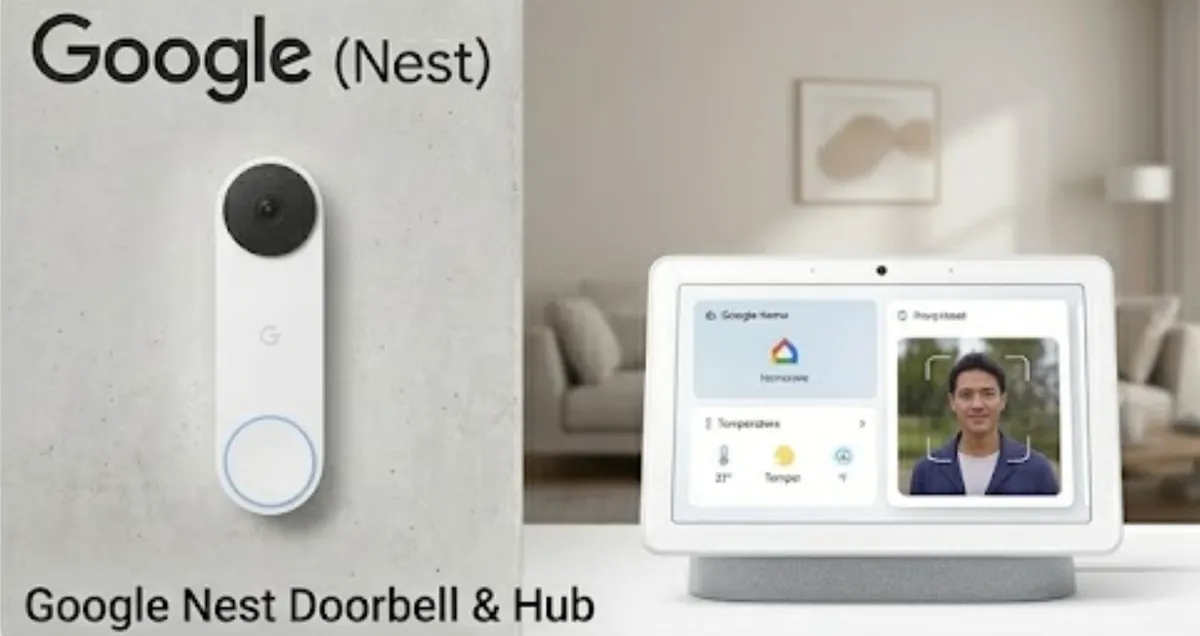
🏢 Nest acquired: 2014📦 Products: Nest Doorbell, Nest Cam, Nest Hub
Google's Nest line wins on AI detection quality. The Nest Doorbell (3rd Gen) runs Gemini-powered facial recognition and package detection that consistently beats Ring in independent testing. Deep Google Home integration gives Nest an edge in the Google ecosystem.
Anker Innovations (Eufy)
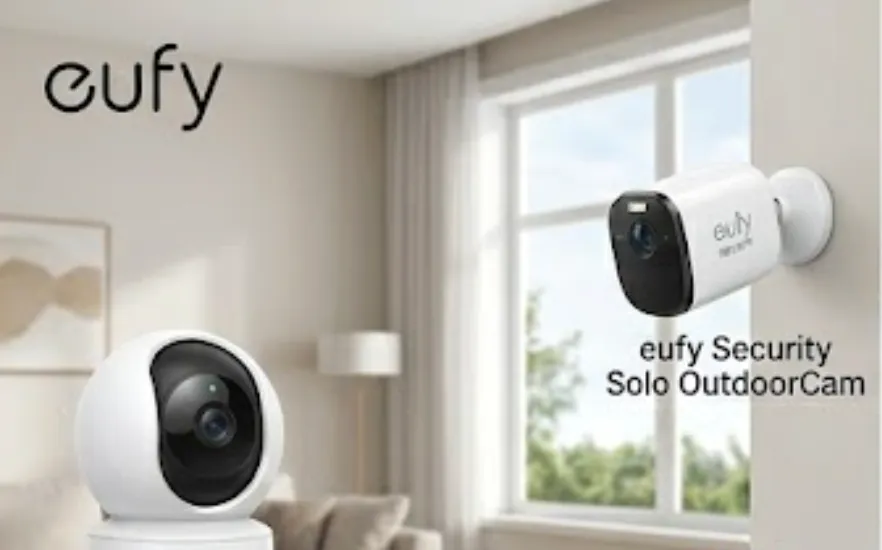
🏢 Founded: 2011🌍 HQ: Shenzhen, China📦 Products: eufyCam, eufy Indoor Cam, eufy Security
Anker's Eufy sub-brand has built its identity on "your footage stays local, your monthly bill stays at zero." The eufyCam S4 with triple-lens auto-tracking is arguably the best independent ai gadget camera launched in 2026 - no subscription required.
Arlo Technologies
🏢 Founded: 2014 (spun off from Netgear)🌍 HQ: Carlsbad, CA📦 Products: Arlo Essential, Pro, Ultra series
Arlo sits in a premium middle ground - wider smart home compatibility than Ring (Alexa + Apple Home + Google + SmartThings + IFTTT) with polished hardware and its new "Arlo Intelligence" AI platform. Subscription-heavy but reliable. See Arlo on Amazon →
TP-Link (Tapo)
🏢 Founded: 1996🌍 HQ: Shenzhen, China📦 Products: Tapo C260, C460, C110 cameras
TP-Link's Tapo line has become the budget champion, offering 4K AI detection cameras for under $60. They've quietly climbed from generic IP-cam maker to legitimate Ring/Nest competitor in just a few years. See Tapo on Amazon →
Reolink & Aqara
🌍 HQ: Shenzhen (Reolink) / Shenzhen (Aqara)📦 Products: Argus 4 Pro (Reolink), G3/G5 Hub (Aqara)
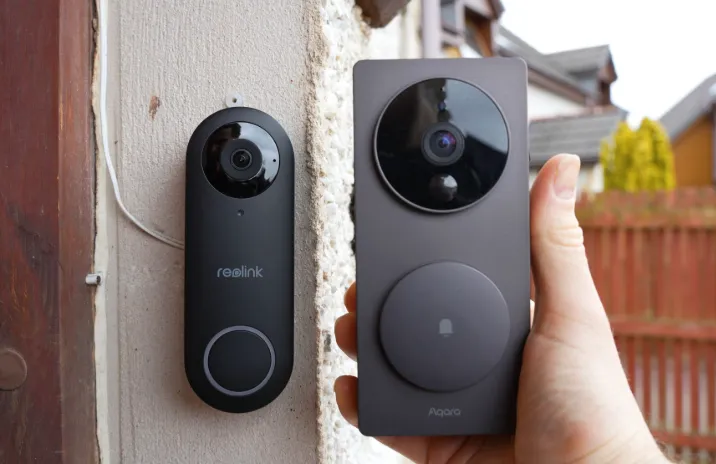
Two China-based specialists that dominate specific niches. Reolink's ColorX starlight sensors produce full-color night vision without floodlights. Aqara's G3 doubles as a Zigbee smart home hub and is the top HomeKit Secure Video camera on the market.
The Chip Companies Powering AI Gadgets
Every ai gadget contains a chip, and only a handful of companies make them. This layer is where real market power sits.
Qualcomm
🏢 Founded: 1985📦 AI Gadget Chips: Snapdragon AR1, AR1+ Gen 1, XR2+ Gen 2
Qualcomm's Snapdragon AR1 platform is the beating heart of almost every lightweight smart glass you've heard of - Ray-Ban Meta, the upcoming Samsung Galaxy Glasses, and most Android XR devices. The heavier XR2+ Gen 2 powers headsets like the Samsung Galaxy XR. Without Qualcomm, there is no smart glasses category as we know it.
NVIDIA
🏢 Founded: 1993📦 AI Gadget Chips: Jetson (edge AI), Blackwell Ultra (2025), Vera Rubin (2026)
NVIDIA dominates cloud AI training (Blackwell, Vera Rubin), but its Jetson platform powers enterprise-grade edge devices like Verkada's multi-sensor security cameras. While less visible in consumer gadgets, NVIDIA silicon is increasingly common in premium AI cameras and robotics.
Apple (Apple Silicon)
🏢 Apple Silicon announced: 2020📦 AI Gadget Chips: M-series, Apple Neural Engine, R1 (Vision Pro)
Apple designs its own chips in-house. The Apple Neural Engine is now on every iPhone, iPad, and Mac - powering features like Siri, photo recognition, and the Vision Pro's spatial computing. Apple rarely licenses its silicon, giving it total ecosystem control.
Google (Tensor Processing Units + Edge TPU)
🏢 TPUs debuted: 2015📦 AI Gadget Chips: Tensor (Pixel phones), Edge TPU (Coral devices), Willow (quantum)
Google's Tensor chips power Pixel phones with on-device AI (Gemini Nano). The Edge TPU targets low-power IoT and robotics. Google controls 58% of the custom cloud AI accelerator market, giving it massive leverage over how AI models run on everyone else's devices.
MediaTek
🏢 Founded: 1997🌍 HQ: Hsinchu, Taiwan📦 AI Gadget Chips: Dimensity series, Kompanio series
MediaTek is the "other Qualcomm" - it powers a huge percentage of mid-tier and budget Android devices, including many Chinese smart home cameras and wearables. Less visible than Qualcomm but critical to price-competitive AI gadgets.
💡 The Silicon Reality
When you buy almost any AI gadget in 2026, you're buying a chip from one of roughly six companies (Qualcomm, NVIDIA, Apple, Google, MediaTek, or Samsung), fabricated by TSMC in Taiwan, with AI models served by OpenAI, Google, Anthropic, or Meta. The "brand" on the box is the easiest layer to replace.
How Big Tech Quietly Owns Everything
When you look at the acquisition pattern of 2024-2026, a clear story emerges: Big Tech is swallowing the AI hardware startup ecosystem whole.
Startup | Acquired By | Date | Price | Product Fate |
|---|---|---|---|---|
Humane | HP | Feb 2025 | $116M (assets only) | AI Pin discontinued |
Bee Computer | Amazon | Jul 2025 | Undisclosed | Still shipping |
Limitless | Meta | Dec 2025 | Undisclosed | Still shipping |
Raxium (microLED) | 2022 | Undisclosed | Powers Android XR displays | |
North (AR glasses) | 2020 | $180M | Became Project Iris/Android XR | |
Nest | 2014 | $3.2B | Now core Google Home brand | |
Ring | Amazon | 2018 | ~$1B | Now Amazon's doorbell flagship |
This pattern isn't an accident. Hardware is hard. Venture capital won't fund a first-gen consumer device forever, especially after Humane's spectacular failure demonstrated the downside risk. Once a startup proves a form factor works - or even just attracts talent and IP - Big Tech moves in to absorb it.
The AI Gadget Startups to Watch (That Haven't Been Acquired Yet)
Here are the still-independent ai gadget startups making interesting consumer hardware in 2026:
Plaud.ai
Card-sized and pin-shaped AI recorders. 1M+ units shipped. Profitable and growing.
Even Realities
Prescription-ready smart glasses with monochrome HUD. $599. Bootstrapped aesthetic meets real engineering.
Rabbit Inc.
Survived the R1 launch disaster through iterative software updates. Watching closely.
Snap Inc. (Specs)
Snap spun out its AR glasses unit into "Specs Inc." in 2025, targeting a 2026 consumer launch with Qualcomm.
Friend.com
Avi Schiffmann's $99 AI friend pendant launched 2024. Niche, controversial, still shipping.
aosu
Chinese smart home brand making dual-lens solar cameras with triple-modality detection. Rising fast.
Verkada
Enterprise AI security cameras built on NVIDIA Jetson. Valued at $4.5B+ after 2025 funding.
Mojo Vision
Pivoted from AR contact lenses to microLED display tech that powers other companies' smart glasses.
Who Actually Wins the AI Gadget Race?
Based on where the market stands in 2026, here's the honest answer to "who makes ai devices successfully":
🏆 The Winners So Far
Meta - Ray-Ban Meta is the first genuinely mainstream AI wearable. 2M+ units sold, 10M/year production target for 2026.
Qualcomm - Almost every smart glass runs on Snapdragon AR silicon. It wins regardless of which consumer brand you buy.
Plaud - The only independent AI wearable startup that's both profitable and still independent. Shipping real hardware to real customers.
Google / Samsung (Android XR) - The open-platform bet is paying off. Multiple hardware partners, growing developer ecosystem, Galaxy XR shipping.
Anker (Eufy) - The subscription-free AI camera category is Anker's to lose. They're shipping better hardware than Ring at lower long-term cost.
💀 The Losers
Humane - $240M+ in funding, sold for $116M, product bricked. Tech absorbed into HP printers.
Apple Vision Pro - $3,499 headset has struggled to find mainstream adoption. Reports suggest production support is being reduced.
Standalone AI Pin startups generally - The "smartphone replacement" pitch keeps failing. Complementary devices (like Plaud) win.
How to Evaluate Any New AI Gadget Company
If you're considering buying an AI gadget from a company you've never heard of, these five checks will tell you whether it's worth your money:
Is it cloud-dependent? Humane's AI Pin was 100% cloud-dependent and got bricked. Plaud and Eufy process more locally.
Track record? First-gen products are risky. Wait for v2 or buy from brands with a 2+ year history.
3-year total cost? A $200 camera with $10/month fees costs $560 over 3 years. Subscription-free math wins.
Who owns the chip? Qualcomm-based devices are reliable. Proprietary chips from tiny startups carry firmware risk.
Has it been acquired? Post-acquisition, consumer products often get deprioritized.
🛒 Shop AI Gadgets on Amazon
AI Wearables →Smart GlassesAI Cameras
FAQ
Who is the biggest AI gadget company?
By revenue and install base, it's a tie between Amazon (Ring, Echo, Alexa ecosystem) and Google (Nest, Pixel, Android XR). Meta leads specifically in AI wearables after the Ray-Ban Meta's success.
Are most AI gadgets made in China?
Almost all final assembly happens in China or Southeast Asia, regardless of where the company is headquartered. Plaud (Shenzhen), Anker/Eufy (Shenzhen), TP-Link (Shenzhen), Reolink (Shenzhen), and most consumer smart home hardware is Chinese-designed and built. Chips are typically designed in the US/Taiwan and fabricated by TSMC in Taiwan.
Which AI gadget companies went out of business?
The most famous is Humane (AI Pin, discontinued Feb 2025). Several smaller AI pendant startups from 2023-2024 Kickstarter campaigns also folded. Rabbit survived through pivots but is still considered at-risk.
Who makes the AI chip inside my device?
Probably Qualcomm (most Android devices, smart glasses), Apple (iPhones, Macs), MediaTek (budget Android), or Samsung Exynos. In smart home cameras, look for brand-specific SoCs from HiSilicon or Novatek.
Will Apple make AI-specific gadgets?
Beyond Vision Pro, Apple has reportedly been developing lightweight AI glasses targeted between 2026 and 2028. Apple's strategy has historically been to wait until a category matures, then enter with a refined product (like the iPhone entered 5 years after the first smartphones).
Affiliate Disclosure: As an Amazon Associate we earn from qualifying purchases. Some links in this guide are Amazon affiliate links. Sources include TechCrunch, The Verge, Tom's Guide, Android Authority, TechRadar, StartUs Insights, Built In, AIMultiple, and official company press releases. Reflects the state of the AI gadget industry as of April 2026.