Updated July 2026 · 10-minute read
Samsung markets the Galaxy Ring as an AI health device. But what AI is actually running inside it? How does the sleep staging model work? What produces the Energy Score that appears every morning? How much of the processing happens on the ring versus in Samsung Health on your phone versus in Samsung's cloud?
Samsung does not publish detailed technical documentation on the Galaxy Ring's AI pipeline the way academic research papers do for clinical devices. But between Samsung's patent filings, the Galaxy AI documentation, and comparison against known approaches in the wearable health AI field, a clear picture emerges.
The Sensor Hardware the AI Works With
Before understanding the AI, it helps to know what data it has to work with. The Samsung Galaxy Ring contains:
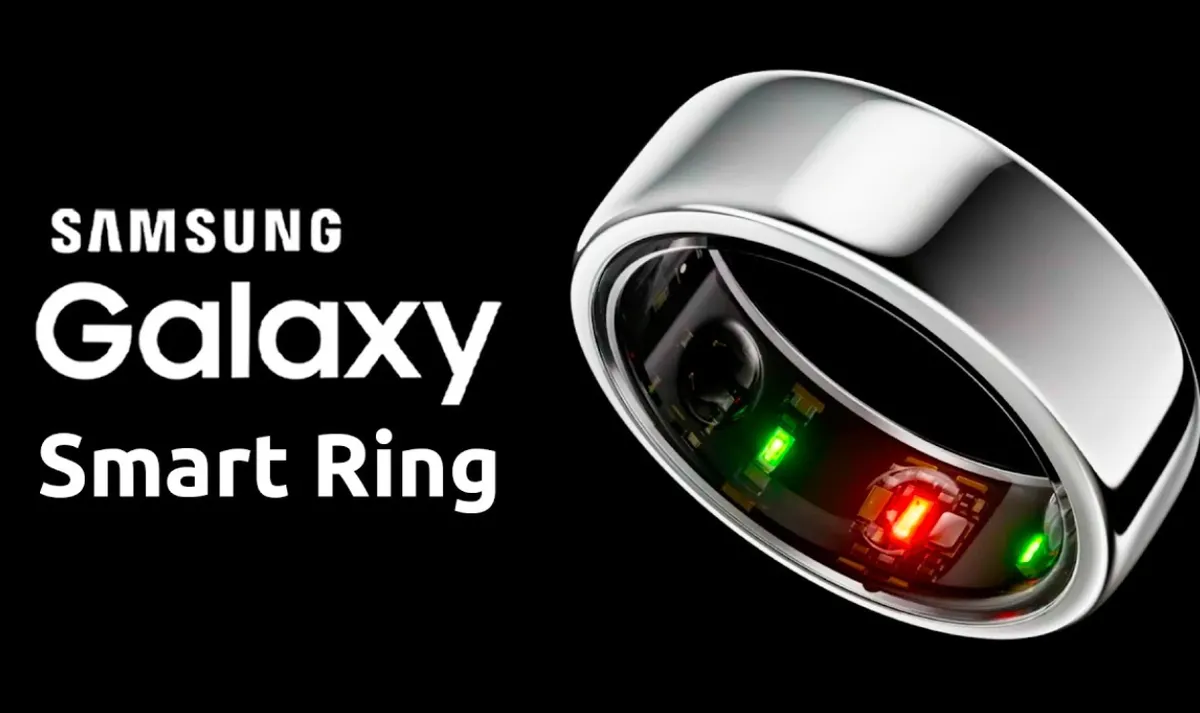
Three optical PPG sensors using green, red, and infrared LEDs for heart rate and SpO2
A skin temperature sensor using a thermistor on the ring's inner surface
A 3-axis accelerometer for motion detection and activity tracking
A bioelectrical impedance sensor (in some markets) for body composition estimation
The sensor array is broadly comparable to Oura Ring 4, though Oura uses six LEDs versus Samsung's three. The additional LEDs in Oura's design allow more optical measurement points and potentially cleaner signal extraction, particularly at the red and infrared wavelengths used for SpO2 and temperature. Both devices then pass their raw sensor data through an AI processing pipeline to produce the health metrics users see.
Sleep Staging: Samsung's AI Model
Samsung Galaxy Ring classifies sleep into four stages: Awake, Light, Deep (slow-wave), and REM, which are the same categories used by Oura Ring and clinical polysomnography.
Samsung has not published independent clinical validation studies for Galaxy Ring sleep staging at the same scale as Oura's research programme, which makes comparative accuracy claims harder to verify from published sources. However, Samsung Health's sleep staging has been validated across their larger Galaxy Watch ecosystem, and the Ring uses a variant of the same core algorithm adapted for the ring form factor and sensor configuration.
The sleep staging model takes the same general approach used across the wearable health AI field: extract features from the PPG-derived heart rate, HRV, and respiratory rate signals alongside accelerometer movement data, then classify each 30-second epoch into a sleep stage using a trained machine learning classifier. The specific model architecture Samsung uses is not publicly disclosed, but their patent filings describe ensemble methods combining multiple classifiers, with features drawn from multiple time scales (short-window features capturing individual heartbeat patterns and longer-window features capturing macro sleep architecture patterns).
The Energy Score: Samsung's Version of Readiness
The Energy Score is the Galaxy Ring's equivalent of Oura's Readiness Score, a daily composite score reflecting recovery and predicted capacity for the day. Samsung positions it as an AI output rather than just a formula, and this framing is partially justified.
The inputs to Energy Score are:
Sleep score from the previous night's sleep quality assessment
Activity level from the previous day compared to your personal activity baseline
Heart rate from overnight monitoring compared to your personal resting heart rate baseline
Daily readiness factors derived from HRV trend analysis
The combination model learns, over time, the weighting that best predicts your actual energy and performance capacity from these inputs. Early in Galaxy Ring ownership, when the personal baseline is still being established, Energy Score is less accurate. After several weeks of data, the personalised baseline makes the score more meaningful.
The key AI element is the personalisation layer. Energy Score does not apply the same fixed formula to all users. It adapts the weighting based on which signals are most predictive for each individual user's physiology. A user whose Energy Score correlates strongly with their sleep duration will have sleep weighted more heavily. A user whose score correlates more with overnight HRV will have HRV carry more weight.
On-Device vs Phone vs Cloud: Where the AI Runs
Samsung Galaxy Ring uses a three-tier processing architecture that differs from both Oura Ring and WHOOP.
On the ring itself: Raw sensor data collection, basic signal processing, and data storage run on the ring's embedded microcontroller. The ring stores compressed sensor data in internal memory and transmits it to the connected phone via Bluetooth Low Energy in batches. The ring does not run the sleep staging or Energy Score AI. These are too computationally intensive for the ring's power-constrained processor.
On the Galaxy phone (Samsung Health): The sleep staging classifier, Energy Score calculation, and most health AI features run locally in the Samsung Health app on the connected phone. This is important for privacy: your raw biometric data is processed on your device rather than in Samsung's cloud for these features. Samsung uses the Exynos and Snapdragon NPUs in their Galaxy phones to run these models efficiently.
In Samsung Cloud: Data backup, cross-device sync, and some advanced analytics features use Samsung Health cloud. The irregular heart rhythm notification feature uses cloud-side processing for more sophisticated algorithm runs on longer data windows than can be computed efficiently on-device.
This architecture means Samsung Galaxy Ring requires a connected Samsung Galaxy phone for full functionality. Without a Samsung phone, the ring can collect and store data but the AI health features either degrade significantly or are unavailable. This is the primary limitation of the Galaxy Ring's design compared to Oura Ring, which processes health metrics independently of which phone brand you use.
Galaxy AI Integration: What It Adds
Samsung's Galaxy AI platform, which runs across their Galaxy phone ecosystem, integrates with Galaxy Ring data in ways that extend beyond the ring's own health AI features.
The Health Advice feature in Samsung Health uses a language model to generate personalised health insights based on your Galaxy Ring data trends. This is similar in concept to WHOOP Coach and Oura Advisor, providing natural language explanations of your health patterns rather than just raw numbers.
The level of sophistication of Samsung's health AI language model integration is currently below WHOOP Coach in terms of depth and conversational ability, but Samsung's rapid iteration on Galaxy AI features across their ecosystem suggests this gap will narrow. Samsung has more total Galaxy AI users than WHOOP has subscribers, giving them a larger data foundation for training these models.
How Samsung's AI Compares to Oura's
AI Feature | Samsung Galaxy Ring | Oura Ring 4 |
|---|---|---|
Sleep staging model | Good, less published validation | Best published validation in consumer ring |
Readiness / Energy AI | Energy Score, personalised weighting | Readiness Score, longer-established model |
AFib detection | FDA cleared, optical PPG-based | FDA cleared, optical PPG-based |
Illness detection | Temperature anomaly via baseline model | Temperature anomaly via baseline model |
AI processing location | Primarily on Galaxy phone | Primarily on phone, some on ring |
Conversational AI | Galaxy AI health advice (basic) | Oura Advisor (moderate) |
Ecosystem dependency | Requires Samsung Galaxy phone | Works with any iOS or Android phone |
Subscription for AI | None | $5.99/month |
Frequently Asked Questions
Does Samsung Galaxy Ring use AI to personalise to your body over time?
Yes, through baseline calibration. The Energy Score and sleep staging accuracy both improve as the ring accumulates more of your personal data and builds a stable model of your normal physiological patterns. Samsung recommends at least two weeks of data before the personalised baselines are fully calibrated. The model does not change its core architecture but adjusts the reference points it compares your current data against, which is the primary source of personalisation.
Can Samsung Galaxy Ring work with an iPhone?
Partially. Samsung has released a Samsung Health app for iOS that provides basic Galaxy Ring data viewing. However, the full AI feature set including Energy Score, detailed sleep staging, and the irregular rhythm notification requires the Samsung Health ecosystem on a Samsung Galaxy Android phone. If you use an iPhone as your primary device, Oura Ring 4 or Ultrahuman Ring AIR provide significantly better functionality than Galaxy Ring in your ecosystem.
How does Samsung collect training data for its health AI models?
Samsung collects anonymised health data from Samsung Health users who opt into data sharing for research and service improvement, which forms one input to their AI training pipeline. Samsung Health has hundreds of millions of users across Galaxy Watch, Galaxy phones, and Galaxy Ring, giving them a large and diverse dataset for training health AI models. Samsung has published research papers using this population data for sleep staging and cardiovascular health research, though the specific models deployed in Galaxy Ring are proprietary.
Why does Samsung Galaxy Ring need a Samsung phone when Oura Ring works with any phone?
Architectural choice. Samsung built the Galaxy Ring AI processing into the Samsung Health ecosystem running on Samsung phones, leveraging the Galaxy AI platform and the NPU hardware in their Exynos and Snapdragon-equipped phones. This allowed them to run more sophisticated AI models than would fit on the ring's constrained processor, at the cost of ecosystem lock-in. Oura chose to run more processing on the ring itself and use a standalone app that works across platforms, which provides ecosystem flexibility at the cost of using simpler models that can run on the ring's own hardware.
Information in this article draws on Samsung patent filings, Galaxy AI documentation, Samsung Health research publications, and published wearable health AI literature as of June 2026.