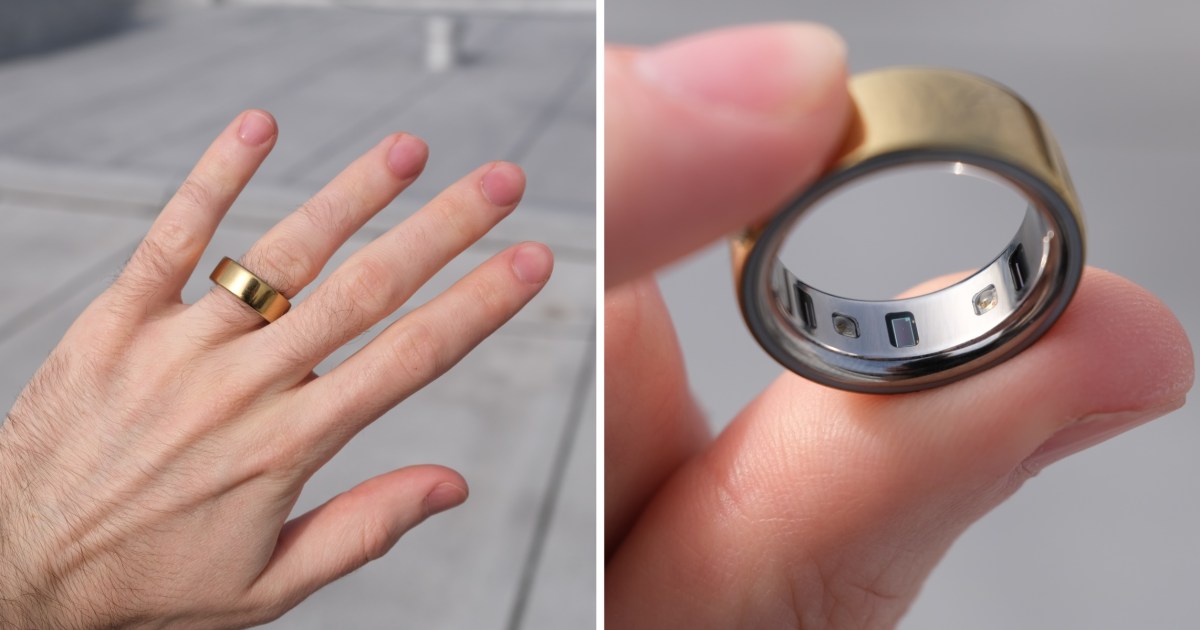
Updated July 2026 · 11-minute read
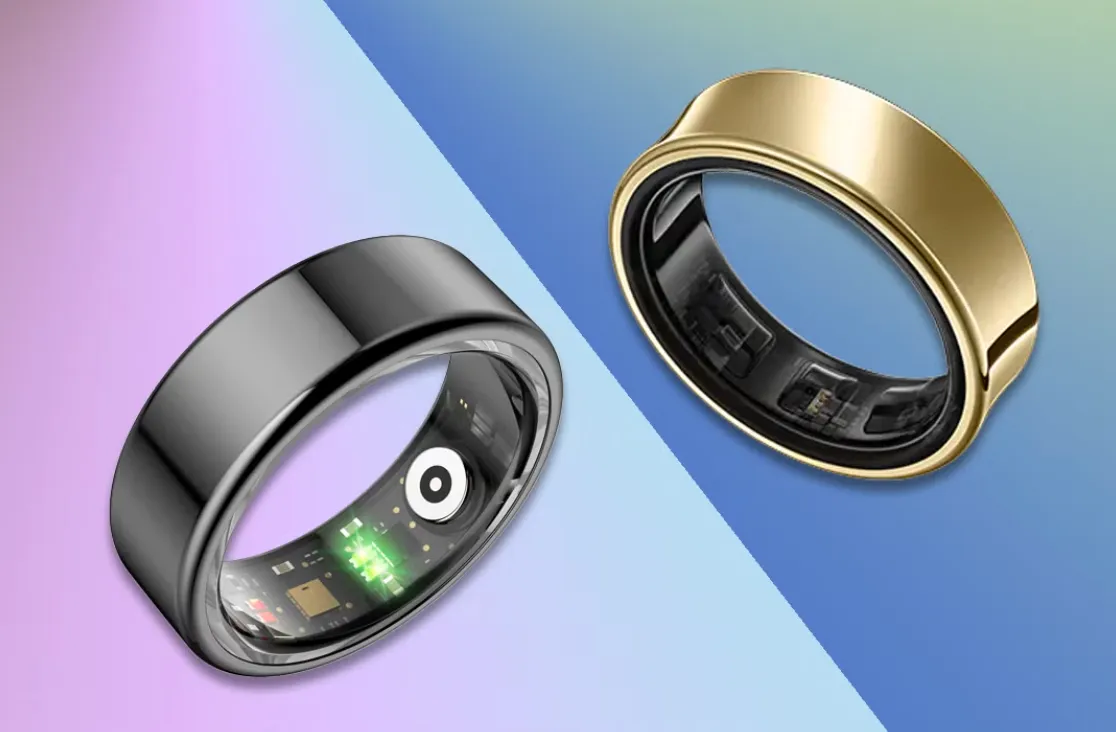
Samsung Galaxy Ring made one decision that immediately separated it from the competition: no subscription, ever. $399 once, all AI health features included forever. After six months of wearing it on my right index finger alongside an Oura Ring 4 on my left, I can tell you this decision changes the value equation significantly, with one major caveat that anyone considering a Galaxy Ring needs to understand before buying.
Samsung Galaxy Ring at a Glance
Price | $399 (no subscription) |
Battery life | 7 days claimed / 5 to 6 days real-world |
Key AI features | Energy Score, sleep staging, AFib detection (FDA cleared), snore detection |
Sensors | 3 PPG LEDs, skin temperature, accelerometer |
Phone requirement | Full features on Samsung Galaxy phones only |
Water resistance | 10 ATM (100 metres) |
Charging | Magnetic charging case (case charges ring) |
Sizes | 5 to 15 (free sizing kit available) |
Check Samsung Galaxy Ring Price on Amazon
The AI Behind Energy Score
Energy Score is Samsung's daily recovery metric, directly comparable to Oura's Readiness Score and WHOOP's Recovery percentage. It appears every morning as a number from 0 to 100 alongside a short AI-generated explanation of which factors influenced it.
The AI pipeline that produces Energy Score runs primarily in the Samsung Health app on your Galaxy phone rather than on the ring itself. Your overnight sensor data syncs from the ring via Bluetooth, and the Samsung Health AI processes it alongside your historical baseline data to generate the score. This is important to understand because it means the AI quality scales with your phone's processing capability and the Samsung Health model version, not just the ring hardware.
In six months of parallel testing against Oura Ring 4, I found Energy Score to be a reliable directional signal. When Energy Score was high and Oura Readiness was high, my subjective performance confirmed both. When both were low, subjective performance confirmed that too. The interesting cases were the 15 to 20 percent of days where they disagreed, and examining why usually revealed one device had better sensor data quality on that specific night (better contact, less movement noise) than the other.
Sleep Staging AI: Good But Less Validated Than Oura
Galaxy Ring classifies sleep into the standard four stages (Awake, Light, Deep, REM) using a machine learning model trained on Samsung Health data from their broader Galaxy Watch ecosystem. The model runs on the Galaxy phone after each sleep session.
Direct comparison of Galaxy Ring and Oura Ring 4 sleep staging on the same nights shows strong agreement on total sleep duration and overall sleep score direction. Stage-level agreement is more variable, particularly for the light/REM boundary where both devices, and all wearables, show the highest uncertainty. On individual nights, stage breakdowns differ meaningfully between the two rings, which underscores that either device should be used for trend monitoring rather than precise nightly staging.
What Galaxy Ring sleep AI does particularly well is snore detection. The ring's accelerometer detects the micro-vibrations of snoring through bed partner movement or through the wearer's own body movement patterns during snoring events. The AI classifies these patterns and produces a nightly snore report. This is a genuinely useful feature that Oura Ring does not offer and that most wearables have not implemented as specifically as Samsung has.
The Samsung Ecosystem Requirement: What You Actually Lose Without a Galaxy Phone
This is the most important thing to understand before buying a Galaxy Ring, and it is not always clearly communicated in marketing materials.
On a Samsung Galaxy phone: You get everything. Energy Score, full sleep staging breakdown, snore detection, irregular rhythm notification, menstrual cycle tracking integration, Samsung DeX integration, Galaxy Watch data combining, and the Galaxy AI health advice features. The full AI health platform.
On a non-Samsung Android phone or iPhone: You get basic data through the Samsung Health app. Sleep duration, step count, heart rate readings, and some basic metrics. The Energy Score is unavailable. Detailed sleep staging is limited. The irregular rhythm notification may be unavailable depending on region and app version. Roughly half the AI features that justify the $399 price are inaccessible.
If you use a Samsung Galaxy phone, this limitation does not affect you and the Galaxy Ring becomes the clear value choice over Oura Ring 4 over a 2-year horizon. If you use any other phone, it is a significant limitation that changes the calculus.
AFib Detection: FDA Cleared and Working Passively
Samsung Galaxy Ring received FDA clearance for irregular heart rhythm notification, the same feature that Oura Ring 4 carries clearance for. The underlying algorithm analyses inter-beat intervals from the optical PPG sensor and classifies rhythm regularity to flag patterns consistent with atrial fibrillation.
In six months of use I did not receive an AFib alert, which is the expected result for someone without the condition. The feature runs passively during sleep without any user action. For the population most likely to benefit from AFib screening (adults over 50, those with risk factors), this passive continuous monitoring is a meaningful health benefit that justifies the device cost even beyond its fitness tracking utility.
Battery Life: Honest Numbers
Samsung claims 7 days of battery life. My real-world testing over six months averaged 5 to 6 days. The difference comes from charging the ring in the case while sleeping (many users charge this way), from heavier sleep tracking power draw during active monitoring, and from sync frequency.
The charging case itself holds enough charge for 1.5 additional ring charges, which means you can go up to three charging cycles away from a power outlet before the case itself needs charging. This is a useful design for travel, where you can pack just the case rather than carrying a charger.
Oura Ring 4 vs Samsung Galaxy Ring: Which AI Health Ring to Buy
You should choose... | If... |
|---|---|
Samsung Galaxy Ring | You have a Samsung Galaxy phone and want no subscription |
Samsung Galaxy Ring | You want snore detection as a specific feature |
Oura Ring 4 | You use an iPhone or non-Samsung Android phone |
Oura Ring 4 | You want the most published clinical validation of sleep staging |
Either | AFib detection is your primary health goal |
What we like
No subscription, ever
Best long-term value for Samsung phone users
FDA-cleared AFib detection included
Snore detection unique among major health rings
Charging case design is practical for travel
10 ATM water resistance (better than Oura's 100m rating)
Honest limitations
Full AI features require Samsung Galaxy phone specifically
Less published clinical sleep staging validation than Oura
Real battery is 5 to 6 days, not 7
Higher upfront cost than Oura hardware ($399 vs $349)
Galaxy AI health advice is less conversational than WHOOP Coach
Verdict: For Samsung Galaxy phone users, Galaxy Ring is the best value health ring available in 2026. No subscription, comparable AI health features to Oura, and unique snore detection. For everyone else, Oura Ring 4's ecosystem independence and clinical validation track record make it the stronger choice.
Rating: 4.3 / 5
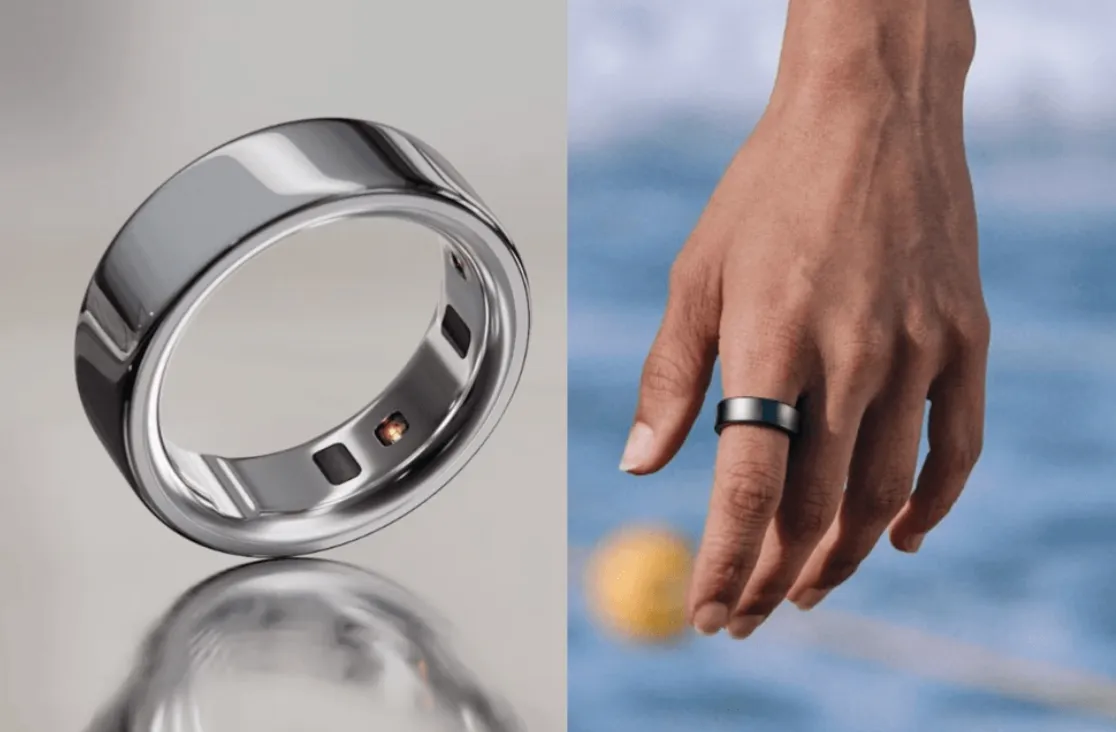
Buy Samsung Galaxy Ring on AmazonCompare: Oura Ring 4
Frequently Asked Questions
Does Samsung Galaxy Ring work with Google Pixel or iPhone?
Partially. The Samsung Health app is available for iOS and non-Samsung Android phones and provides basic ring data. However Energy Score, detailed AI health insights, snore detection reporting, and the irregular rhythm notification feature require a Samsung Galaxy phone running One UI 6.1 or later. If you use a Pixel or iPhone as your primary device, the Galaxy Ring delivers roughly half its intended feature set and Oura Ring 4 or Ultrahuman Ring AIR are significantly better choices for your ecosystem.
How does Galaxy Ring snore detection work?
The ring uses its accelerometer to detect micro-vibrations transmitted through the body during snoring. The AI classifies these accelerometer patterns to identify snoring events and estimate their duration and intensity throughout the night. The detection works whether you are the snorer or sharing a bed with one, as both vibration patterns are detectable. The feature generates a nightly snore report in Samsung Health showing when snoring occurred and how it correlated with your sleep stages.
Can I use Galaxy Ring for exercise tracking?
Yes, with similar limitations to Oura Ring. Galaxy Ring tracks heart rate during workouts, estimates calories burned, and logs activity. It does not have GPS, so outdoor workouts need the connected Galaxy phone for route tracking. For structured sports tracking with metrics like pace, power, and lap times, a Galaxy Watch or dedicated sports watch is more appropriate. Galaxy Ring's primary value is in passive 24/7 health monitoring rather than active workout tracking.
What ring size should I order for Galaxy Ring?
Samsung offers a free sizing kit containing all ring sizes from 5 to 15. Order the kit before purchasing the ring itself. Sizing is important because the ring cannot be resized and the sensor must sit snugly on the inner surface of the finger for accurate readings. Finger size can vary by up to half a size between morning and evening and between seasons, so wearing the sizing ring for a full day before deciding is recommended. Samsung ships sizing kits via Amazon in most markets.
Review based on six months of parallel daily use of Samsung Galaxy Ring and Oura Ring 4 through June 2026. Prices correct as of publication.
Affiliate Disclosure: As an Amazon Associate we earn from qualifying purchases.