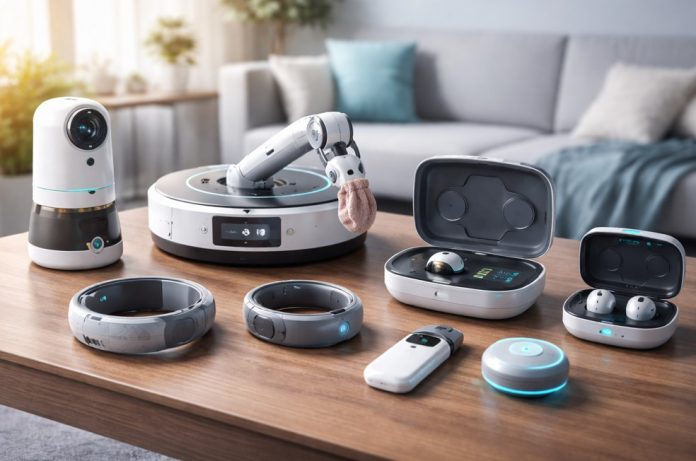
AI Gadgets That Failed: What Went Wrong and What We Can Learn (2026)
Not every AI gadget succeeds. For every Oura Ring or Ray-Ban Meta that genuinely earns its place in millions of pockets and on millions of wrists, there are a graveyard's worth of devices that launched with breathless press coverage, raised millions of dollars, and quietly disappeared within 18 months. Understanding why they failed is the most useful consumer education in the AI gadget space - because the failure patterns repeat, and knowing them helps you avoid wasting money on the next one.
This isn't a mockery piece. Many of the products below were technically impressive, built by talented teams, and represented genuine swings at the future. They failed for reasons that weren't always obvious at launch - which is exactly why they're worth understanding in detail.
1. Humane AI Pin - The Most Expensive Lesson in AI Gadget History
Launch price: $699 + $24/month · Fate: Humane sold to HP in 2025
The Humane AI Pin was the most hyped AI gadget of 2024 and the most catastrophic commercial failure in the category's short history. Founded by ex-Apple engineers Imran Chaudhri and Bethany Bongiorno, Humane raised over $200 million in venture funding, debuted the Pin at TED 2023 in a moment of viral excitement, and launched at $699 with a $24/month data plan required for core functionality. Total year-one cost: over $985.
The concept was genuinely interesting: a screenless AI device worn on your lapel, controlled entirely by voice and gesture, with a laser projector that displayed information on your palm. It was meant to be the post-smartphone interface - an AI-first device that didn't require you to stare at a glass rectangle.
The execution failed across almost every dimension:
The laser projector was unreadable in sunlight - the primary output method worked only in dim conditions, making it useless for the outdoor real-world scenarios it was designed for
Battery life collapsed under real use - under 3 hours of active use, with no way to swap batteries
AI responses were slower than phone AI - round-trip latency for voice queries was noticeably worse than simply asking Siri or Google Assistant
The overheating problem - multiple reviewers reported the device becoming uncomfortably hot against clothing during normal use
No app ecosystem, no workarounds - when the AI couldn't do something, there was nothing else the device could do
$24/month for a device that didn't work well - the subscription added insult to the hardware injury
The Verge's review called it "not a product you should buy." MKBHD's measured but damning video concluded it was "the worst product I've reviewed in years." The company sold its assets to HP in 2025 for a fraction of its venture valuation. Users who bought the device were left with hardware that lost its cloud AI service - a cautionary tale about the risks of subscription-dependent AI gadgets from companies without established track records.
The Lesson: Beautiful hardware vision doesn't substitute for functional core experience. The laser projector that didn't work in sunlight was a fatal flaw that no amount of software updates could fix - it was a hardware problem. Always ask: "What happens when the primary feature doesn't work?" For the AI Pin, the answer was: "Nothing. The device does nothing else."
2. Amazon Halo Wristband - A Great Idea Killed by Execution
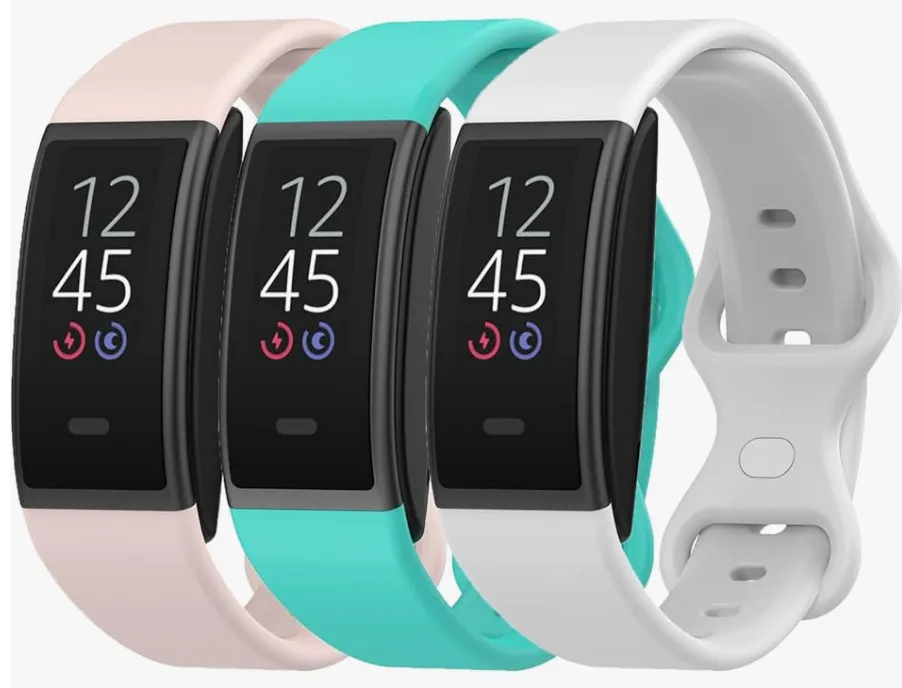
Launch price: $99 + $3.99/month · Fate: Discontinued, app shut down 2023
Amazon launched the Halo wristband in 2020 as a bold entry into AI health tracking. The design was intentionally screenless - a deliberate choice meant to reduce phone dependency. The AI features were genuinely innovative for 2020: tone-of-voice analysis that listened to your speech patterns and reported on whether you sounded happy, tense, or dismissive; body fat percentage estimation from a camera scan; sleep staging and activity tracking.
The tone-of-voice analysis was immediately controversial. The idea that your wearable was listening to your conversations and grading the emotional quality of your speech - without always making it clear to others in the room that this was happening - triggered a significant privacy backlash that Amazon never fully overcame. The body scan feature, which required users to photograph themselves in minimal clothing for AI analysis, attracted similar criticism.
Amazon discontinued the Halo product line in 2023, shutting down the app and leaving users with hardware that became inert. The Halo Rise (bedside sleep tracker) suffered the same fate - the app was discontinued, stranding users who had paid $139 for a device that depended entirely on cloud services to function.
The Lesson: Privacy-invasive AI features - tone monitoring, body scans - require exceptional trust that new hardware brands haven't earned. Amazon had the brand recognition; the specific features triggered concerns that overrode it. The app shutdown also illustrates a critical risk: if a gadget's intelligence lives entirely in the cloud and the company discontinues the service, your hardware becomes worthless overnight.
3. Google Glass (Consumer Edition) - The Original AI Wearable That Spooked Everyone
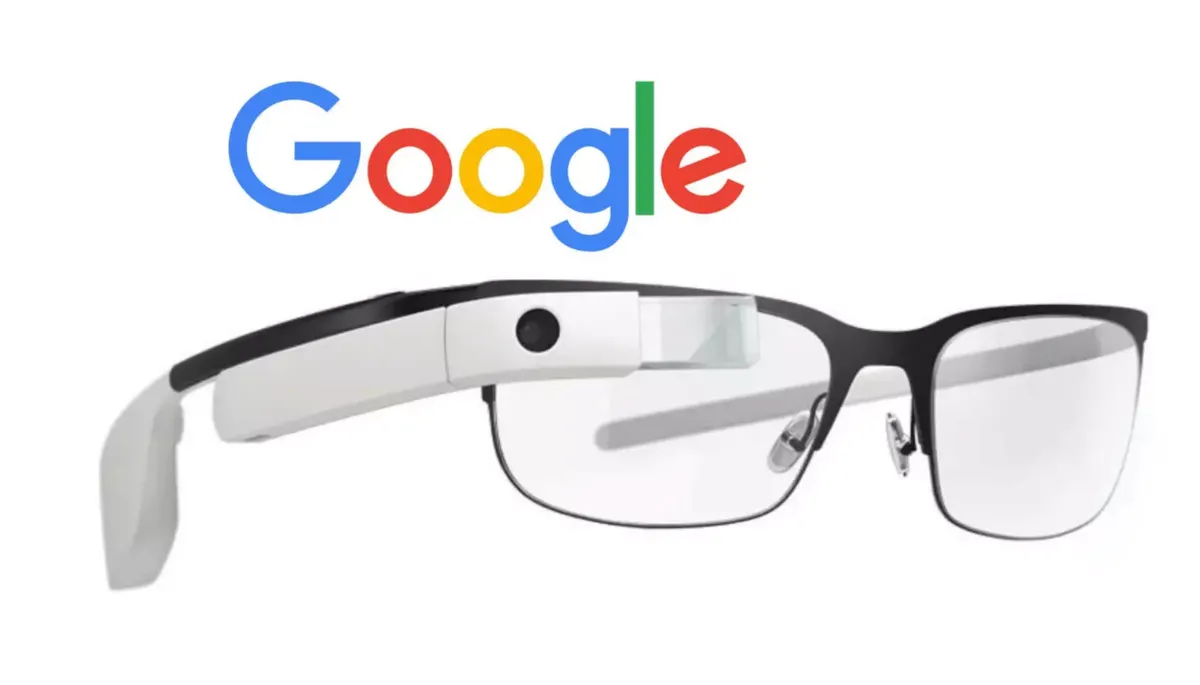
Launch price: $1,500 (Explorer Edition) · Fate: Consumer version killed 2015; Enterprise Edition survived
Google Glass is the founding case study for AI wearable failures - so significant that it coined a term. "Glasshole" entered the dictionary as a pejorative for Glass wearers who made others uncomfortable. The device launched in 2012 as an Explorer Edition for developers and tech enthusiasts at $1,500, with a planned consumer launch that never came. Google quietly killed the consumer product in 2015.
Glass failed for reasons that still apply to every camera-equipped wearable today:
The camera anxiety problem: People didn't know if they were being recorded. The transparent prism display meant it was impossible to tell from the outside whether Glass was capturing video. This created genuine social friction in restaurants, bathrooms, and private spaces that Glass wearers couldn't resolve with social norms - because no social norms existed yet for face-worn cameras.
The "cyborg" problem: Glass looked unmistakably like a technology device. There was no version of Glass that didn't immediately identify the wearer as a tech early adopter. In 2012-2014, that attracted attention that most people didn't want.
Battery life under 4 hours with active use - the same constraint smart glasses still struggle with today
No compelling use case that justified the friction - getting directions slightly faster than looking at your phone wasn't worth the social cost
The enterprise version survived and is still sold today for warehouse and industrial applications where the social friction concerns don't apply. The consumer lesson: a camera on your face requires either social invisibility (like Ray-Ban Meta) or a use case so compelling it overcomes the social friction. Glass had neither in 2012.
4. Snap Spectacles - Four Generations of Promising the Future
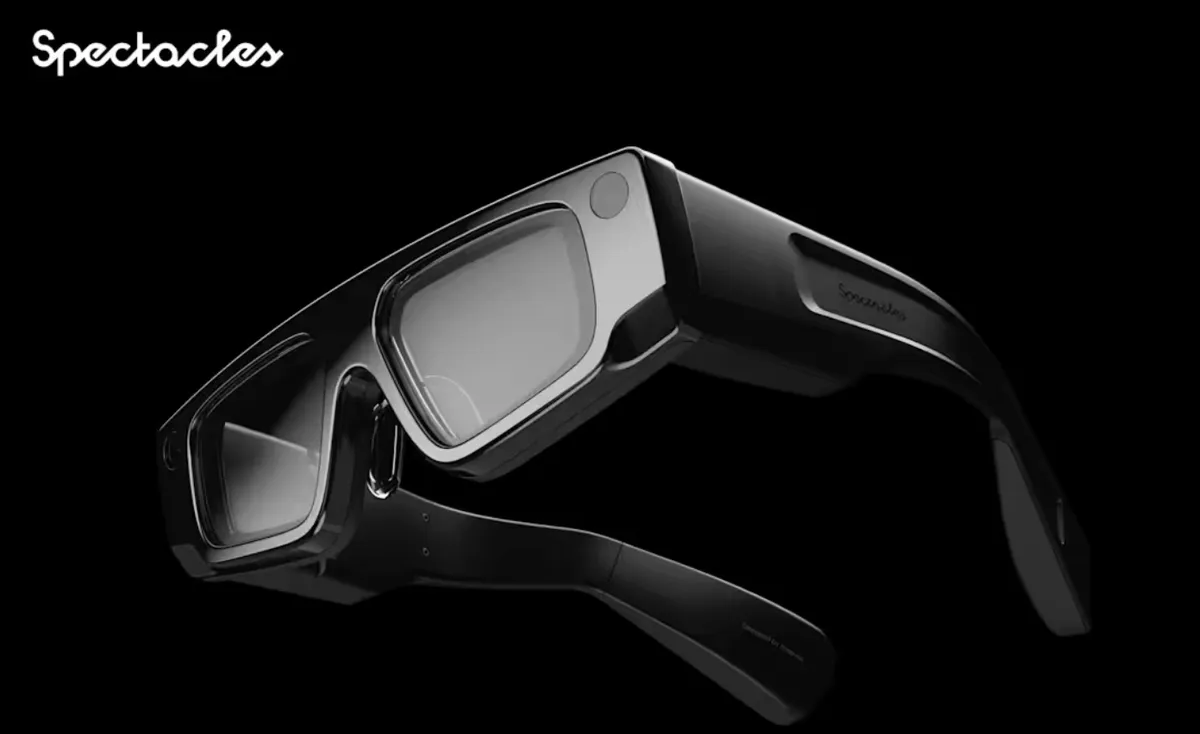
First launch: 2016 · Current status: Spectacles 5 (developer-only, not consumer release)
Snap has launched five generations of Spectacles since 2016, and none has become a mass market success. The original Spectacles were a clever camera glasses product that recorded circular videos - genuinely novel at the time. They sold via quirky yellow vending machines that created real buzz. They also accumulated massive overstock that Snap wrote off for $40 million.
Each subsequent generation added AR capability - the Spectacles 4 and beyond have genuine augmented reality displays - but Snap has retreated to developer-only distribution rather than consumer retail. The AR Spectacles are powerful technology; they're also uncomfortable for extended wear, expensive for consumers, and require a strong Snapchat use case to justify purchase.
Snap's repeated attempts illustrate a different failure mode than Humane's: a technically improving product that hasn't found the mainstream market fit despite years of iteration. The hardware isn't the problem - the compelling consumer use case remains elusive.
5. Rabbit R1 - Failed Launch, Partial Recovery
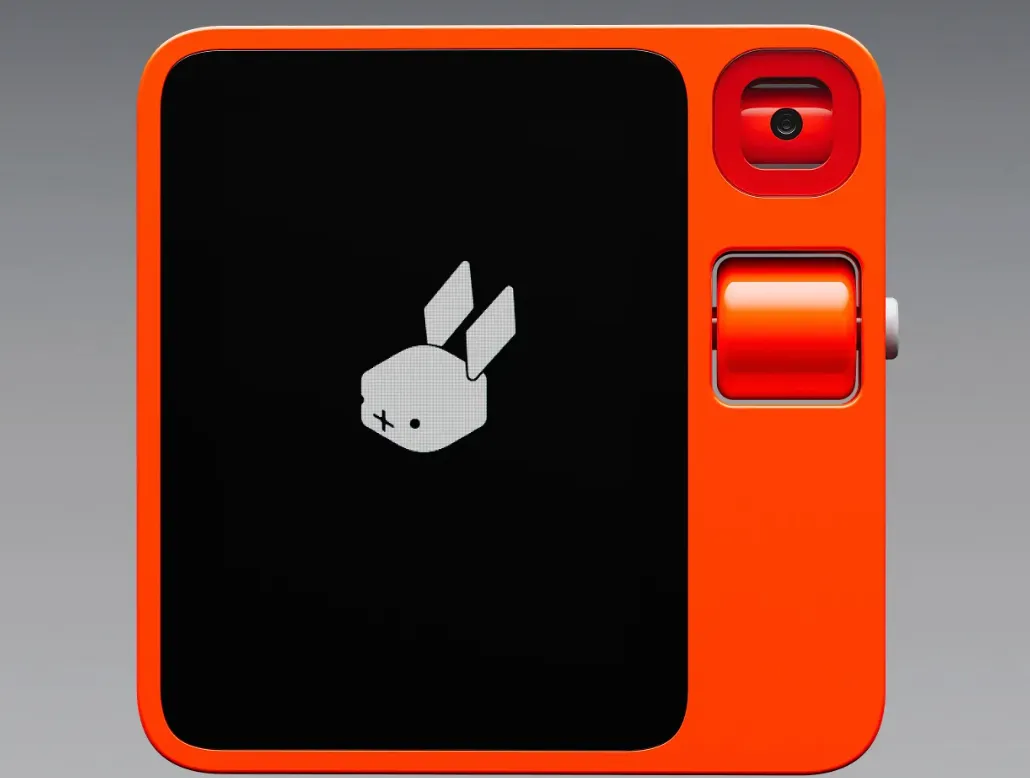
Launch price: $199 · Current status: Alive, improved, but not a mainstream success
The Rabbit R1 is an unusual entry on this list because it didn't completely fail - but its launch in April 2024 was broadly panned by reviewers, and the gap between the marketing claims and the actual product was significant enough to include here.
The R1 was marketed around its Large Action Model (LAM) - AI that could operate apps on your behalf, like booking an Uber or ordering from DoorDash, by having been "trained" on how to use those apps. At launch, the LAM implementation was minimal and unreliable. The "training on apps" turned out to be largely a web wrapper that accessed services through browsers, not true trained behavior models. Battery life was poor. The rabbit hole social platform was underdeveloped.
Rabbit pushed substantial software updates through 2025 and into 2026 that improved the Vision mode (which genuinely works now), expanded the task capabilities, and refined the core AI assistant quality. The R1 in mid-2026 is meaningfully better than the R1 at launch. But the first-impression damage was real, and the company never achieved the cultural moment it needed to become a mainstream AI device category.
The Lesson: Launch quality matters enormously for hardware. A phone app can ship with bugs and patch them silently. A physical product ships once to reviewers who write permanent public records. The R1's launch reviews live forever - and even as the product improved, the initial reputation shaped public perception of the entire "AI device" category negatively.
6. Doppler Here One - AI Earbuds Before AI Earbuds Were Ready
Launch price: $299 · Fate: Company closed, product discontinued 2019
Doppler Labs launched the Here One earbuds in 2016 with a compelling vision: earbuds that used AI to let you control the real world's audio. Turn down the volume of a subway car. Amplify a conversation happening across a restaurant. Apply EQ to the sounds around you in real-time. The concept was genuinely futuristic and correctly predicted where hearable AI would go.
The execution was constrained by 2016 hardware. The battery lasted around two hours. The app was essential for function but temperamental. The AI audio processing required processing power that drained the battery rapidly. The company closed in 2019, unable to raise sufficient funding to develop a second generation that could deliver on the original promise with better hardware.
Here One's failure was almost entirely a technology timing problem, not a concept problem. In 2026, Sony WH-1000XM6's Adaptive Sound Control does essentially what Doppler promised - and does it reliably on 30-hour battery life. The product was right; the technology wasn't ready.
The Common Failure Patterns
Failure Pattern | Examples | Warning Signs to Watch For |
|---|---|---|
Subscription dependency + startup risk | Humane AI Pin, Amazon Halo | Required sub + unproven company + hardware that can't function offline |
Primary feature that doesn't work in real conditions | Humane AI Pin laser, Google Glass camera anxiety | Features demonstrated only in controlled demo environments |
Launch-day quality gap | Rabbit R1, Snap Spectacles v1 | Reviewer units arrive days before launch with "be gentle, it'll improve" framing |
Technology not ready for the concept | Doppler Here One | Battery life that can't sustain the primary use case |
Social friction unaddressed | Google Glass | No explanation for how others will feel about the device |
How to Protect Yourself From the Next AI Gadget Flop
Wait for independent reviews from long-term users - not just launch-day takes. Hardware problems often emerge after 30-60 days of real use that CES demos never surface.
Calculate the subscription dependency - if the device is worthless without the cloud service and the cloud service requires an ongoing subscription from a startup, you are one funding round away from a bricked gadget.
Ask: "What happens when the primary feature fails?" - For the AI Pin, the laser projector in sunlight. For Google Glass, the social friction. If the only answer is "the device does nothing," that's a red flag.
Prefer established companies for high-priced AI gadgets - Amazon, Samsung, Sony, Meta, Garmin, Apple have track records of hardware support and aren't going to disappear. First-time hardware startups are higher risk, especially for subscription-dependent AI.
Be skeptical of "post-smartphone" framing - the phone has survived every challenger because it does too many things too well. AI gadgets that complement phones succeed; AI gadgets that try to replace phones face near-impossible odds.
Bottom Line: The AI gadget failures share a common DNA - overambitious claims, critical hardware constraints, subscription dependencies from companies that couldn't sustain them, and features that didn't survive contact with real-world conditions. The successes (Oura Ring, Ray-Ban Meta, WHOOP, Garmin, Roborock) are distinguished by solving a specific problem extremely well, from companies with the resources to support the product long-term. When evaluating the next hyped AI gadget, ask which pattern it fits.
Shop Trusted AI Gadgets →Shop Ray-Ban Meta (No Subscription) →Browse All Smart Wearables →
Product status information based on publicly available reporting as of June 2026. Company acquisition and discontinuation details sourced from published news coverage.
Affiliate Disclosure: As an Amazon Associate we earn from qualifying purchases. Links on this page are affiliate links - we earn a commission at no additional cost to you. We only recommend products we'd genuinely consider buying ourselves.