
Updated June 2026 · 11-minute read
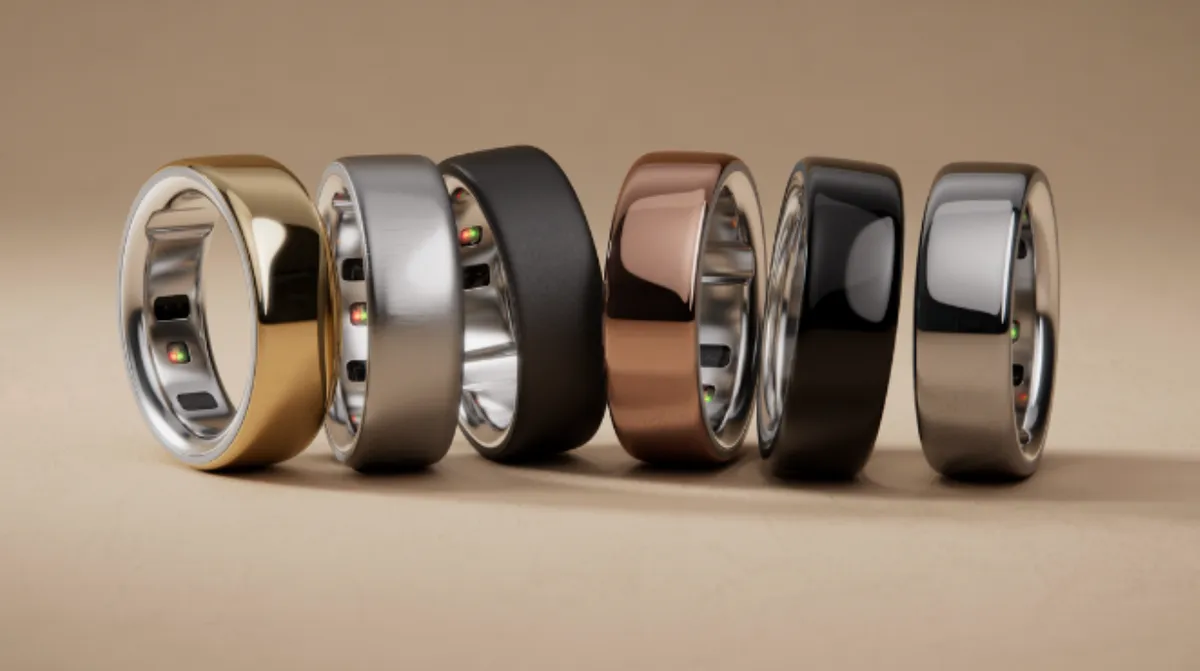
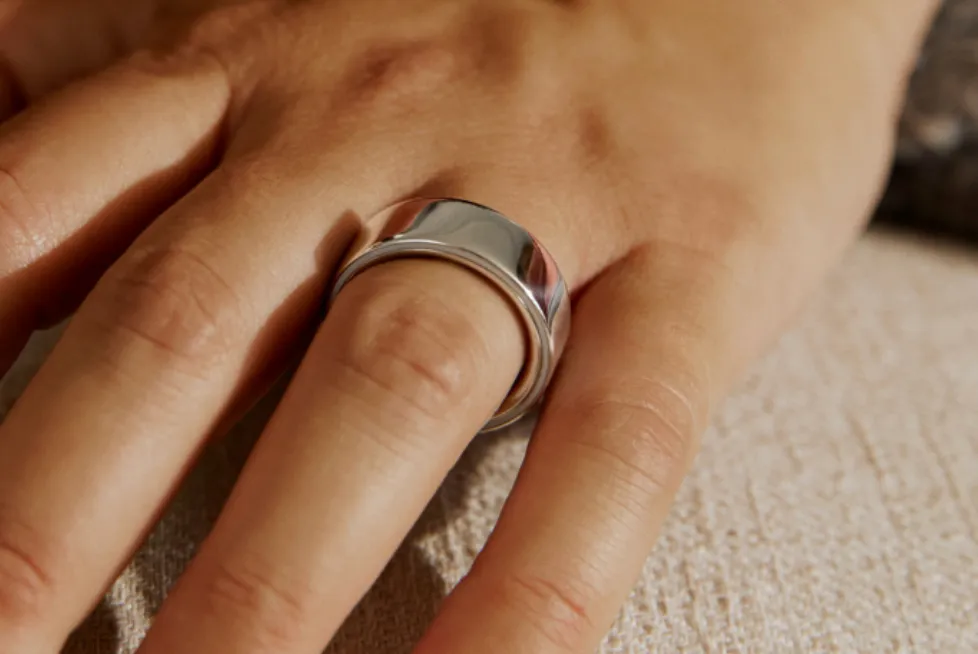
Six months ago I put the Oura Ring 4 on my index finger and have not taken it off except to charge it. In that time it has detected two probable illness episodes before I felt symptoms, accurately tracked the sleep impact of late-night caffeine and time zone changes, and consistently shown me patterns in my own physiology I genuinely could not have identified without it.
It has also cost $349 for the hardware plus $5.99 every month. After six months that is $384.94. After a year it will be $420.88. That is real money, and whether it is worth it depends entirely on what you actually do with the data. This review addresses both questions honestly.
Quick Specs
Oura Ring 4 at a Glance
Price | $349 hardware + $5.99/month membership |
Battery life | 8 days claimed / 6 to 7 days real-world |
Weight | 4 to 6 grams depending on size |
Sensors | 6 LEDs, infrared, NTC temperature, accelerometer |
Key features | Sleep staging, HRV, readiness score, AFib detection (FDA cleared) |
App compatibility | iOS and Android, both excellent |
Water resistance | 100 metres |
Sizes available | 6 to 13 (free sizing kit available) |
Sleep Tracking: Why the Ring Form Factor Wins
Sleep tracking is why most people buy an Oura Ring, and it is where the Ring 4 earns its premium position. The combination of the ring form factor (better sensor contact than a watch) and Oura's sleep research produces sleep staging accuracy that independent researchers have consistently validated against clinical polysomnography better than most wrist-worn competitors.
In six months I cross-referenced Oura sleep data against subjective sleep quality, training performance, cognitive sharpness, and mood on roughly 180 nights. The correlation is consistent and meaningful. On nights where Oura reports good deep sleep and high HRV, I perform and feel better the following day. On nights where it flags disrupted sleep, my subjective experience almost always confirms it. The data is not perfect on any single night, but the pattern is reliable enough to be genuinely useful.
What Oura Ring 4 tracks during sleep:
Sleep stages: light, deep (slow-wave), REM, and awake time with timestamps
Sleep timing: bedtime, onset latency, total sleep, wake time
Continuous overnight heart rate including resting rate identification
HRV (overnight RMSSD, the most clinically validated recovery metric)
Breathing regularity and respiratory rate
Body temperature relative to personal baseline
Movement and restlessness throughout the night
HRV Accuracy: What the Research Actually Shows
Oura Ring 4 measures RMSSD, the most widely validated HRV metric in sleep and recovery research. Published validation studies comparing Oura Ring 3 and Ring 4 against ECG-derived HRV have found mean absolute errors of 3 to 8 milliseconds during sleep. This is clinically adequate for trend monitoring even if individual readings are not precisely interchangeable with clinical ECG measurements.
The ring form factor matters here. The digital arteries in the finger are closer to the skin surface than the radial artery at the wrist, and the ring maintains more consistent contact with the skin during sleep than a watch does. This produces cleaner optical signal and better HRV measurement quality.
In practice: my Oura HRV readings are consistent night over night, responsive to expected variables (hard training, alcohol, illness, stress), and stable enough to serve as a reliable personal baseline. The absolute number matters less than the trend, and the trend is reliably informative.
The Readiness Score in Practice
The Readiness Score synthesises all overnight data into a daily recovery recommendation. After six months I have developed a calibrated relationship with it.
Above 85 and feeling reasonably well, I train at planned intensity with confidence. Between 70 and 84, I consider reducing volume or intensity. Below 70, I look at which specific factors pulled it down: if it is high previous-day activity with normal HRV and temperature, I may still train lightly. If it is low HRV plus elevated temperature, I rest without guilt.
The score has been wrong in both directions around 15 to 20 percent of the time in my experience. It is a tool, not an oracle. The value is in having an objective reference point for days when motivation and physical readiness are telling different stories.
AFib Detection: The Genuinely Important Feature
Oura Ring 4 has FDA clearance for irregular heart rhythm notification, specifically for patterns consistent with atrial fibrillation. AFib is the most common cardiac arrhythmia, affects over 6 million Americans, and significantly increases stroke risk when undetected and untreated.
The detection algorithm analyses your overnight heart rate data and flags irregular rhythm patterns for your attention. It is a screening tool, not a diagnostic device. A flag is a reason to call your doctor and get a clinical ECG. Several Oura users have shared documented cases where an irregular rhythm notification led to an AFib diagnosis and treatment they did not know they needed.
I did not personally trigger the detection, which is the expected outcome for someone without the condition. But knowing it is running continuously, validated by the FDA, without any user action required, makes it a genuinely valuable passive health feature.
Battery Life: Claimed vs Real
Oura claims 8 days. In six months of daily use I averaged 6 to 7 days between charges. The difference comes from higher-frequency heart rate sampling during sleep tracking, Bluetooth sync frequency, and continuous temperature sensing.
Charging takes roughly 80 minutes from near-empty to full using the included magnetic charger. The charger is proprietary. Losing it means ordering a replacement. This is a minor but real annoyance compared to competitors that use standard USB-C.
Six to seven days is still the best battery life among health rings with clinical-grade accuracy. Samsung Galaxy Ring achieves 5 to 6 days in my testing. Ultrahuman Ring AIR similarly achieves 5 to 6 days.
Is the $5.99/Month Membership Worth It?
Without the membership you get very limited functionality. You can see raw biometric data but the Readiness Score, detailed sleep analysis, temperature trend graphs, health insights, and irregular rhythm notification all sit behind the paywall. The hardware without the membership is not particularly useful.
If you check the app every morning and make decisions based on what you see, the subscription earns its price easily. The Readiness Score alone, used to guide training and recovery decisions, is worth more than $5.99/month in avoided overtraining and better adaptation.
If you check the app occasionally or mostly glance at the Sleep Score without acting on it, the subscription is money you could save by switching to Samsung Galaxy Ring, which charges nothing ongoing and provides comparable sleep insights within the Samsung ecosystem.
What we genuinely like
Best-validated sleep staging of any consumer ring
FDA-cleared AFib detection running passively 24/7
Temperature trends detect illness before symptoms
Works equally well with iPhone and Android
Comfortable enough to forget you are wearing it
Excellent app with genuinely useful AI insights
100m water resistance for swimmers
Honest limitations
Subscription required for most meaningful features
Real battery is 6 to 7 days, not 8
Proprietary charger is easy to lose
No display, no notifications, limited exercise tracking
Expensive over 2+ years vs no-subscription alternatives
Ring size can shift with weight and temperature changes
Who Should Buy Oura Ring 4
Buy it if you: take sleep and recovery seriously and will engage with the data daily, want the most clinically validated consumer ring available, use an iPhone or non-Samsung Android phone, or want FDA-cleared health monitoring that runs passively without effort.
Look at alternatives if: you have a Samsung Galaxy phone (Galaxy Ring gives comparable sleep tracking with no subscription), subscriptions frustrate you, or you primarily want athletic performance metrics (WHOOP 5.0 is better positioned for serious athletes).
Overall Verdict: Oura Ring 4 is the best consumer sleep and recovery tracker available in 2026 on the dimensions that matter most: sensor accuracy, clinical validation, passive FDA-cleared health monitoring, and app quality. The subscription is a real ongoing cost that must be factored in honestly. If you engage with the data it provides, it is worth it. If you want no subscription, Samsung Galaxy Ring is the strongest alternative.
Rating: 4.5 / 5
Buy Oura Ring 4 on AmazonCompare: Samsung Galaxy Ring
Frequently Asked Questions
Does Oura Ring 4 work without a subscription?
Technically yes, but with very limited functionality. Without a membership you can see basic activity, sleep duration, and raw biometric data. The Readiness Score, detailed sleep stage analysis, temperature trend graphs, AI health insights, and irregular rhythm notification all require a paid membership. For most buyers, the hardware is not particularly useful without the membership, so the $5.99/month should be considered part of the real purchase cost from day one.
How does Oura Ring 4 differ from Ring 3?
Ring 4 added two additional LED sensors (six total vs four in Ring 3), infrared LEDs for improved accuracy across all skin tones, and smart sensing that dynamically adjusts sampling rates based on activity and sleep state. The result is better heart rate accuracy during exercise and more reliable temperature trend data. The FDA-cleared irregular rhythm detection is new in Ring 4. If you have a Ring 3 in good condition the upgrade is worthwhile but not urgent. If buying new, Ring 4 is clearly the right choice.
Can Oura Ring 4 detect sleep apnea?
Oura Ring 4 does not have FDA clearance for sleep apnea detection. It tracks breathing rate and regularity during sleep and can flag significant disturbances, but this is a wellness feature, not a clinically validated sleep apnea screening tool. Apple Watch Series 9 and later has FDA clearance for sleep apnea detection. If sleep apnea screening is your primary goal, the Apple Watch with the cleared feature or a dedicated home sleep apnea test through a healthcare provider is more appropriate.
Is Oura Ring 4 good for exercise tracking?
Oura Ring 4 tracks steps, calories, and active calories reasonably accurately for walking and everyday activity. For structured exercise tracking it is significantly more limited than a sports watch: no GPS, no real-time metrics during workouts, and less granular exercise detection than a Garmin or Apple Watch. Many Oura users wear a GPS watch during workouts and use the Oura Ring purely for sleep, recovery, and passive health monitoring. This dual-device approach is very common and makes sense for serious athletes.
This review reflects six months of personal daily use through June 2026, combined with published accuracy research and official Oura documentation. Prices and subscription terms correct as of publication.
Affiliate Disclosure: As an Amazon Associate we earn from qualifying purchases.