
Every flagship phone released in 2025 and 2026 carries "AI" somewhere in its marketing. Most of it is legitimate - these devices genuinely run machine learning models locally that would have required a cloud server three years ago. But the features, hardware, and philosophies vary dramatically between platforms, and understanding what each one actually does helps you pick the right phone rather than the most-hyped one.
This guide covers what AI processing in phones actually means in April 2026, how Apple, Samsung, and Google approach it differently, which specific features matter for different types of users, and what's still coming later this year.
What Separates a Real AI Phone from Marketing Fluff
How We Evaluated
- All three flagships (iPhone 17 Pro, Galaxy S26 Ultra, Pixel 10 Pro) used as daily drivers for 30+ days each
- AI features tested with identical prompts and tasks across all platforms
- On-device vs cloud processing verified by testing in airplane mode
- Battery impact of AI features measured over full workdays with and without heavy AI use
The term "AI phone" lost meaning around 2023 when every manufacturer started stamping it on mid-range devices with no dedicated hardware. The meaningful distinction is whether a phone runs AI models on-device using dedicated silicon - a Neural Processing Unit (NPU) - or whether it simply sends your data to a cloud server and displays the result.
On-device AI requires an NPU: specialized silicon designed for matrix math operations at a fraction of the power cost of a general-purpose CPU or GPU. The three main chips in flagship phones in 2026 each take a different approach to this hardware:
Apple A19 Pro (iPhone 17 Pro / Pro Max) - next-generation Neural Engine with expanded on-device model capacity versus the A19 Pro, optimized for Apple's Private Cloud Compute offload model
Apple A19 (iPhone 17 / iPhone Air / iPhone 17e) - same Neural Engine architecture as the Pro, same 8 GB RAM floor for Apple Intelligence support
Qualcomm Snapdragon 8 Elite Gen 5 (Samsung Galaxy S26 series) - Hexagon NPU, the highest throughput of any shipping Android phone chip as of early 2026, paired with 12 GB RAM standard across the S26 lineup
Google Tensor G5 (Pixel 10 series) - custom TPU-derived design with approximately 60% more TPU throughput than the Tensor G5, highly optimized for Google's specific on-device models including Gemini Nano
Raw TOPS figures are poor proxies for real performance because they measure different operations under different conditions. What matters is which models each chip can run locally, how efficiently they run, and how well the manufacturer has integrated those models into the OS.
Apple Intelligence: Privacy-First, OS-Deep Integration
Apple's philosophy is to process as much as possible on the device and, when cloud offload is necessary, route it through Private Cloud Compute - Apple's privacy-preserving server infrastructure where requests are not logged or stored. The result is a system that runs across every Apple app and most third-party apps without requiring you to open a dedicated AI interface.
As of iOS 26.x (current release), Apple Intelligence covers:
Writing Tools - Available in any text field across any app. Select text to rewrite, proofread, summarize, adjust tone, or make it more concise or detailed. Works in third-party apps via the standard text selection menu.
Notification Priority and Summaries - The system identifies time-sensitive notifications and groups lower-priority ones with AI-generated summaries so you see the key point rather than reading every alert.
Smart Reply in Mail and Messages - Suggests context-aware replies generated from the message thread, not generic canned responses.
Clean Up in Photos - Remove distracting objects from photos with background reconstruction, integrated natively into the Photos app.
Memory Movies - Describe a memory in natural language and the system assembles a video with relevant photos and music.
Visual Intelligence - On all iPhone 17 models with the Camera Control button, press and hold to identify objects, plants, animals, dishes, or text in your camera view without opening a browser.
Siri on-screen awareness - Siri can read your screen content and act on it. "Send this to Dad" while viewing a photo works without further explanation.
App Intents - Siri can take actions inside third-party apps that have adopted the App Intents API, including booking rides, editing documents, and queuing music.
Gemini-powered Siri - Apple has announced that Siri will gain Gemini model integration in iOS 27, expected September 2026, substantially expanding conversational capability and multi-step agentic behavior.
ChatGPT integration - When Apple Intelligence can't handle a query locally, Siri can hand off to ChatGPT with an opt-in confirmation prompt.
Genmoji and Image Playground - Generate custom emoji from text descriptions, or create illustrative images in a sketch or animation style.
Apple Intelligence requires an A18 Pro chip or newer. The iPhone 17 lineup - including the standard iPhone 17 at $799, the iPhone Air at $999, the iPhone 17 Pro at $1,099, and the iPhone 17 Pro Max at $1,199 - all run the A19 and A19 Pro chips and get the full feature set. The iPhone 17e ($599, launched March 2026) also supports Apple Intelligence on its A19 chip.
Samsung Galaxy AI: Broad Device Support, Hybrid Processing
Samsung takes a hybrid approach - some Galaxy AI features run entirely on the Snapdragon 8 Elite Gen 5 chip, while others use Samsung's cloud servers or Google's Gemini infrastructure. This gives Galaxy AI a wider feature set and supports more devices, but certain tasks send data off your phone.
Galaxy AI runs on One UI 8.5 across the S26 lineup and has been back-ported to S25, S24, S23, and select Z Fold and Z Flip models. The Galaxy S26 series launched in March 2026 at $799 (S26), $999 (S26+), and $1,299 (S26 Ultra), all running Android 16.
The core Galaxy AI features as of One UI 8.5:
Circle to Search - Draw a circle around anything on your screen to search it instantly via Google without leaving your current app. Supports video content, text within images, music identification, and translation overlay.
Live Translate - Real-time translation during phone calls in 16+ languages, with both sides translated simultaneously.
Chat Assist - Adjusts the tone, formality, and language of messages before sending, available through the Samsung Keyboard system-wide.
Note Assist - Summarizes, formats, auto-titles, and translates notes in Samsung Notes, with on-device processing for notes under ~2,000 words on S26.
Transcript Assist - Records calls or meetings and produces a full transcript with speaker labels, then generates a summary with action items.
Generative Edit - Move, remove, or resize objects in photos with AI-generated background fill. More capable on S26 with the Snapdragon 8 Elite Gen 5.
Now Brief and Now Bar - Proactive AI summaries of your day pulled from calendar, email, and usage patterns, surfaced on your lock screen.
Galaxy Buds 4 Pro integration - The Galaxy S26 pairs with Galaxy Buds 4 Pro ($249, March 2026) for live call translation and enhanced audio AI.
Gemini integration - Gemini is the default assistant on Galaxy S26 for complex queries, replacing Bixby for most interactions.
Google Pixel AI: The Tightest Hardware-Software Integration
Google builds its own chip specifically around its AI models. The Tensor G5 in the Pixel 10 series handles Gemini Nano on-device with approximately 60% more TPU throughput than the Tensor G5, which means larger models can run locally than on any previous Pixel.
The Pixel 10 ($799), Pixel 10 Pro ($999), and Pixel 10 Pro XL ($999) all launched in early 2026, running Android 16. The Pixel 10a ($499, March 2026) brings most Pixel AI features to a more affordable price point.
Pixel AI features as of Android 16:
Magic Eraser and Reimagine - Remove objects or replace backgrounds using generative AI fill. Reimagine lets you describe what you want in place of an object or background with a text prompt.
Best Take - Composites multiple burst shots to give everyone in a group photo their best expression.
Add Me - Takes two photos and combines them so the photographer appears in the final group shot.
Audio Magic Eraser - Identifies and reduces specific background sounds in videos: wind, crowd noise, traffic.
Call Screen and Hold for Me - Automated screening of unknown calls and on-hold detection, both running on-device using Gemini Nano.
Direct My Call - Transcribes phone tree menu options in real time so you can see the options visually.
Clear Calling - Real-time noise cancellation on the other person's audio during calls.
Pixel Recorder AI summaries - Transcribes recordings with speaker labels and generates a summary on-device.
Pixel Screenshots - Indexes your screenshots semantically so you can search by content rather than scrolling through a gallery.
Circle to Search - Available on all Pixel 10 models, same Google-powered feature as on Samsung.
Head-to-Head Comparison: AI Phones in April 2026
Feature Category | iPhone 17 Pro (iOS 26.x) | Galaxy S26 Ultra (One UI 8.5) | Pixel 10 Pro (Android 16) |
|---|---|---|---|
Chip | A19 Pro | Snapdragon 8 Elite Gen 5 | Tensor G5 |
NPU / AI silicon | Next-gen Neural Engine | Hexagon NPU (Gen 5) | Custom TPU (60% more than G4) |
On-device AI RAM | 8 GB (Pro) / 8 GB (standard) | 12 GB (all S26 models) | 16 GB (Pro) / 12 GB (standard) |
OS version | iOS 26.x (iOS 27 Sep 2026) | Android 16 + One UI 8.5 | Android 16 |
Primary AI assistant | Siri + Apple Intelligence | Gemini + Galaxy AI | Gemini + Pixel AI |
Writing assistance | Writing Tools (system-wide) | Chat Assist, Note Assist | Gboard AI, limited system-wide |
Photo AI | Clean Up, Memory Movies, Visual Intelligence | Generative Edit, Sketch to Image, Generative Background | Magic Eraser, Reimagine, Best Take, Add Me |
Call AI | Live Voicemail (visual) | Live Translate, Transcript Assist | Call Screen, Hold for Me, Direct My Call, Clear Calling |
Privacy approach | On-device + Private Cloud Compute | Hybrid (on-device + Samsung/Google cloud) | On-device Gemini Nano + Google cloud |
Starting price (April 2026) | $1,099 (Pro) / $799 (standard) | $1,299 (Ultra) / $799 (S26) | $999 (Pro) / $799 (standard) |
On-Device vs. Cloud Processing: Why It Matters
The on-device vs. cloud distinction affects three practical things: speed, privacy, and offline availability.
Speed: On-device processing has no network latency. Writing Tools on iPhone and Pixel's Call Screen respond in under a second because nothing leaves the chip. Cloud-dependent features can stall on slow connections.
Privacy: Data processed on-device never leaves your phone. Apple's Private Cloud Compute is the closest cloud alternative - Apple has published the server software so security researchers can audit it, and requests are cryptographically unlinkable to your Apple ID. Samsung's cloud approach is less transparent about what's retained.
Offline availability: On-device features work on an airplane. Circle to Search, Live Translate call features, and Gemini queries all require a connection. Apple Intelligence writing tools work offline; ChatGPT handoffs obviously don't.
Phones That Don't Have Meaningful AI
Not every phone with "AI" in its spec sheet delivers useful AI features. These categories don't qualify:
iPhone 14 and older - No Apple Intelligence at all. The A15 Bionic and older chips lack the Neural Engine headroom required.
Standard iPhone 15 / 15 Plus - Same exclusion. Apple drew the line at A18 Pro and later, so these A16 Bionic phones are excluded.
Samsung Galaxy A36 and below - Have "AI" branding but run Exynos chips without the NPU for on-device inference. Galaxy AI features are cloud-only at best.
Most Android mid-range (under $400) - Snapdragon 7s Gen 3 and equivalent chips lack the NPU throughput for on-device LLM inference.
Pixel 10a - Runs Tensor G5 with 8 GB RAM; supports most Pixel AI features but not the full Tensor G5 capabilities of the Pixel 10 series.
Buying Advice by Use Case
Best for Privacy-Conscious Users: iPhone 17
Apple's Private Cloud Compute architecture is the most rigorously audited approach to cloud AI processing available in a consumer phone. If keeping your data local and your processing transparent matters, the iPhone 17 or iPhone 17 Pro is the correct choice. The standard iPhone 17 at $799 gets the full Apple Intelligence feature set on the A19 chip.
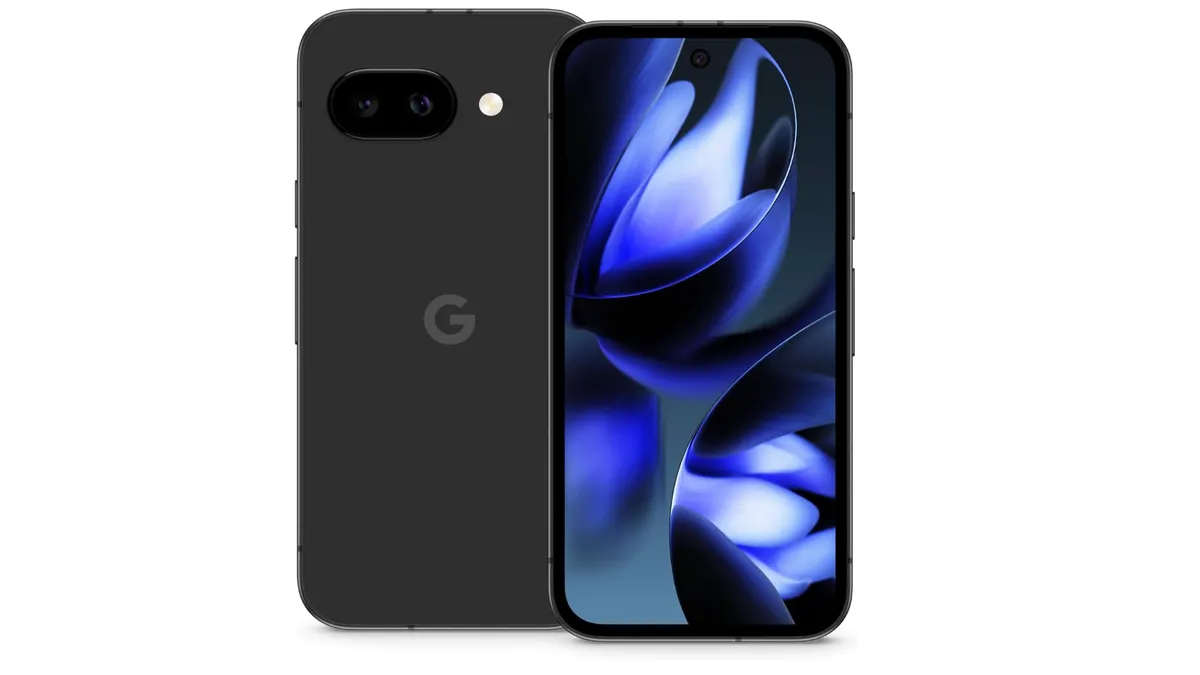
Best for Photography: Pixel 10 Pro
Google's computational photography pipeline remains the benchmark. Best Take, Add Me, Audio Magic Eraser, and Reimagine solve real problems that iPhone's Clean Up doesn't address. The Tensor G5's increased TPU throughput means more of these operations run fully on-device and faster than on the Pixel 10 Pro. At $999, the Pixel 10 Pro is the most capable photo phone available.
Best for Productivity and Multilingual Use: Galaxy S26+
Live Translate, Transcript Assist, and Note Assist make the S26 series the strongest choice for people who work across languages or need meeting documentation. The S26+ at $999 hits the best balance of screen size, battery, and Galaxy AI capabilities in the lineup. Galaxy Buds 4 Pro ($249) rounds out the communication suite with ANC 2.0 and head gesture controls.
Best Value AI Phone: iPhone 17e or Pixel 10a
The iPhone 17e at $599 (launched March 2026) runs the A19 chip and delivers the full Apple Intelligence feature set at a significantly lower price than the standard iPhone 17. The Pixel 10a at $499 (March 2026) brings most Pixel AI features - Call Screen, Magic Eraser, Circle to Search - to the best price in the Pixel lineup. Both are strong entry points.
If You're Upgrading from an Older Phone
If you're on an iPhone 14 or 15 (non-Pro), upgrading to an iPhone 17 is the fastest path to AI features - same ecosystem, dramatically expanded capabilities. If you're on an older Android, the Pixel 10 at $799 or the Galaxy S26 at $799 are both clean entry points with guaranteed multi-year AI updates.
What's Coming Later in 2026
iOS 27 (September 2026) - The current iOS 27 public beta shows deeply integrated Gemini-powered Siri, multi-step agentic app control, Match My Style in Writing Tools, and generative photo editing inside Photos. The full release will add features Apple has not yet announced publicly.
Android 17 (in beta) - The next major Android release is currently in beta, expected to further standardize the Android AI Core API and expand on-device model capabilities across Pixel and Snapdragon devices uniformly.
Galaxy AI One UI 9 - Samsung has previewed agentic AI features where Galaxy AI would take multi-step actions across apps - booking a restaurant, adding it to calendar, drafting the message to the group - without manual intervention at each step.
Apple Intelligence expansion - Apple has been expanding Private Cloud Compute capacity, expected to enable tasks currently requiring ChatGPT handoff to be handled within Apple's own system in iOS 19.
Sources
Frequently Asked Questions
Do I need the Pro model to get AI features?
Not on iPhone 17 or Galaxy S26 - the standard models get the full AI feature set from their respective platforms. On Pixel 10, the standard model gets most features, but the Pro runs more of them on-device using the full Tensor G5 capability. The iPhone Air ($999) sits between standard and Pro and gets the complete Apple Intelligence feature set on its A19 chip.
Can AI phone features work without an internet connection?
Core on-device features work offline: Apple Intelligence writing tools, Pixel's Call Screen, and Galaxy AI's basic photo editing. Features that depend on cloud models - ChatGPT integration on iPhone, Gemini queries on Pixel and Samsung, Circle to Search, Live Translate calls - require a connection. The trend is toward more on-device capability with each chip generation.
Does using AI features drain the battery faster?
Sustained AI workloads like generating a Memory Movie or processing a long transcript do consume significant power for the duration of the task. Passive features like notification summaries run as lightweight background processes with negligible battery impact. Real-world testing shows roughly 5-8% additional battery drain on a heavy AI use day compared to a day without those features active.
Are AI features available in all countries?
No. Apple Intelligence launched in English first and has been rolling out additional languages through iOS 26.x updates. Some features remain English-only in certain regions. Samsung's Live Translate supports more languages more broadly. Pixel AI features vary by region and carrier. Android 16 with full Pixel AI is available in most major markets from launch.
Is the AI on these phones actually a large language model?
Yes, with caveats. Apple runs a roughly 3B parameter model on-device for most Apple Intelligence tasks, with larger models handled via Private Cloud Compute. Google runs Gemini Nano on Pixel 10 locally with expanded model size enabled by the Tensor G5. Samsung uses a mix of smaller on-device models and cloud-hosted Gemini. None of these match the full Gemini 1.5 Pro or GPT-4o, but they are genuinely language models rather than older-generation ML classifiers.
Will my current phone get AI features through a software update?
Only if it has the required NPU hardware. Software updates have brought Galaxy AI to older Samsung models back to the S23 series. Apple has been consistent that Apple Intelligence requires A18 Pro or newer hardware - no software update will bring it to older iPhones. Google's Pixel Feature Drops have expanded some AI features to Pixel 8 and 9 series, but the full Tensor G5 AI capabilities of the Pixel 10 require the new hardware.