Choosing an AI gadget in 2026 is not really a hardware decision - it is a platform decision. Every major device purchase ties you into a web of compatible services, cross-device features, and proprietary protocols that either work seamlessly together or create friction at every interaction. The smartphone you chose two years ago has already partially made this decision for you. But as you add smart speakers, wearables, cameras, and home automation devices, the ecosystem you are building toward matters more than any individual product specification.
This guide compares the four dominant ecosystems - Apple, Google, Amazon, and Samsung - as they stand in April 2026. We cover the hardware portfolio, AI assistant quality, home automation capabilities, lock-in mechanics, and the cross-cutting impact of the Matter 1.5 protocol that has complicated the old ecosystem boundaries. At the end is a decision matrix to help you identify which platform matches your life.
What Makes an Ecosystem Different From a Product
How We Evaluated
- Each ecosystem tested in a real apartment with 15+ smart home devices
- Cross-platform compatibility verified with Matter-certified devices
- Voice assistant accuracy compared with 100 identical queries
- Setup complexity timed from unboxing to full functionality for each platform
An ecosystem is the set of benefits you get specifically from combining multiple products from the same platform - features that work only because the devices share protocols, data, and software infrastructure. AirDrop works because iPhone, iPad, and Mac share Apple's Continuity framework. Samsung Galaxy Ring's Energy Score AI is more accurate when paired with Galaxy Watch 8 because the two devices share health data through Samsung Health's unified model. Amazon Echo devices can act as a unified intercom system because they share the Alexa backend.

The key question for any ecosystem decision: how much of the value is delivered by individual devices, and how much by the combination? Platforms with high ecosystem-specific value reward users who go all-in. Platforms with lower ecosystem dependencies are more mix-and-match friendly.
Apple: The Tightest Integration, Highest Hardware Cost
The Hardware Portfolio
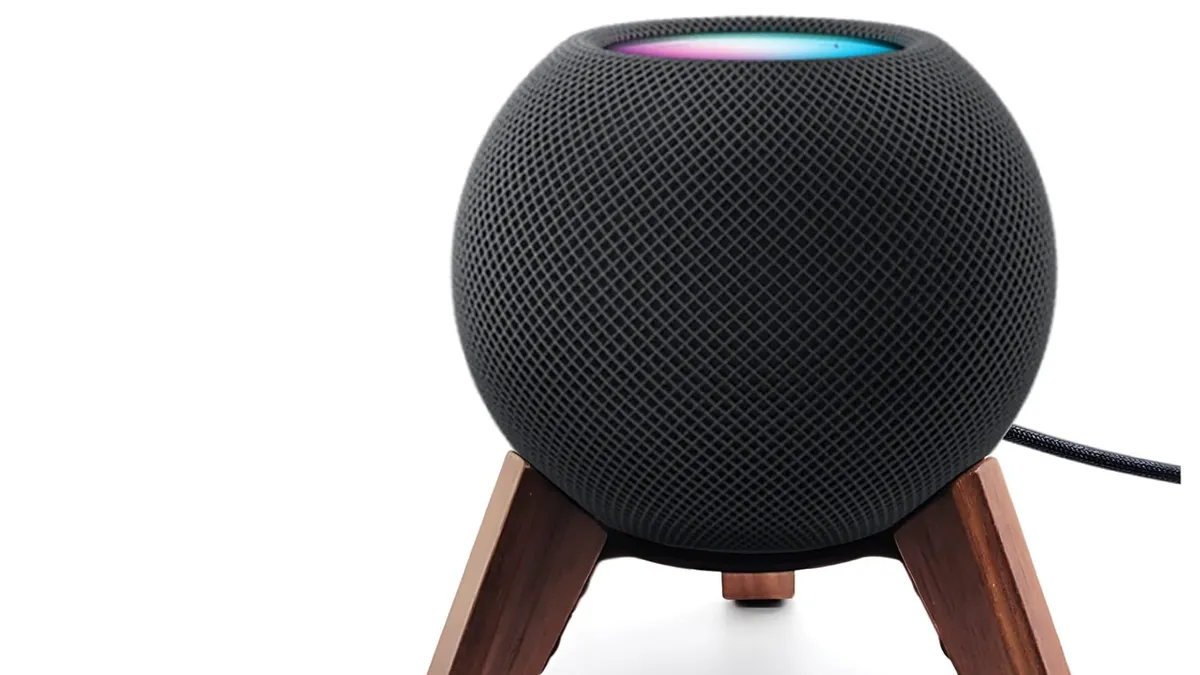
iPhone 17, iPhone 17 Plus, iPhone 17 Pro, iPhone 17 Air, and iPhone 17e; iPad and iPad Pro; Mac (MacBook Air, MacBook Pro, Mac mini, Mac Studio, Mac Pro); Apple Watch Series 11; AirPods Pro 3, AirPods 4, and AirPods Max; HomePod and HomePod mini ($99); Apple TV 4K; and Vision Pro (M5). Apple controls both hardware and software across all of these products, which enables integration depth that software-only platforms cannot match. The entire iPhone 17 lineup ships with the A19 or A19 Pro chip, built on TSMC's 3nm process.
Apple Intelligence and Siri in 2026
Apple Intelligence, which launched with iOS 26.1 and has expanded through iOS 26.x updates, is the AI layer across Apple devices. It runs a substantial portion of its models on-device using the Neural Engine in A19, A19 Pro, M-series, and A18 Pro chips - processing personal queries, email summaries, and notification prioritization locally without sending data to Apple servers. For tasks that require larger models, Apple Intelligence uses Private Cloud Compute: requests are processed in Apple-managed server infrastructure with cryptographic guarantees that Apple cannot access the data, and the servers are auditable by independent security researchers.
The most significant Apple Intelligence development in 2026 is the arrival of Gemini-powered Siri. Apple's multi-year partnership with Google brings Gemini's reasoning capabilities into Siri as an optional backend, giving iPhone 17 users access to Gemini's real-time knowledge and advanced reasoning through a Siri interface. This addresses the longstanding criticism that Siri's conversational intelligence lagged Gemini and ChatGPT. The full iPhone 17 lineup - including iPhone 17e - supports Apple Intelligence, marking the first time the entry-tier iPhone is fully included.
The on-device processing focus means Siri responds faster than cloud-dependent assistants for common personal queries and works without network access. Personal context queries - reading your emails, messages, and calendar - remain fully on-device with no exposure to any external model unless you explicitly invoke the Gemini or ChatGPT extensions.
HomeKit and Home Automation
Apple HomeKit was historically criticized for its restrictive accessory certification requirements. The Matter 1.5 standard - which Apple co-developed alongside Google, Amazon, and Samsung - has substantially changed this. Most new smart home devices now support Matter, which means they work with HomeKit without requiring Apple-specific certification. The Home app on iPhone manages HomeKit, Matter, and Thread-based devices in a unified interface.
Apple TV 4K and HomePod act as local Home Hubs, processing HomeKit automations locally without requiring cloud connectivity. This local processing is a meaningful advantage over purely cloud-dependent platforms: your lights still turn on at sunset based on geofence rules even if Apple's servers are inaccessible.
Lock-in Analysis
Apple's lock-in is primarily through data and workflow integration rather than technical restrictions. iMessage, FaceTime, iCloud Photos, and Apple Health create significant data gravity - years of health data, photos, and messages that are exportable but functionally difficult to migrate to competing platforms without loss of history or features. AirDrop, Handoff, Universal Clipboard, and iPhone-as-Webcam features work exclusively within the Apple ecosystem. The financial cost of switching - replacing every device simultaneously - is the most significant lock-in mechanism.
Apple has improved cross-platform compatibility where it faces regulatory pressure: Apple Music, Apple TV+, and Apple Podcasts are available on Android and smart TVs. iCloud is accessible from any browser. But the core productivity and communication features remain Apple-exclusive.
Best For
People who use iPhone as their primary device and want the highest-quality cross-device integration, the strongest privacy architecture in the consumer AI space, and are willing to pay the premium for Apple hardware. Also the best choice for users with mild hearing loss who want FDA-cleared hearing assistance from AirPods Pro 3, and for users who want Gemini-quality conversational AI while keeping their personal data processing fully private.
Google: The Best AI, Most Open Platform
The Hardware Portfolio
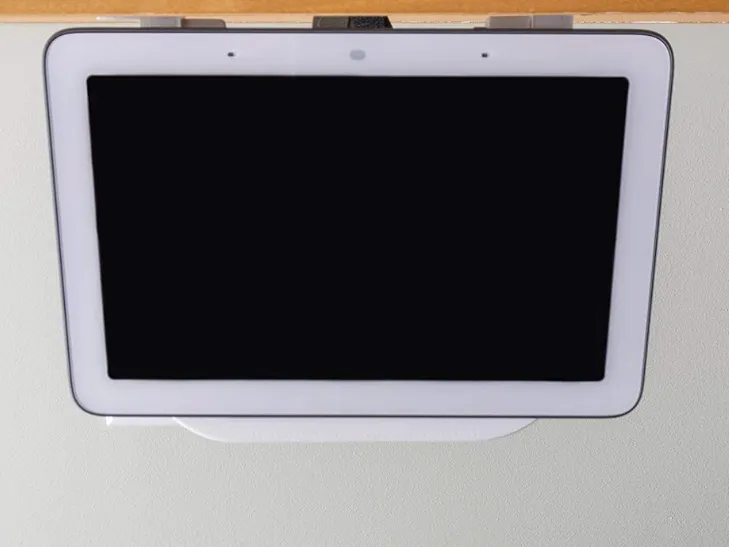
Pixel 10, Pixel 10 Pro, and Pixel 10 Pro XL phones powered by the Tensor G5 chip (built on TSMC 3nm with 60% more TPU capacity than its predecessor); Pixel Tablet; Pixel Watch 4; Pixel Buds Pro 2; Nest Audio; Nest Mini; Nest Hub 2nd Gen (still current, no 2026 update); the new Google Home Speaker ($100, Spring 2026 launch); Chromecast with Google TV; and Nest Cam (3rd gen)/Doorbell security cameras. The Google Home Speaker represents Google's first major smart speaker hardware launch in years, running Gemini natively and positioned directly against Echo Dot Max.
Gemini and Tensor G5: The Strongest AI Stack
Gemini on Pixel 10 devices represents the most capable AI assistant in any consumer ecosystem as of April 2026. The Tensor G5's TPU - 60% larger than the Tensor G5's - handles on-device Gemini Nano inference for privacy-sensitive tasks, with Gemini Pro and Ultra models available via the cloud for heavier requests. The result is fast local inference for daily tasks and access to the world's best reasoning model when needed, with a seamless handoff the user never sees.
Pixel 10 Pro's Gemini integration includes Call Screen (AI filters spam and transcribes important calls), Live Translate (real-time translation during phone calls in 50+ languages), Google Recorder with speaker-separated transcription, and deep integration with Gmail, Docs, Drive, and Google Workspace. For users whose primary AI use case involves information retrieval, reasoning, and content generation, Gemini on Pixel 10 outperforms Apple Intelligence, Alexa+, and Bixby.
Google Home Speaker and the Nest Ecosystem
The Google Home Speaker ($100) launched in Spring 2026 as Google's answer to Echo Dot Max. It runs Gemini natively - not the stripped-down Assistant-on-speakers experience that frustrated users on older Nest hardware - enabling full conversational AI for smart home control and general queries. Paired with Nest Hub 2nd Gen for visual interaction or Nest Cam (3rd gen) for security, the Google Home platform now has comparable entry hardware to Amazon's refreshed Echo lineup.
The Nest ecosystem remains Google's strongest home hardware line: Nest Learning Thermostat, Nest Protect smoke detector, Nest Cam (3rd gen), Nest Doorbell (3rd gen, 2K HDR), and Nest Yale Lock. Familiar Face recognition - training the camera to recognize household members versus strangers and notifying accordingly - remains one of the more practically useful AI camera features available on any platform.
Lock-in Analysis
Google's lock-in is primarily through services rather than hardware. Gmail, Google Drive, Google Photos, YouTube history, and Google Maps are deeply embedded in daily workflows for many users and are effectively cross-platform - they work on iPhone and other devices. The data gravity is real but the migration path is more accessible than Apple's. Hardware lock-in is low; Nest devices work with Matter 1.5-compatible third-party apps including Apple Home.
The meaningful Google-specific advantage that creates lock-in is Gemini integration depth on Pixel hardware and within Google Workspace. If your work runs on Google Docs, Gmail, and Drive, the Gemini integration in those tools is a productivity multiplier that competing platforms cannot replicate.
Best For
Android users who want the most capable AI assistant, people with significant Google Workspace investment, international travelers who need Google Translate integration at its deepest level (Pixel Buds Pro 2 + Pixel 10 real-time call translation), and people building a smart home who want wide device compatibility with Gemini-native voice control through the new Google Home Speaker.
Amazon: The Smart Home Specialist, Now With Alexa+
The Hardware Portfolio
Echo Dot Max ($100), Echo Show 8 4th Gen ($180), Echo Show 11 ($220), Echo Studio, Echo Hub smart home control panel, Fire TV Stick and Fire TV Cube, Ring Video Doorbell and Ring Camera line, Blink security cameras, Eero mesh Wi-Fi routers, Kindle e-readers, and Fire tablets. Amazon's 2026 Echo refresh - with Echo Dot Max replacing the prior Echo Dot line and the new Echo Show 8 4th Gen and Echo Show 11 adding upgraded displays - is the most significant hardware update to the Echo lineup since 2020.
Alexa+ in 2026
Alexa+ ($20/month, free for Amazon Prime members) is the rebuilt Alexa platform using a large language model foundation. It handles natural language conversations, multi-step task completion, and third-party integration through an Action API that connects third-party services to Alexa workflows. Alexa+ is significantly better than the original rule-based Alexa for conversational AI tasks: it maintains context across a conversation, handles ambiguous requests gracefully, and can orchestrate complex home automation sequences from a single natural language instruction.
For Prime members, Alexa+ costs nothing additional - it is included with the $139/year Prime membership. This pricing structure makes Alexa+ the most economical AI assistant upgrade in the market: households already paying for Prime get a meaningfully improved assistant on all Alexa+ compatible Echo devices without a separate subscription.
Where Alexa+ still lags: complex reasoning, knowledge retrieval quality, and integration with productivity tools outside Amazon's ecosystem. Alexa+ is a home OS, not a general-purpose AI assistant in the way Gemini is. If you ask Alexa to "summarize my emails and schedule a meeting with the people who mentioned the Henderson project," the workflow fails. If you say "set the thermostat to 68, lock the front door, and turn off all the lights downstairs," it executes perfectly.
Echo Dot Max and the Refreshed Display Lineup
Echo Dot Max ($100) is Amazon's headline speaker for 2026 - a significant audio upgrade over the prior Echo Dot 5th Gen, with larger drivers and improved bass response. Echo Show 8 4th Gen ($180) upgrades the display to a higher-resolution panel with improved camera quality for video calls. Echo Show 11 ($220) fills the gap between the 8-inch and 15-inch models with a new 11-inch screen better suited to countertop use in medium-sized kitchens. The refresh gives Amazon a complete display lineup that competes more directly with Google's Nest Hub range and Apple's rumored smart display.
Ring, Blink, and Eero Security Stack
Amazon's acquisition of Ring and Blink gives it the most comprehensive smart home security portfolio available. Ring Protect Plus ($10/month) adds video history across all Ring devices. The AI features in Ring cameras - Package Detection, Person Detection, Face Recognition, Vehicle Detection - remain competitive with Google Nest's Familiar Face recognition and ahead of most third-party camera systems. Eero mesh Wi-Fi integration with Alexa enables network management by voice, including parental controls enforced at the router level.
Lock-in Analysis
Amazon's lock-in is less severe than Apple's or Samsung's because most Amazon smart home devices support Matter and work with competing platforms. Echo speakers are Amazon-exclusive, but smart bulbs, plugs, and locks connected via Alexa also work with Google Home and Apple Home through Matter. Ring cameras require Ring/Alexa for full feature sets but support RTSP streams for third-party systems. The practical lock-in is primarily Echo speakers (Amazon-only) and Ring cameras (whose AI features require Ring Protect subscription).
Best For
Households prioritizing smart home automation and voice-controlled routines, Ring camera users, Amazon Prime households (Alexa+ is free with Prime), and people who want a wide selection of affordable smart home entry points. Echo Dot Max at $100 is the best-value smart speaker with a capable AI assistant in 2026.
Samsung: The Most Comprehensive Device Portfolio
The Hardware Portfolio
Galaxy S26, Galaxy S26+, and Galaxy S26 Ultra smartphones running Snapdragon 8 Elite Gen 5 and One UI 8.5 (Android 16); Galaxy Z Fold 7 and Z Flip 7; Galaxy Tab S11 series; Galaxy Book laptops; Galaxy Watch 8 and Galaxy Watch 8 Ultra; Galaxy Ring; Galaxy Buds 4 Pro; Samsung Frame and Neo QLED and OLED TVs; Samsung Family Hub refrigerators; Samsung smart washers, dryers, and dishwashers. Samsung's portfolio spans more product categories than any other manufacturer - the only ecosystem that puts its own AI hardware in your pocket, on your wrist, in your ear, and in your kitchen simultaneously.
Galaxy AI, One UI 8.5, and the Snapdragon 8 Elite Gen 5
Samsung's Galaxy S26 series runs One UI 8.5 on Android 16, powered by Qualcomm's Snapdragon 8 Elite Gen 5. The Galaxy AI feature suite - Circle to Search, Live Translate, Chat Assist, Note Assist, Transcript Assist, and Generative Edit - runs partly on the Snapdragon's Hexagon NPU for on-device inference and partly through Samsung's cloud partnership with Google. Gemini is the default assistant on Galaxy S26, handling conversational AI, research, and content generation, while Bixby handles device-specific control functions.
Live Translate on Galaxy S26 handles real-time call translation in 20+ languages on-device using the Hexagon NPU, meaning call content is never transmitted to any server - a meaningful privacy advantage for international business users who need translation without cloud dependency.
The Cross-Device Health Ecosystem
The integration between Galaxy Ring, Galaxy Watch 8, Galaxy Buds 4 Pro, and Samsung Health creates the most comprehensive cross-device health platform available in 2026. The ring contributes continuous sleep and HRV data. Galaxy Watch 8 adds GPS workout tracking, ECG, and blood pressure monitoring. The buds contribute audio health metrics. Samsung Health's AI synthesizes all three data streams into a unified health model - Energy Score, activity recommendations, and health trend analysis - that improves with each additional Samsung device.
No other ecosystem offers this breadth of native cross-device health integration. Apple Watch Series 11 plus AirPods Pro 3 plus iPhone 17 is comparable in principle, but Samsung's health hardware portfolio is wider, particularly with Galaxy Ring adding passive overnight biometrics that improve AI model accuracy without the sleep disruption of wearing a watch.
SmartThings (updated 2026 hub with Thread, Zigbee 3.0, WiFi 6E, Matter 1.5, Qi2 charging, and Galaxy AI routine automation) and Home Automation
SmartThings is Samsung's smart home platform and the most device-compatible of any ecosystem-native platform. It supports Matter, Zigbee, Z-Wave, LAN, and cloud-to-cloud integrations. Samsung's unique SmartThings advantage is appliance integration: a Samsung Family Hub refrigerator shows contents on your phone, generates recipes from what is inside, and integrates with grocery delivery. For households that own Samsung major appliances, SmartThings creates integration value that no other ecosystem can match.
Lock-in Analysis
Samsung's lock-in is strongest in home appliances and the cross-device health ecosystem. The health ecosystem lock-in is real: Samsung Health's longitudinal data and AI models degrade significantly if you switch to a Pixel Watch or Apple Watch, because the cross-device data model loses its inputs. SmartThings devices work with Matter 1.5-compatible third-party platforms, mitigating smart home lock-in. Galaxy phones support Gemini and most Google services, creating some portability within the Android world.
Best For
Households that have purchased Samsung TVs and major appliances, users who want the most comprehensive cross-device health tracking (Galaxy Ring + Watch 8 + Buds 4 Pro), people who want Gemini AI flexibility on Android without leaving Samsung's hardware ecosystem, and users who prioritize on-device Live Translate for international work or travel.
Matter 1.5 protocol: What It Changes in 2026
Matter, the smart home connectivity standard co-developed by Apple, Google, Amazon, Samsung, and dozens of device manufacturers, launched in 2022 and reached meaningful adoption by 2024. In 2026, most new smart home devices - bulbs, plugs, switches, locks, thermostats, sensors - support Matter by default. The practical impact on ecosystem decisions is significant.
Before Matter, buying a Philips Hue bulb meant committing to the Hue ecosystem. In 2026, a Matter-certified Philips Hue bulb works with Apple Home, Google Home, Amazon Alexa, and Samsung SmartThings simultaneously. You can buy hardware from any brand without betting on a platform surviving. The lowest common denominator of smart home hardware is now platform-agnostic.
What Matter does not solve: the AI features layered on top of basic device control. Nest Cam (3rd gen)'s Familiar Face recognition works only with Google Home. Ring Package Detection works only with Amazon Alexa and Ring Protect subscription. Samsung Family Hub's SmartThings integration has no equivalent on other platforms. The basic on/off and scheduling functions are now interoperable via Matter. The intelligent, AI-powered features remain proprietary.
The strategic implication: for smart lighting, plugs, and basic switches, buy based on hardware quality and price - the ecosystem dependency has largely been removed by Matter. For AI-powered devices like security cameras, smart displays, and voice assistants, ecosystem matters significantly and proprietary features require platform commitment.
Ecosystem Decision Matrix
Your Situation | Recommended Ecosystem | Reason |
|---|---|---|
iPhone user, want seamless device integration | Apple | Continuity features, Apple Intelligence, AirDrop require Apple ecosystem |
Heavy Gmail/Docs/Drive user | Gemini integration in Google Workspace is unmatched | |
Want the most capable AI assistant | Gemini on Pixel 10 with Tensor G5 outperforms all rivals on reasoning and knowledge | |
Building a smart home on a budget | Amazon | Echo Dot Max ($100) + Alexa+ (free with Prime) is the best-value AI home entry |
Home security is primary concern | Amazon | Ring + Blink + Eero is the most comprehensive security ecosystem |
Have Samsung TVs and appliances | Samsung | SmartThings appliance integration is unique to Samsung |
Want comprehensive health tracking | Samsung | Galaxy Ring + Watch 8 + Buds 4 Pro cross-device health model is category-leading |
Privacy is primary concern | Apple | On-device processing and Private Cloud Compute offer strongest privacy guarantees |
Want flexibility to mix-and-match brands | Google or Amazon | Both platforms have lower ecosystem lock-in; Matter compatibility is broad |
International travel frequently | Google or Samsung | Pixel 10 + Pixel Buds Pro 2 real-time translation and Galaxy S26 on-device Live Translate are both best-in-class |
Mild hearing loss, use iPhone | Apple | AirPods Pro 3 FDA-cleared Hearing Aid feature has no equivalent elsewhere |
Want the broadest smart home device compatibility | Samsung (SmartThings) | SmartThings supports Matter, Zigbee, Z-Wave, and cloud integrations simultaneously |
Amazon Prime household, want best value AI speaker | Amazon | Alexa+ free with Prime, Echo Dot Max $100 - best cost-per-AI-feature ratio |
Mixed Ecosystem: The Practical Reality
Most households do not operate in a single ecosystem. They have an iPhone and a Ring doorbell and a Nest thermostat and a Samsung TV. This is not a problem in 2026 the way it was in 2020, largely because of Matter and because all four major AI assistants are available as apps on all major smartphone platforms.
The practical guidance for mixed-ecosystem households: anchor your AI assistant to your smartphone platform (Siri/Apple Intelligence for iPhone, Gemini for Android), use Matter-certified devices for basic smart home hardware, and reserve platform-specific devices for categories where the proprietary AI features justify the commitment (Ring for security cameras if you use Alexa, Nest Cam (3rd gen) if you use Google Home).
The one area where mixed-ecosystem genuinely costs you is health tracking. The cross-device health models from Apple, Samsung, and Google are meaningfully better when all health devices are from the same platform. A Samsung Galaxy Watch 8 and a Fitbit do not share data in a way that improves either platform's AI model. An Apple Watch Series 11 and Oura Ring 4 share data through Apple Health, but the AI coaching from each platform does not see the other device's full data. If comprehensive health tracking with AI-driven insights is a priority, commit to one health ecosystem and stay within it.
Sources
Frequently Asked Questions
Can I use Alexa devices if I have an iPhone?
Yes. The Alexa app runs on iPhone and Echo devices pair with iPhone via Bluetooth. Echo Dot Max, Echo Show 8 4th Gen, and the full Echo lineup work for music playback, smart home control, and Alexa+ AI queries regardless of your phone platform. The Amazon shopping integration and Alexa calling features work cross-platform. The only feature that requires an Android phone is Alexa's deep OS integration on select Android devices.
Is it worth switching ecosystems to get better AI features?
Switching your primary smartphone platform - from iPhone to Android or vice versa - is a significant undertaking that should be driven by multiple factors, not a single AI feature. Evaluate whether the AI features you want are accessible as apps on your current platform (they often are) before committing to a hardware switch. Gemini is available on iPhone. Apple Intelligence features require Apple hardware. Amazon Alexa is cross-platform. Samsung Galaxy AI is Samsung-phone-only. In 2026, the Gemini-powered Siri integration means iPhone 17 users can access Gemini's reasoning quality through Siri without switching to Android.
What happens to my smart home devices if I switch ecosystems?
Matter-certified devices will continue to work with any Matter 1.5-compatible platform if you switch. Non-Matter legacy devices may require repurchasing or bridge solutions. Ring cameras work only with Amazon Alexa for full features but support RTSP for third-party systems. Nest devices support Matter and work with third-party platforms for basic control. Before switching ecosystems, audit which of your existing devices are Matter-certified and which are platform-proprietary.
Which ecosystem has the best privacy protections?
Apple has the strongest privacy architecture of any consumer AI ecosystem: on-device processing for personal queries, Private Cloud Compute for tasks requiring server-side processing (with cryptographic guarantees and independent auditability), end-to-end encryption for iMessage and FaceTime, and no advertising business model creating tension with privacy-maximizing behavior. Samsung's Galaxy S26 on-device Live Translate is a notable privacy win for that specific feature. Google has improved its privacy controls significantly and Tensor G5 handles substantial Gemini Nano inference on-device. Amazon processes the most data in the cloud and Ring/Alexa data has been subject to law enforcement requests.
How does the Google Home Speaker compare to Echo Dot Max?
Both are $100 smart speakers with native AI assistants. Google Home Speaker (Spring 2026) runs full Gemini and is the better choice for users invested in Google Workspace and Nest Cam (3rd gen)eras. Echo Dot Max runs Alexa+ (free with Prime) and is the better choice for Ring camera households and Amazon Prime members. Audio quality on Echo Dot Max has received strong early reviews. Google Home Speaker's Gemini integration is deeper than what any prior Nest speaker offered, bringing the smart speaker experience much closer to the Pixel phone experience for the first time.