Updated June 2026 · 10-minute read
You slept eight hours, you feel fine, and your Oura Ring gave you a Readiness Score of 54. Or the opposite: you had a terrible night and your score says 82. Either way you are staring at your phone wondering what the ring is actually measuring and whether it knows something you do not.
The Readiness Score is one of the most useful features in any health wearable and also one of the most frequently misunderstood. This article explains every input that goes into it, why each one affects it the way it does, and what specifically to look at when your score is lower than expected.
What the Readiness Score Is Actually Calculating
The Readiness Score is a composite of seven contributing factors, each weighted and combined into a single number from 1 to 100. Oura does not publish the exact weighting formula, but the contributing factors appear in the app when you tap the score. Understanding each one is the starting point for interpreting a low reading.
Contributing Factor | What It Measures | Ideal Direction |
|---|---|---|
Resting Heart Rate | Your lowest overnight heart rate vs your personal baseline | At or below baseline |
HRV Balance | Overnight HRV vs your 2-week average | At or above baseline |
Body Temperature | Skin temp vs your normal overnight reading | Within normal range |
Recovery Index | How early in the night your HR stabilised | Early stabilisation |
Sleep Score | Quality and quantity of last night's sleep | High sleep score |
Previous Day Activity | Physical strain accumulated yesterday | Not excessively high |
Activity Balance | Training load trend over the past two weeks | Consistent, not excessive |
Reason 1: Your HRV Dropped Below Your Baseline
HRV Balance is usually the heaviest contributor to a low Readiness Score. Your heart rate variability during sleep reflects the state of your autonomic nervous system. When HRV drops relative to your personal 2-week average, it signals your body is under some form of stress, whether physical, psychological, or biological.
The critical word is "relative." Oura does not compare your HRV to a population average. It compares it to your own recent history. A drop of 10 to 20 percent below your recent average is usually enough to meaningfully lower HRV Balance and pull down Readiness.
The most common causes of an overnight HRV drop:
Alcohol within 4 hours of sleep, even moderate amounts
A hard training session the previous day, especially high-intensity work
Psychological stress from work, relationships, or major life events
Early-stage illness before obvious symptoms appear
Poor sleep quality, particularly reduced deep sleep
Travel across time zones
Luteal phase of the menstrual cycle in women
If HRV Balance is the flagged factor, look at what happened in the 24 hours before that night and you will almost always identify the cause.
Reason 2: Your Resting Heart Rate Was Elevated
Your resting heart rate during sleep reflects how hard your cardiovascular system is working at baseline. When it is elevated above your normal overnight average, it indicates your body is processing something: recovering from exercise, fighting an immune response, metabolising alcohol, or managing physiological stress.
Oura calculates resting heart rate as the lowest 5-minute average during sleep, typically occurring during the deepest part of the night. If this figure is higher than your recent average, it pulls down the Resting Heart Rate component and lowers Readiness.
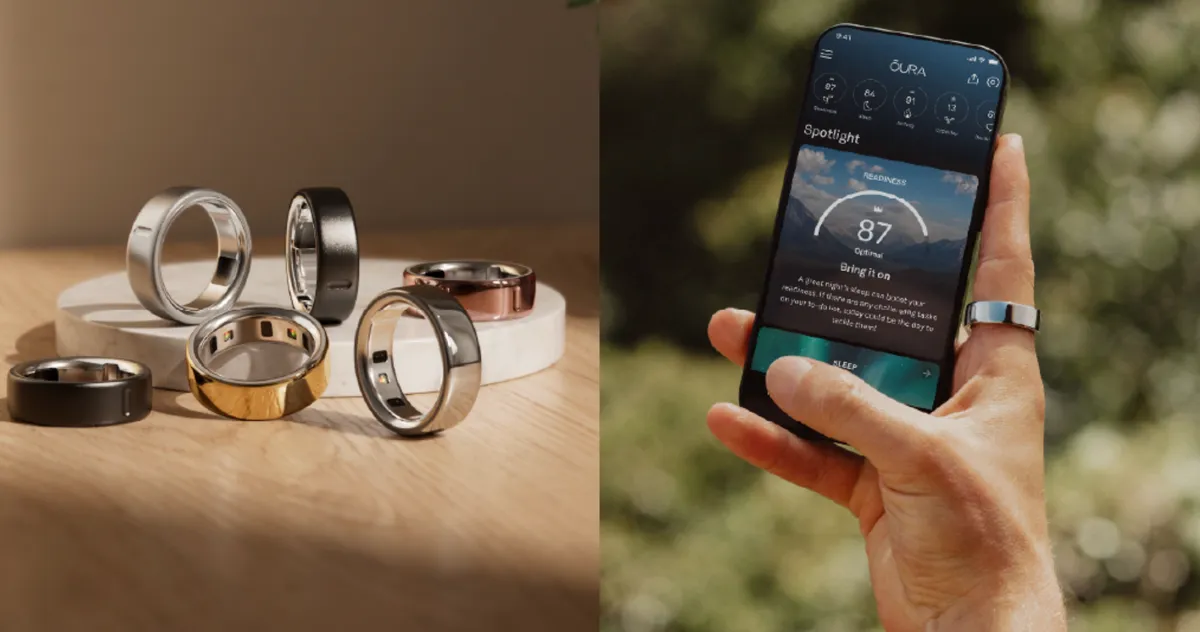
Practical check: In the Oura app, tap Readiness then tap Resting Heart Rate. You will see your nightly HR plotted against your 30-day average. If last night's reading is visibly above the line, that is a direct contributor to your low score.
Reason 3: Your Body Temperature Was Elevated
Oura tracks skin temperature relative to your personal baseline throughout the night. Small variations of plus or minus 0.5 degrees Celsius are normal. Sustained elevations above 1 degree Celsius flag in the Body Temperature factor and lower Readiness.
Three main causes:
Illness. The most clinically significant cause. Oura's temperature sensor often detects rises associated with infections 1 to 2 days before you feel sick. If temperature is elevated and HRV is also down, watch how you feel over the next 48 hours.
Ovulation and luteal phase. Body temperature rises naturally after ovulation. This is normal physiology, not illness. Oura's cycle tracking feature contextualises this when enabled.
Warm sleeping environment. Sleeping in a much warmer room than usual can produce an elevated skin temperature reading. Oura's algorithm compensates for this but extreme variations still sometimes affect the reading.
Reason 4: Your Recovery Index Was Low
Recovery Index measures how early in the night your resting heart rate reached its lowest point and stabilised. Early stabilisation means your body moved into deep recovery mode quickly. Late stabilisation means something kept your heart rate elevated deep into the night.
Alcohol is the most common cause. The liver takes 3 to 5 hours to clear the metabolites from two or three drinks. If you drank at 10pm and went to bed at midnight, your heart rate may not drop to its resting level until 3 or 4am, producing a low Recovery Index regardless of how many hours you slept.
Late eating, intense evening exercise, and high psychological stress at bedtime all delay heart rate stabilisation.
Reason 5: Poor Sleep Score
The Sleep Score feeds directly into Readiness. A night with significantly below-average total sleep, low sleep efficiency, disrupted staging, or high restlessness pulls down both Sleep Score and Readiness.
The sleep factors most likely to cause a low Sleep Score:
Total sleep significantly below your average
More than 15 percent of time in bed awake
Less than 10 percent of total sleep in deep NREM
Sleep at an unusual time relative to your normal schedule
High movement and restlessness throughout the night
If Sleep Score is the primary reason for a low Readiness, it will recover as soon as you have a better night. Unlike HRV or temperature issues, a poor sleep Readiness impact resolves quickly.
Reason 6: High Previous Day Activity
A hard training day, a physically demanding day at work, or an unusually high step count shows up in the Previous Day Activity factor and reduces your Readiness Score the following morning. This is intentional: the ring is acknowledging that your body needs more recovery time and should not be pushed hard again immediately.
If high activity is the primary factor pulling your score down and everything else (HRV, temperature, heart rate) looks normal, the appropriate response is lighter activity that day while recovery completes.
Reason 7: Activity Balance Is Off
Activity Balance looks at training load over the past two weeks, not just yesterday. Consistent overtraining, extended inactivity, or highly irregular training patterns all show up as a negative Activity Balance. It typically recovers as your body adapts to the new training level or as you return to a more consistent pace.
Reason 8: The Ring Was Not Worn Properly
A loose ring or one worn on an unusually active finger produces noisy sensor data that can result in anomalous readings across multiple metrics simultaneously. If your Readiness Score is unusually low and none of the factors make sense given how you feel and what you did, check whether the ring was fitting securely throughout the night.
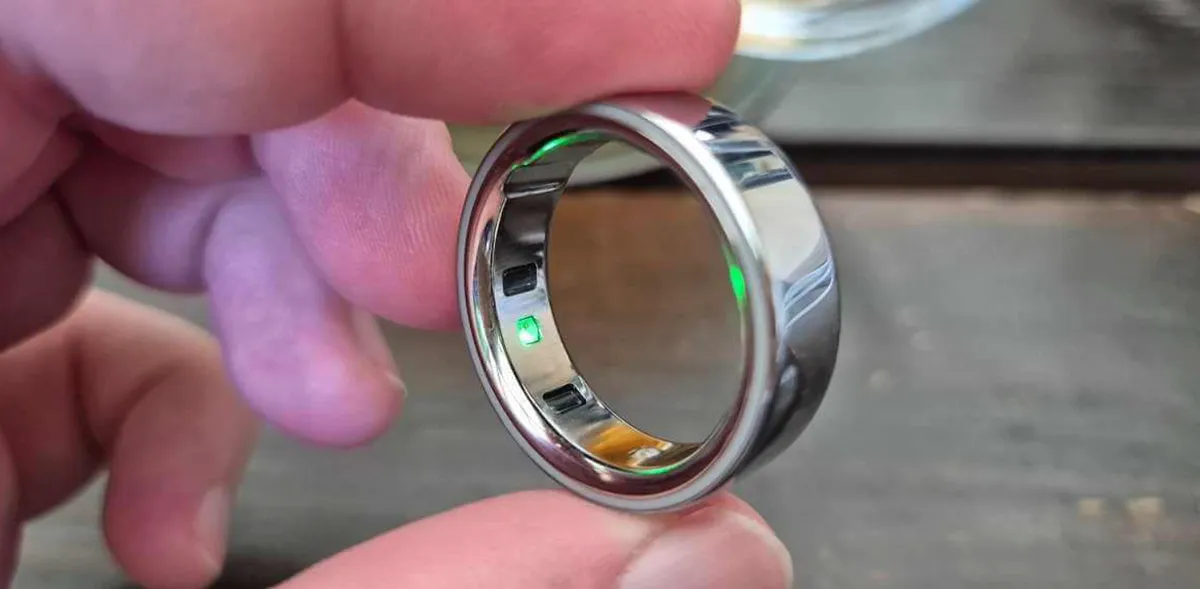
Oura recommends wearing the ring on the index finger with the sensor cluster positioned on the palm side of the finger. A ring that has become slightly loose (fingers change size with temperature, hydration, and weight) can affect reading quality meaningfully.
When to Take a Low Score Seriously vs When to Move On
Scenario | What It Likely Means | What to Do |
|---|---|---|
Low score + feel fine + obvious cause (alcohol, hard workout) | Normal recovery signal | Train lighter, will recover in 1 to 2 days |
Low score + elevated temperature + low HRV for 2+ days | Possible early illness | Rest, monitor symptoms |
Low score + you feel genuinely terrible | Ring correctly detecting stress | Prioritise recovery |
Low score + feel fine + no obvious cause | Possible sensor artefact or ring fit issue | Check ring fit, verify data quality in app |
Consistently low for 2+ weeks | Accumulated training or life stress | Review training load, sleep, stress sources |
Frequently Asked Questions
Can work stress or relationship problems lower my Oura Readiness Score?
Yes, directly. Psychological stress activates the sympathetic nervous system and suppresses HRV, elevates resting heart rate, and can disrupt sleep. All three show up in Oura's sensor data and pull down the Readiness Score. Many users notice lower scores during high-stress work periods or major life events even when physical training and sleep duration are unchanged.
How long does Oura Readiness take to recover after a bad night?
For a single bad night driven by poor sleep, Readiness typically recovers within 1 to 2 nights of good sleep. For HRV-driven low scores from hard training, recovery usually takes 24 to 48 hours. For illness-related drops, the score remains low until the body resolves the infection. For accumulated training stress, addressing the underlying cause is necessary before scores normalise.
Why does my Readiness Score seem wrong compared to how I actually feel?
The Readiness Score measures physiological recovery, not subjective feeling. These can diverge in both directions. You can feel energetic on a low Readiness day because the sympathetic activation that suppressed your HRV also increases alertness. You can feel sluggish on a high Readiness day for reasons the ring cannot measure: mood, motivation, caffeine timing, or what you are about to face. The score is most useful as a trend signal over weeks rather than a daily directive to follow blindly.
What is a good Oura Readiness Score?
Oura defines 85 to 100 as Optimal, 70 to 84 as Good, and below 70 as Pay Attention. What matters more than hitting a specific number is your personal trend. A user whose baseline is consistently 72 to 78 is likely well-recovered for them. A user who normally scores 90 and drops to 70 has seen a significant change worth investigating. The change relative to your baseline is more informative than the absolute number.
This article is for informational purposes only. Oura Ring Readiness Score is a wellness tool, not a medical diagnostic device. Consult a healthcare professional for health concerns.