
Most Anticipated AI Gadgets of 2026: What's Released, What's Still Coming
We are four months into 2026 and the hardware pipeline has already delivered some of its biggest releases. Samsung shipped the Galaxy S26 Ultra in January. Google launched the Pixel 10a. Meta's Ray-Ban prescription glasses are now a real product you can order. Several more heavy hitters - iPhone 18, the Apple HomeHub display, Galaxy Watch 9 - are locked in for the back half of the year.
This guide clarifies the state of play as of April 2026: what has shipped and whether it lived up to the hype, what's genuinely coming in the remaining months, and what to actually buy right now if you don't want to wait.
Already Shipped: The Big Releases of Early 2026
Samsung Galaxy S26 Ultra - Released January 2026 | $1,299
The Galaxy S26 Ultra is the most capable Android phone shipping as of April 2026. It ships with the Snapdragon 8 Elite Gen 2 (US) and Samsung's Exynos 2600 (select markets), featuring a 6.9-inch Dynamic AMOLED display with 2600 nits peak brightness. The built-in S Pen distinguishes it from every other Android flagship.
Galaxy AI has expanded significantly in One UI 8: Sketch to Image now works in real time on the camera viewfinder, Live Translate handles 40 languages, and the new Agentic AI mode can execute multi-step tasks across apps. On-device Gemini Nano processing handles most Galaxy AI features locally, with cloud routing for complex queries.
Camera system: 200MP primary, 50MP ultrawide, 50MP 5x optical zoom telephoto, and a new 100x Space Zoom sensor shared with the S26 Ultra that uses AI-enhanced stabilization to make previously unusable telephoto shots workable. Night photography has improved over the S25 Ultra with larger photodiodes on the primary sensor.
At $1,299, it's the most expensive phone in Samsung's lineup, priced $300 above the Pixel 10 Pro and $200 above the iPhone 17 Pro. Whether the S Pen, 200MP sensor, and Galaxy AI suite justify that premium over the Pixel 10 Pro is a legitimate question. For S Pen users, the answer is clearly yes. For everyone else, the gap has narrowed.
Google Pixel 10a - Released March 2026 | $499
The Pixel 10a arrived three months after the Pixel 10 Pro and delivered the most capable mid-range Android camera available at $499. It runs a Tensor G5 chip - the same silicon as the Pixel 10 Pro - making it one of the few mid-range phones with full on-device Gemini Nano capability, including offline translation, real-time transcription, and Call Screen.
Camera: 64MP primary, 13MP ultrawide, no telephoto. Photo quality is within 15% of the Pixel 10 Pro in daylight; low-light is the expected gap, where the Pro's larger sensor and improved optical image stabilization create a visible difference. Video is 4K/60fps, which is class-leading for the price.
The $499 price makes it the most recommended Android phone for most people right now. Pixel 10a versus iPhone 17e ($599) is the comparison that will occupy most buying decisions in the mid-range segment for 2026. The Pixel 10a wins on camera; the iPhone 17e wins on software longevity and ecosystem integration.
Meta Ray-Ban Display Glasses - Released Q1 2026 | $799
Meta delivered on the most anticipated smart glasses product of 2026: the Meta Ray-Ban Display model. Paired with the new EMG wristband controller, the Display model adds a small monocular heads-up overlay to the existing Ray-Ban frame - capable of showing navigation prompts, message previews, and AI response text without occupying your full field of vision.
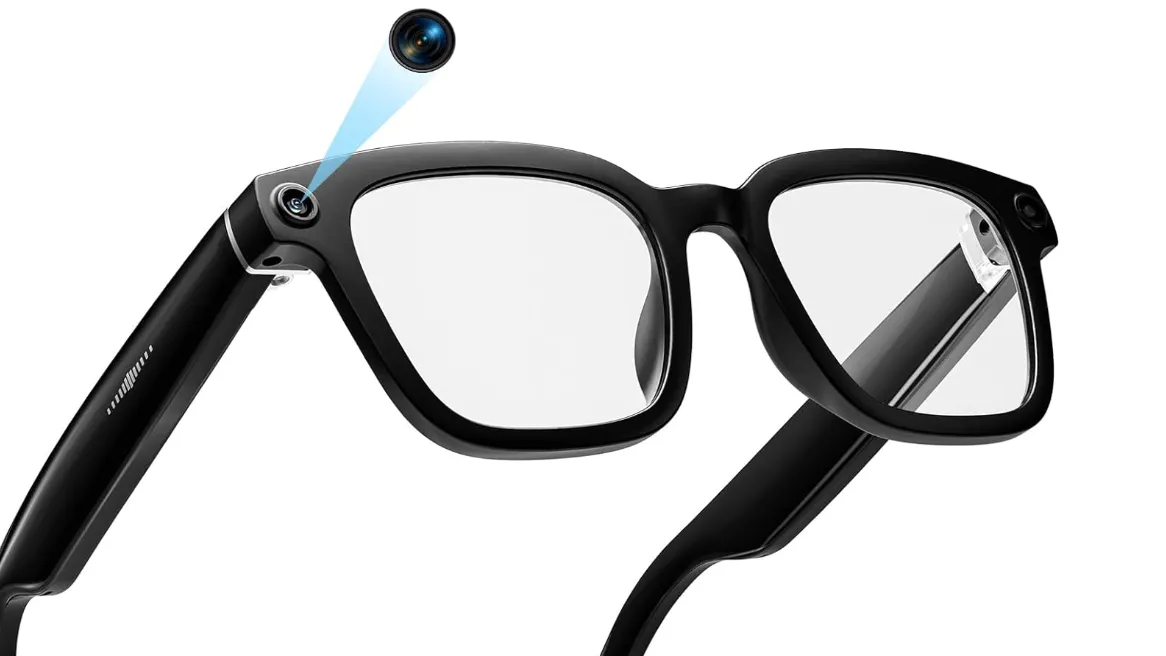
Battery life with the display active averages 3.5-4 hours in real-world use - better than Google Glass's 3-hour ceiling, and workable for most day-use scenarios with the charging case. The EMG wristband reads muscle movements rather than requiring touchpad interaction on the frame, enabling subtle gesture control that doesn't make you look like you're operating a device.
At $499, it costs $200 more than the standard Meta Ray-Ban ($379). The question is whether the display adds $200 of daily value. For navigation, notification management, and AI text responses, it frequently does. For users who primarily used the glasses for audio and camera, the upgrade is harder to justify.
Blayzer/Scriber Prescription Smart Glasses - Available 2026 | $799
The prescription smart glasses category quietly became real in 2026. Blayzer and Scriber both ship prescription-compatible smart glasses frames at $799 with Rx lenses included - eliminating the extra $100-300 that Meta Ray-Ban prescription owners pay on top of the base frame cost. Both feature camera, open-ear audio, and AI assistant integration, though neither matches Meta Ray-Ban's Meta AI integration depth.
For the roughly 75% of adults who require vision correction, these represent the first prescription-native smart glasses option that doesn't require sourcing lenses separately. The optical quality of the Rx lenses is the critical evaluation point - get an in-person fitting before committing.
Galaxy Buds 4 Pro - Released January 2026 | $249
Samsung's Galaxy Buds 4 Pro arrived alongside the S26 Ultra and represent a genuine generational improvement over the Buds 2 Pro. Active noise cancellation now uses AI classification to identify noise type (mechanical vs. vocal vs. wind) and apply targeted suppression rather than broad-spectrum ANC. In real-world use, the improvement is most noticeable for mid-frequency noise like HVAC systems and airplane engines.
Sound quality: 11mm two-way speaker configuration produces stronger bass than most competitors without the artificial bass-boost that many ANC earbuds rely on. Transparency mode has been substantially improved and now sounds natural rather than processed. Battery life is 6 hours ANC-on with 24 hours from the case.
The three-way competition among AirPods Pro 3 ($249), Galaxy Buds 4 Pro ($249), and Pixel Buds Pro 2 ($229) is the tightest the earbuds market has ever been at the $229-249 price point. The right choice depends primarily on your phone ecosystem.
Still Coming: The Back Half of 2026
iPhone 18 Series
Expected: September 2026
Apple's September event will define the back half of 2026. The iPhone 18 lineup is expected to build on the iPhone 17 series (iPhone 17 at $799, Air at $999, 17 Pro at $1,099, 17e at $599 - all currently shipping) with the next-generation A19/A19 Pro chip and expanded Apple Intelligence capabilities in iOS 20.
The most credible rumor for iPhone 18 Pro: a thinner profile approaching the iPhone Air's dimensions, elimination of the Dynamic Island in favor of a fully embedded Face ID system with a pinhole front camera, and expanded on-device AI model capacity. The iPhone Air's ultra-thin design formula may migrate to the entire Pro lineup.
Buy now instead: iPhone 17 Pro at $1,099 runs every current Apple Intelligence feature and will receive iOS 20 on launch day. If you're on iPhone 15 or older, the 17 Pro is a strong buy. If you want to wait five months to see what iPhone 18 brings, the iPhone 17e at $599 is the right holding option.
Apple HomeHub Display
Expected: Spring or Fall 2026 | Estimated: $299-$399
Apple's long-rumored dedicated smart home display - now referred to internally as the HomeHub - is expected to ship in 2026. The device is described as a wall-mountable or countertop display running a customized interface with built-in camera for FaceTime, HomeKit controls, and Siri powered by Apple Intelligence. It directly addresses Apple's notable gap in the smart display category where Echo Show 8 4th Gen ($180) and Google Nest Hub Max have dominated for years.
The HomeHub would be a meaningful addition to the Apple ecosystem for HomeKit users, eliminating the need for a dedicated iPad as a home control panel. Whether it ships before fall 2026 is the outstanding question; some supply chain reports suggest a spring launch window.
Buy now instead: Echo Show 8 4th Gen ($180) for a capable smart display, or HomePod ($299) for the best-sounding Apple-compatible smart speaker. If you're deep in the HomeKit ecosystem and specifically want Apple's own display, the wait is likely justified.
Samsung Galaxy Z Fold 7 and Galaxy Z Flip 7
Expected: July 2026 | Estimated: Fold 7 from $1,799 / Flip 7 from $999
Samsung announces foldables in July and ships within 2-3 weeks of announcement. The Galaxy Z Fold 7 is expected to arrive thinner than the Fold 6, with the inner display upgraded to 8 inches and the hinge mechanism revised to reduce the visible crease. The Flip 7 is rumored to add a significantly larger cover screen (4.1 inches, up from 3.4 on Flip 6) that turns the closed phone into a near-functional mini-tablet for AI queries and notifications without unfolding.
Buy now instead: Galaxy Z Fold 7 ($1,299 after post-launch discounts) does everything the Fold 7 will do with minor differences. The Fold 7 will cost $500 more than current discounted Fold 6 pricing.
Google Pixel 10 Pro
Expected: October 2026 | $999
The Pixel 10 Pro (already listed at $999 in our product map) is Google's October flagship. With the Tensor G5 chip already shipping in the Pixel 10a, the Pro model will add the larger sensor camera system, 5x optical telephoto, and higher-end display. Google's October event will define the Android camera benchmark for 2026-2027.
Buy now instead: Pixel 10a ($499) for most people - the camera gap is real but not $500 real. For anyone who needs 5x telephoto or shoots heavily in low light professionally, wait for the Pixel 10 Pro.
Galaxy Watch 9
Expected: July 2026 | Estimated: $299-$349
Samsung's Galaxy Watch 9 will ship alongside the foldables in July. Expected improvements include the Exynos W1000 chip upgrade, improved health sensor accuracy, and expanded Galaxy AI health features including a more detailed sleep coaching AI and improved irregular heart rhythm detection. The Galaxy Watch 8 ($299, currently shipping) remains an excellent buy - the Watch 9 will primarily benefit buyers coming from Watch 6 or older.
Apple Glasses
Still Rumored: 2027
Apple's smart glasses remain a 2027 story. The engineering challenges - miniaturized Apple silicon, sub-50g weight, 6+ hour battery in a glasses frame, on-device Apple Intelligence - have not been publicly resolved. Mark Gurman and Ming-Chi Kuo both point to a 2027 launch window. Apple has not acknowledged the product exists. If you want smart glasses in 2026, Meta Ray-Ban ($379) is the only serious option. Apple Glasses are not a 2026 decision.
Samsung Ballie Companion Robot
Expected: Mid-2026 (maybe) | $999-$1,499 unconfirmed
Samsung showed what appeared to be a near-production Ballie at CES 2026 - a rolling spherical robot with a built-in 1080p projector, conversational Galaxy AI, and smart home control. The device has been announced twice before (CES 2020, CES 2024) and missed both ship dates. The 2026 showing was the most production-ready demo yet. Whether it ships before end of year is genuinely uncertain. Do not hold off on other purchases in anticipation of Ballie.
At-a-Glance: 2026 Status Tracker
Device | Status | Price | Notes |
|---|---|---|---|
Samsung Galaxy S26 Ultra | Available now | $1,299 | Best Android flagship currently shipping |
Google Pixel 10a | Available now | $499 | Best mid-range Android, Tensor G5 chip |
Meta Ray-Ban Display + EMG wristband | Available now | $499 | First display smart glasses for consumers |
Blayzer/Scriber prescription glasses | Available now | $499 | Prescription-native smart glasses |
Samsung Galaxy Buds 4 Pro | Available now | $249 | Best ANC for Galaxy/Android users |
iPhone 17 / Air / Pro / 17e | Available now | $599-$1,099 | Full Apple Intelligence lineup |
Pixel 10 Pro | Available now | $999 | Google's current flagship |
Samsung Galaxy Z Fold 7 / Flip 7 | Expected July 2026 | $999 / $1,799 | High confidence - confirmed annual cycle |
Galaxy Watch 9 | Expected July 2026 | ~$299-$349 | Alongside foldables |
iPhone 18 Series | Expected September 2026 | TBD | High confidence - confirmed annual cycle |
Apple HomeHub Display | Expected 2026 | $299-$399 est. | Medium confidence - credible leaks |
Google Pixel 10 / Tablet 2 | Expected October 2026 | $699 / $499-$599 | High confidence - confirmed annual cycle |
Samsung Ballie robot | Expected mid-2026 (maybe) | $999-$1,499 est. | Low-Medium - twice previously delayed |
Apple Glasses | Rumored 2027 | $1,500-$2,000 est. | Not a 2026 product - confirmed 2027 target |
Sources
Frequently Asked Questions
What's the best AI gadget to buy right now in April 2026?
For most people: Apple Watch Series 11 ($399) or Galaxy Watch 8 ($299) for a smartwatch; AirPods Pro 3 ($249) or Galaxy Buds 4 Pro ($249) for AI audio; Echo Show 8 4th Gen ($180) for a smart display; and a Pixel 10a ($799) or iPhone 17 ($799) for a smartphone. All of these are current-generation, fully supported, and available at good prices in April 2026. Nothing shipping in the rest of 2026 makes these bad buys today.
Is the Meta Ray-Ban Display model worth $200 more than the standard?
For navigation-heavy users and anyone who frequently wants AI text responses - yes. The heads-up display turns Meta AI from an audio experience into a visual one, which is meaningfully more useful for reading translations, navigation directions, and notification summaries. For users who primarily used the glasses for podcasts, calls, and occasional photo capture, the standard model at $299 remains the better value.
Should I wait for iPhone 18 or buy iPhone 17 Pro now?
If you're on iPhone 15 or older and need a new phone, iPhone 17 Pro at $1,099 is an excellent buy right now. It runs every current Apple Intelligence feature and will receive iOS 20 on launch day. If you're on a functioning iPhone 17 or newer, waiting five months to see iPhone 18's announcement is a reasonable choice - you're close enough to September that waiting costs little.
Is the Galaxy S26 Ultra worth $300 more than Pixel 10 Pro?
For S Pen users and Samsung ecosystem power users - yes. The 200MP camera system with 100x Space Zoom and the expanded Galaxy AI suite justify the premium for specific use cases. For casual photographers and general Android users, the Pixel 10 Pro ($999) delivers 90% of the camera capability with cleaner software and guaranteed OS updates for 7 years, at $300 less. The S26 Ultra is the better phone; the Pixel 10 Pro is the better value.
Are Blayzer/Scriber smart glasses better than Meta Ray-Ban?
They serve a different need. Blayzer and Scriber are prescription-native - you get Rx lenses built into the $799 price rather than paying a premium after the fact. For the 75% of adults who need vision correction, that's a meaningful convenience. But Meta Ray-Ban's Meta AI integration (live camera queries, real-time translation, social media integration) remains more capable than what Blayzer/Scriber currently offer. The right choice depends on whether prescription integration or AI capability is your priority.
Will Apple Glasses ship in 2026?
No credible source suggests an Apple Glasses launch in 2026. All reporting from Mark Gurman and Ming-Chi Kuo points to 2027 at the earliest. The engineering challenges - sub-50g weight, 6+ hour battery, on-device Apple Intelligence - have not been publicly resolved. Plan for 2027 and treat anything earlier as a surprise.