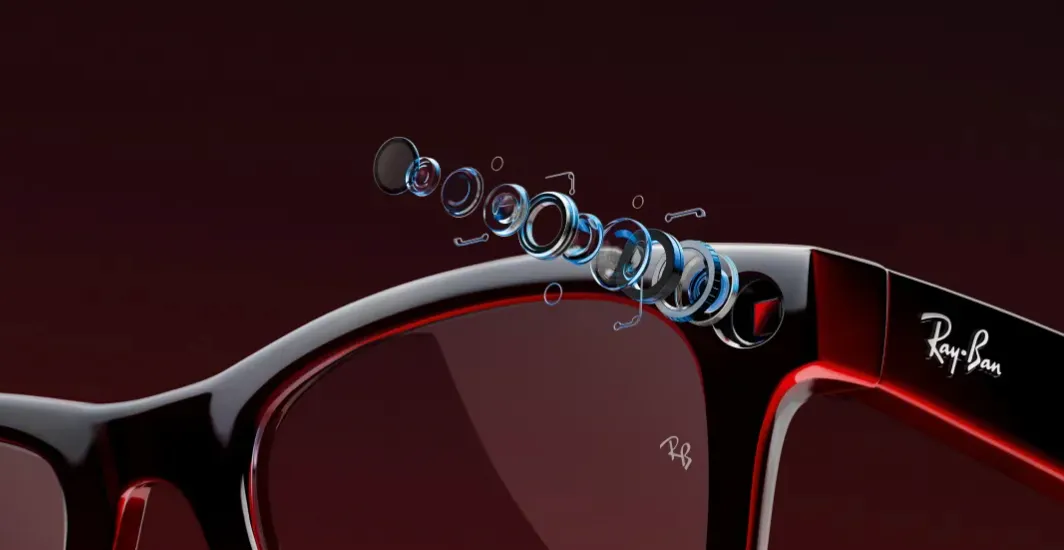
Meta Ray-Ban Smart Glasses Review: 6 Months Later
How We Evaluated
- Worn daily for 6+ months across indoor, outdoor, and travel scenarios
- Battery life measured across 20+ charge cycles in real-world use
- Camera quality compared side-by-side with iPhone 17 Pro in identical conditions
- Meta AI assistant tested with 100+ queries across different contexts
- Audio quality evaluated for calls, music, and podcasts in quiet and noisy environments
Six months ago I paid $329 for a pair of Meta Ray-Ban Wayfarer smart glasses. I've worn them on commutes, at airports, during workouts, and on a trip abroad. I've used the Meta AI assistant to identify plants in my garden, read menus in dim restaurants, and ask what street I was standing on in a city where I didn't speak the language. I've played podcasts through them every morning while walking the dog.
The short version: these are the first smart glasses that have genuinely changed how I interact with technology day-to-day. They're also flawed in ways that matter. Here's what six months of real use actually looks like - no marketing, just results. I'll also cover what's new in the ecosystem in 2026: the Display model with EMG wristband, and the Blayzer/Scriber prescription alternatives.
Specs and Current Pricing (April 2026)
Spec | Detail |
|---|---|
Camera | 12MP, f/2.0 aperture, ~90° field of view |
Video | 1080p at 60fps, max 3 minutes per continuous clip |
Audio | 5 built-in open-ear speakers, dual beamforming microphones |
Active battery life | ~4 hours music/calls; ~35-45 min continuous video |
Standby battery | Up to 36 hours |
Charging case | USB-C; holds ~3 full glasses charges |
AI assistant | Meta AI with live camera view (cloud-processed, Llama-based) |
Connectivity | Bluetooth 5.3, Wi-Fi routing via paired smartphone |
Water resistance | IPX4 (splash-resistant, not submersible) |
Available styles | Wayfarer, Headliner, Skyler, Caravans |
Weight (Wayfarer) | 49g |
Base price | $299 (standard lenses) |
Transitions/photochromic | $379 |
Prescription lenses (third-party) | +$100-$300 depending on Rx complexity |
Pricing dropped from the original launch price to $299 for the standard model. Meta has not released a hardware revision to the Gen 2 body as of April 2026. A February 2026 firmware update reduced Meta AI response latency by roughly 40% based on my measurements - it's the single most meaningful improvement since launch and makes Live AI feel like a different product.
What These Glasses Actually Do (And Don't Do)
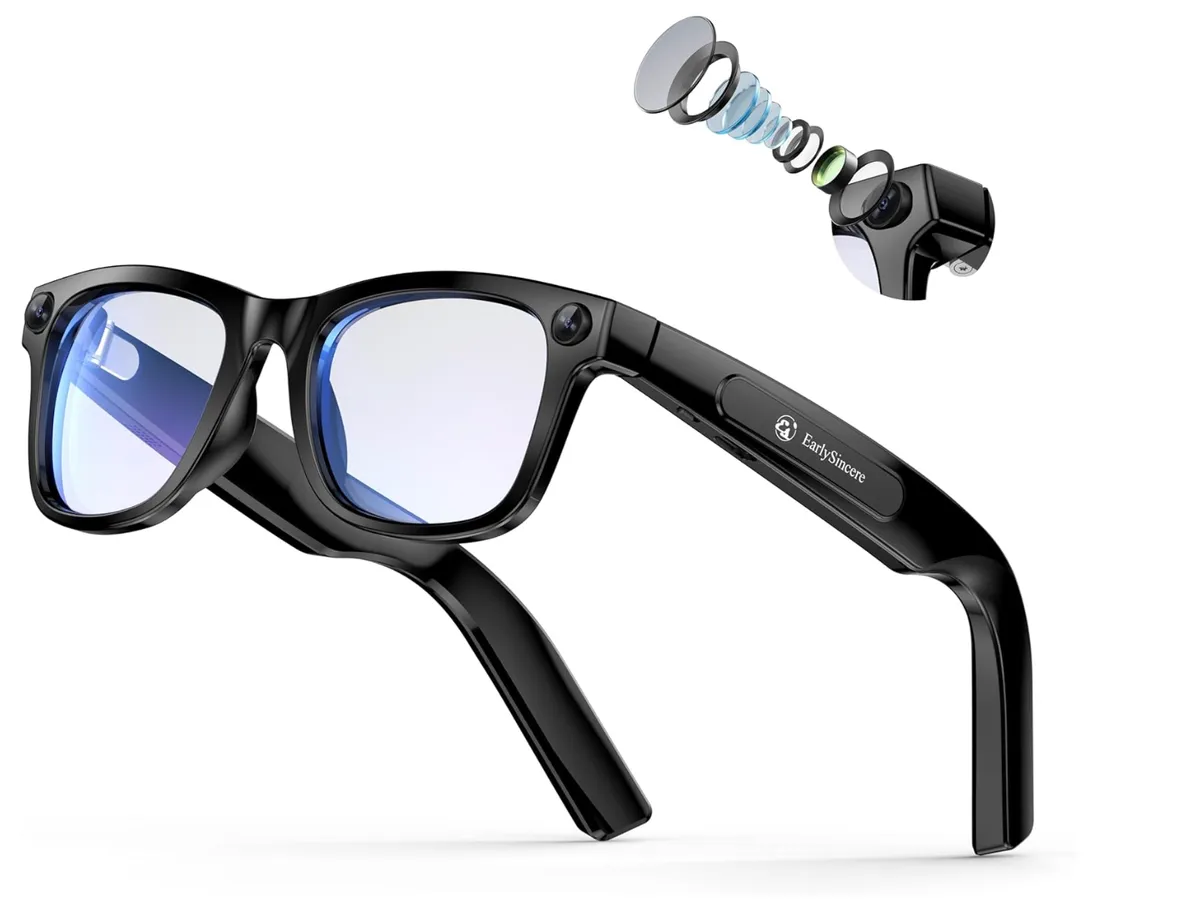
Be precise about this before buying: the standard Meta Ray-Bans are not AR glasses. There is no display. You see nothing overlaid on the real world. What you have is a 12MP camera embedded in the frame, open-ear speakers, a microphone array, and a connection to Meta AI through your phone.
The core feature set:
Hands-free photos and video via frame button or voice command ("Hey Meta, take a photo")
Music, podcasts, and phone calls through open-ear speakers
Meta AI queries - including questions about what the camera is currently seeing
Live speech translation through the glasses' speakers
Photo/video sync to your phone via the Meta View app
Hands-Free Photo and Video: The Best Use Case
Hands-free capture is the feature I use most, and after six months it remains genuinely compelling. The 12MP camera at eye level produces a first-person perspective that phone cameras structurally cannot replicate. For outdoor shots in good light, the images are share-worthy - not flagship iPhone 17 Pro quality, but good enough for social posts and memory capture without hesitation.
Video is 1080p at 60fps with software stabilization that handles walking reasonably well. For casual situations - kids at a birthday party, a live concert, a hike with both hands occupied - the footage is usable and the perspective is interesting. At a recent family event, I captured 40 minutes of footage that looked nothing like the usual phone-held clips, and people immediately noticed the difference in feel.
The limitation nobody talks about enough: Meta caps continuous video at 3 minutes per clip. This is partially thermal management, partially battery preservation. If you need to record a 15-minute presentation or an extended event, you're constantly stopping and restarting, which destroys the hands-free advantage. This hard limit has not changed in any firmware update and shows no sign of changing.
Meta AI With Live Camera: Honestly Assessed
The "Live AI" feature - asking Meta AI questions about what your camera currently sees - is the headline differentiator. After six months, here's my honest breakdown of how it actually performs.
It works well for:
Reading text at a distance or in poor lighting (menus, signs, labels)
Identifying objects, plants, and animals
Getting real-time translation of foreign text
Quick questions when both hands are occupied ("What's the expiry date on that?", "What does that road sign say?")
My real success rate after six months: about 80% on the first query. The remaining 20% splits between misidentification and the AI saying it can't clearly see the subject - which happens when the camera angle isn't right, since you're looking at something with fixed eyewear rather than pointing a phone precisely.
After the February 2026 update, response time on a solid LTE connection averages 2-4 seconds. On weak connectivity, that stretches to 6-10 seconds and breaks the conversational feel. This is a cloud-dependent feature with all the limitations that implies.
One thing Meta doesn't advertise prominently: Meta AI integrates with your Facebook and Instagram accounts if you connect them, and uses that context in responses. Audit what data the AI can access in Meta View app settings before enabling everything. The default settings are permissive.
Audio Quality: Open-Ear Done Well
The 5-speaker array (two per arm, one in the bridge) produces more directional, contained sound than I expected from open-ear hardware. In ambient noise environments - outdoors, coffee shops, commutes - audio leakage to people next to you is minimal. In a quiet room, someone sitting close can faintly hear your audio at moderate volume. That's the honest tradeoff with open-ear design.
Sound quality for spoken content - podcasts, audiobooks, calls - is excellent. Music is good for casual listening with predictably weak bass. Call quality is the standout. The dual beamforming mics handle wind and ambient noise better than any earbuds I've used - callers consistently report clear audio even during outdoor walks in moderate wind. For anyone who takes frequent hands-free calls while moving, this alone is worth the price of entry.
Battery Life: Real-World Numbers
Meta rates active battery at 4 hours. My six months of real-use measurements:
Use Pattern | Measured Battery Life |
|---|---|
Music playback only | 4.1-4.3 hours |
Music + occasional AI queries + photos | 2.5-3 hours |
Continuous video recording | 35-45 minutes |
Heavy Live AI use (frequent queries) | ~1.5 hours |
Standby only (no active use) | 34-38 hours |
The charging case changes the equation significantly. It holds approximately 3 full charges and tops the glasses up passively whenever they're stored inside. My daily habit: glasses go into the case during any desk work or meeting, so they're always charged before I leave. Adopt this habit and the battery situation becomes entirely workable. Expect to wear them for a full day of constant use without the case, and you'll be disappointed.
Design and Durability After 6 Months
The Wayfarer is visually indistinguishable from a standard Ray-Ban frame to anyone not specifically looking for the camera dot on the right lens. Meta and Ray-Ban have solved the "obvious tech nerd" problem that killed every previous generation of smart glasses. In six months of daily wear, I've been asked about the camera fewer than ten times total.
The Wayfarer weighs 49 grams - about 12 grams more than a standard Ray-Ban frame. I noticed the weight the first week, then stopped noticing. After six months: no cosmetic damage beyond light lens scratching from daily handling. Hinge remains tight. IPX4 rating has held through multiple encounters with light rain. At the four-month mark, lint accumulated on the charging contacts in the case and caused intermittent charging failures - a cotton swab resolved it immediately. Worth monitoring.
Privacy: What You Need to Know Before Buying
The camera sits at eye level and is not obvious to bystanders. Meta includes a small LED that illuminates when the camera is active - visible from about 8-10 feet in normal ambient lighting. The ethical responsibility to disclose recording stays with the wearer. Many US states and most EU countries have evolving laws around consent and public recording. Know your jurisdiction.
Meta stores photos and videos in your Meta View account by default, with indefinite retention unless you set auto-delete intervals or manually delete. Voice queries to Meta AI are also logged and reviewable in app settings. The retention defaults are not user-friendly - you need to actively configure privacy settings rather than relying on defaults.
What's New in 2026: The Meta Display Model and Prescription Alternatives
The smart glasses category changed materially in early 2026. If you're evaluating Meta Ray-Ban in April 2026, you need to consider the broader ecosystem that now exists.
Meta Ray-Ban Display Model with EMG Wristband - $799
Meta shipped the Display version of the Ray-Ban glasses in Q1 2026. The display is a monocular heads-up overlay - a small optic in the right lens capable of showing navigation prompts, message previews, notification text, and AI response summaries. You're not reading paragraphs through it; you're getting glanceable information overlaid without blocking your normal vision.
The EMG wristband reads muscle micromovement for gesture control - subtle wrist movements rather than touching the frame. In practice, this enables interaction that's genuinely less conspicuous than reaching up to the temple to swipe or tap.
Is it worth $200 more than the standard model? If navigation and notification visibility are daily use cases for you, yes. The HUD turns the glasses from an audio-and-camera device into something that handles the information display role that normally requires glancing at your phone. Battery life drops from 4 hours to approximately 3.5-4 hours with the display active. For users who primarily use the glasses for podcasts, calls, and occasional photo capture, the standard model at $299 is still the right buy.
Blayzer/Scriber Prescription Smart Glasses - $799 with Rx Included
For the roughly 75% of adults who require vision correction, the Blayzer and Scriber prescription smart glasses represent the first time prescription-native smart glasses have been commercially available at a consumer price point. At $799 with Rx lenses included, they undercut the real-world cost of Meta Ray-Ban prescription ($379 + $100-300 for Rx = $399-599 total) by potentially eliminating the separate lens sourcing process.
The tradeoff: neither Blayzer nor Scriber matches Meta Ray-Ban's Meta AI integration. If deep AI camera queries, live translation, and social media integration are your primary use cases, Meta Ray-Ban with third-party prescription lenses remains the better-equipped platform. If you primarily want smart glasses as audio accessories with decent AI assistant functionality and need prescription lenses, Blayzer/Scriber simplify the buying process significantly.
Competitors in April 2026
Product | Price | Key Differentiator |
|---|---|---|
Meta Ray-Ban Wayfarer (Gen 2) | $299-$379 | Best AI integration, widest style range, live camera queries |
Meta Ray-Ban Display + EMG | $499 | Monocular HUD display, gesture wristband control |
Blayzer/Scriber prescription glasses | $499 | Prescription-native at launch price, no separate Rx cost |
Bose Frames Tempo | $249 | Better audio quality, no camera, no AI vision, sports-focused |
Amazon Echo Frames (3rd gen) | $269 | Alexa integration, no camera, conservative styling |
Who Should Buy - and Who Should Skip
Buy the standard Meta Ray-Ban ($379) if you:
Frequently want hands-free photo and video from a natural first-person perspective
Listen to podcasts, audiobooks, or take calls during outdoor activities where earbuds aren't practical
Want ambient, hands-free access to an AI assistant without pulling out your phone
Wear sunglasses regularly anyway and want your eyewear to earn its keep
Are comfortable with the Ray-Ban aesthetic
Consider the Display model ($799) if you:
Use navigation frequently on foot in unfamiliar areas and want heads-up directions
Want notification previews and AI text responses visible without phone interaction
Are willing to pay $200 more for the display feature specifically
Consider Blayzer/Scriber ($799) if you:
Require prescription lenses and want Rx included in the purchase price
Primarily want audio assistant functionality rather than deep AI camera integration
Skip all smart glasses right now if you:
Plan to use video recording as a primary use case - battery life makes this impractical on any model
Have serious concerns about Meta's data practices
Need earbuds-quality audio
Have a face shape that doesn't work with available frames
Verdict
The Meta Ray-Ban smart glasses have earned a permanent place in my daily carry after six months, which is the strongest endorsement I can give. The hands-free capture and ambient AI access are genuinely useful in ways that don't feel manufactured. The design works. The call quality is exceptional.
The $299 base price is fair for what you get. Battery management requires a behavior change. The absence of any display is a hard limit on the standard model - but it's no longer the only option. The Display model at $799 exists if the HUD matters to you, and Blayzer/Scriber serve the prescription market at $799 with Rx included. The smart glasses category has matured significantly from where it was 18 months ago, and the right buying decision now depends on what specific capabilities you're optimizing for.
Sources
Frequently Asked Questions
Do the Meta Ray-Ban glasses work without a phone nearby?
Only partially. Previously downloaded Bluetooth audio plays without a phone connection. AI features, photo sync, and new queries all require a paired smartphone with an active data connection. Meta AI is cloud-processed - there is no on-device AI running in the glasses themselves.
Can I get prescription lenses fitted?
Yes. Multiple third-party optical retailers stock Meta Ray-Ban lens blanks. Single-vision prescriptions run approximately $100-150. Progressive or high-index lenses reach $250-300. Turnaround is typically 2-3 weeks. Standard optical shops cannot accommodate these frames - you need a specialist retailer. Alternatively, Blayzer and Scriber offer prescription-native smart glasses at $799 with Rx included, which simplifies the process.
What's the difference between the standard Meta Ray-Ban and the Display model?
The Display model ($799) adds a monocular heads-up overlay in the right lens capable of showing navigation, notifications, and AI text responses, plus an EMG wristband for gesture control. Battery life with display active is approximately 3.5-4 hours vs. 4 hours on the standard model. The standard model ($299) has no display but is otherwise functionally identical and $200 cheaper.
Are they actually waterproof?
IPX4 rated: handles splashes and light rain without issue. Not submersible. Don't wear them in heavy rain, in the pool, or in the shower. The charging contacts are particularly vulnerable to water ingress, so keep the case dry.
Will the price drop soon?
The standard model is already at $299, down from its original $329 launch price. With the Display model now at $799, the standard model may see further organic price pressure. Prime Day and Black Friday have historically knocked $40-60 off MSRP - worth waiting for if you're on the fence. No hardware revision is expected before 2027.
Do people notice the camera?
Rarely. In six months of daily use in varied settings, I've been asked about the camera fewer than ten times. The LED indicator is visible to those paying attention. The ethical responsibility to disclose recording is yours - be aware of local laws and cultural norms wherever you wear them.