Dreame X60 Max Ultra vs Roborock Qrevo Curv 2 Flow: Best Robot Vacuum 2026
 Robot vacuum self-cleaning station" loading="lazy" width="1200" height="675" />
Two robot vacuums released in the past year are competing for the same premium buyer: someone who wants the best floor cleaning performance available, does not want to supervise the robot, and is willing to pay $1,000 to $1,700 to get it. The Dreame X60 Max Ultra and the Roborock Qrevo Curv 2 Flow are both flagship products from brands that have dominated independent testing for the past three years. The choice between them is not obvious, and one of them has a significant flaw that does not show up in the marketing materials.
This comparison uses independent test results, verified specs, and documented pricing. Where independent testing contradicts manufacturer claims, the independent data wins.
Quick Specs Comparison
Spec | Dreame X60 Max Ultra | Roborock Qrevo Curv 2 Flow |
|---|---|---|
Price | $1,700 (frequently $1,360 on sale) | $999 (launch promo $849) |
Suction power | 35,000 Pa | 20,000 Pa |
Robot height | 3.12 inches (retractable LiDAR) | Not listed as a thin design feature |
Mop system | DuoBrush + heated mopping (104°F) | SpiraFlow roller mop (220 RPM, 15N pressure, 8 nozzles) |
Mop pressure | 15N | 15N |
Mop lift for carpet | Yes (extending mop pad system) | 15mm lift |
Mop wash temperature | 104°F heated mopping | 167°F hot water wash |
Mop dry temperature | Not specified | 131°F hot air dry |
Obstacle avoidance | Dual AI cameras, 280+ obstacle types | Structured light + RGB camera, 200+ obstacle types |
Noise level (standard mode) | 55 dB(A) | Not published at equivalent detail |
Independent mopping rank | #1 overall (Vacuum Wars) | Below average in independent mopping testing |
Suction Power: A Significant Difference
The Dreame X60 Max Ultra runs at 35,000 Pa of suction, and the Roborock Qrevo Curv 2 Flow at 20,000 Pa. This is a 75% gap in rated suction, which in practice means the X60 Max Ultra is substantially more capable on deep-pile carpet, pet hair embedded in textured rugs, and large debris pickup. The Qrevo Curv 2 Flow's 20,000 Pa is not weak for a standard hard floor cleaning scenario, but on carpeted homes with pets or high-traffic areas that collect embedded debris, the suction difference is material.
Suction numbers from manufacturers should always be treated with skepticism because the measurement conditions vary. However, the gap here is large enough that real-world performance differences are predictable: independent carpet cleaning tests consistently show high-suction robots performing better on plush carpet regardless of brand. If your home is predominantly hard floor, the suction gap matters less. If you have thick area rugs or wall-to-wall carpet, the X60 Max Ultra's advantage is meaningful.
The Mopping Situation: Where the Comparison Gets Complicated
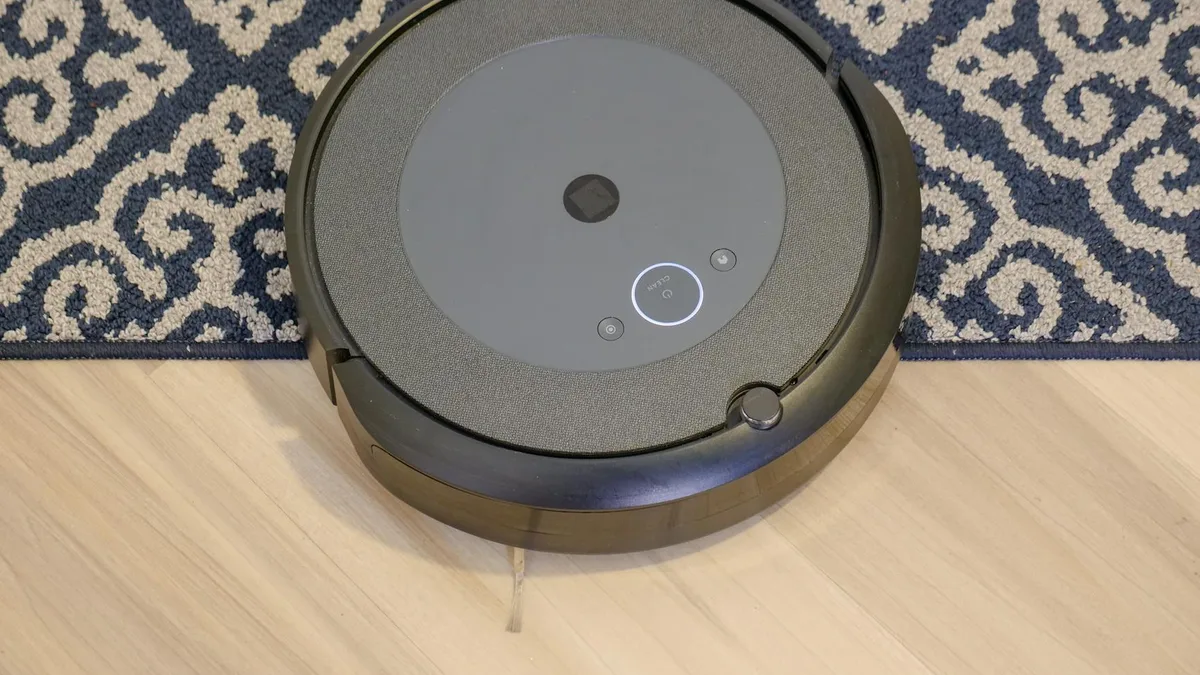
Dreame X60 Max Ultra: DuoBrush and Heated Mopping
The X60 Max Ultra's mopping system uses two rotating mop pads (the DuoBrush system) with 15N of downward pressure each and heats the mopping solution to 104°F. The heat matters because hot water is more effective at dissolving grease, oils, and certain food residue than cold water. The extending mop pad system allows the robot to reach close to walls without the base station's mop solution contaminating carpeted areas during transition.
The extending mop design also means the X60 Max Ultra can handle homes with mixed hard floor and carpet more cleanly: the mop pads retract when the robot transitions to carpet, reducing wet streak incidents on carpet edges. This is a common failure mode on cheaper mop robots that do not manage the carpet-floor transition well.
Independent testing by Vacuum Wars ranked the X60 Max Ultra as the number one robot vacuum overall. Mopping performance was a key factor in that ranking. This is the most credible independent validation available for a robot vacuum product.
Roborock Qrevo Curv 2 Flow: Impressive Specs, Disappointing Results
The Roborock Qrevo Curv 2 Flow introduces something genuinely new: the SpiraFlow roller mop. This is a cylindrical roller rather than flat mop pads, spinning at 220 RPM with 8 water-hydrating nozzles feeding water continuously across the roller surface and 15N of downward pressure. The concept is borrowed from commercial floor scrubbers, where roller mops are standard equipment for large-area cleaning.
The base station adds a 167°F hot water wash cycle for the roller and a 131°F hot air dry, which are the highest wash and dry temperatures in any consumer robot vacuum base station. The goal is thorough cleaning of the mop itself between passes, reducing cross-contamination and odor from a wet roller sitting in a base station between uses.
Here is the problem: independent mopping testing rated the Qrevo Curv 2 Flow's mopping performance as below average. The roller mop system, despite its impressive specifications and commercial inspiration, did not translate into superior cleaning results on the floor. This is a significant finding. Roborock's mopping systems on previous models (Qrevo Pro, Qrevo Curv) were competitive in testing. The Curv 2 Flow's innovative roller approach produced worse practical results than the established pad-based systems.
This does not make the Qrevo Curv 2 Flow a bad vacuum. Its suction performs well at 20,000 Pa on hard floors. But if mopping performance is a primary reason you are buying a premium robot vacuum, the independent data says the Dreame X60 Max Ultra is the more capable machine.
Obstacle Avoidance: Both Are Capable, X60 Is Slightly Ahead
The Dreame X60 Max Ultra uses dual AI cameras and claims recognition of over 280 obstacle types. The Roborock Qrevo Curv 2 Flow uses a structured light sensor combined with an RGB camera and claims over 200 obstacle types. Both are legitimate premium obstacle avoidance systems.
The practical question with obstacle avoidance is not the spec number but real-world performance with the specific objects in your home: charging cables, pet toys, shoes, small socks, and other floor debris that cheaper robots push around or get stuck on. Both the X60 Max Ultra and Qrevo Curv 2 Flow perform well on standard obstacle categories. The X60 Max Ultra's dual camera system and larger obstacle database give it an edge on unusual objects and low-light scenarios, but the difference in a typical home is unlikely to be dramatic.
Where obstacle avoidance systems still struggle across the entire premium segment: thin charging cables lying flat on hard floors, transparent plastic items, and very dark objects that absorb rather than reflect sensor light. Neither robot is immune to these edge cases.
The Retractable LiDAR Advantage
The X60 Max Ultra's 3.12-inch height is made possible by a retractable LiDAR system. The LiDAR tower, which usually protrudes above the robot body to get an unobstructed 360-degree scan, retracts when the robot needs to pass under furniture. At 3.12 inches, the X60 Max Ultra can clean under most sofas, bed frames, and low furniture where taller robots cannot reach.
This is not a feature that appears in every review but it is relevant for real-world cleaning coverage. Dust accumulates under low furniture and the inability to reach those areas means the robot maps and cleans a smaller portion of your actual floor area than the floor plan suggests. If your home has low sofas or platform bed frames, the retractable LiDAR height matters.
Roborock does not specify a notable low-profile design for the Qrevo Curv 2 Flow, and the fixed LiDAR tower on most Roborock models limits their under-furniture access. Check the specific clearance of furniture in your home before assuming any robot will clean under it.
Base Station Cleaning: Roborock Wins on Hygiene
The Qrevo Curv 2 Flow's base station hot water wash at 167°F and hot air dry at 131°F are the strongest self-cleaning specifications in consumer robot vacuums. A roller mop that is washed at 167°F and dried at 131°F should emerge from the base station genuinely clean and dry, reducing the bacterial load and smell that accumulates in wet mop systems that use lower-temperature cleaning.
The X60 Max Ultra's heated mopping at 104°F applies heat at the floor surface rather than during the base station wash cycle. It cleans the mop pads through a spinning and washing process in the base station, but the wash temperature is lower than the Qrevo Curv 2 Flow's 167°F. For users who are concerned about bacteria, mold, or odor in the base station, the Qrevo Curv 2 Flow's cleaning process is superior on paper.
In practice, both systems handle mop hygiene adequately for typical home use. The 167°F wash temperature advantage becomes more relevant in homes with pets, young children, or users who mop with cleaning solution and want to ensure the mop is thoroughly cleaned between sessions.
Noise Comparison
The Dreame X60 Max Ultra's published noise level of 55 dB(A) in standard mode is notably quiet for a robot vacuum with 35,000 Pa of suction available. For context, a normal conversation is approximately 60 dB, and most robot vacuums run between 65-72 dB in standard modes. At 55 dB, the X60 Max Ultra can run while you are on a phone call or watching TV in the same room without significant intrusion.
Roborock does not publish a 55 dB(A) noise figure for the Qrevo Curv 2 Flow, making direct comparison difficult. Roborock's previous models have typically tested around 65-70 dB in standard mode. The X60 Max Ultra's 55 dB figure, if consistent across modes, is a meaningful quality-of-life advantage for daytime cleaning in occupied homes.
Price and Value
The list price gap is substantial: $1,700 for the X60 Max Ultra versus $999 for the Qrevo Curv 2 Flow. However, the X60 Max Ultra is frequently discounted to $1,360, which narrows the real-world gap to approximately $360-$500 depending on when you buy.
The value calculation:
At $999, the Qrevo Curv 2 Flow is priced competitively for a premium robot vacuum with 20,000 Pa suction and strong base station self-cleaning.
At $1,360 (X60 Max Ultra sale price), you are paying approximately $360 more for: 75% more suction, the top-ranked mopping system in independent testing, retractable LiDAR for low-furniture access, and 55 dB(A) quiet operation.
At full $1,700 list price, the X60 Max Ultra's advantages need to matter significantly to justify the $700 premium.
The practical advice: buy the X60 Max Ultra when it is on sale at $1,360. At that price the performance premium over the Qrevo Curv 2 Flow is justified, particularly if mopping is important to you. If the X60 Max Ultra is at full price and the Qrevo Curv 2 Flow is at $849 on promotion, the gap becomes harder to justify unless you specifically need the suction power for heavy carpet cleaning.
Who Each Robot Is Right For
Buy the Dreame X60 Max Ultra if:
Mopping performance is a priority and you want the independently ranked best-in-class result
Your home has thick carpet, pets, or high-traffic areas where 35,000 Pa suction matters
You have low furniture (under 3.5 inches clearance) that other robots cannot access
Quiet operation during daytime cleaning matters and 55 dB(A) is a meaningful spec to you
You can find it at the $1,360 sale price, which represents the strongest value case
Buy the Roborock Qrevo Curv 2 Flow if:
Your home is predominantly hard floor and 20,000 Pa suction is adequate for your debris level
The 167°F base station wash and 131°F hot air dry are features you specifically want for mop hygiene
The $999 launch price (or $849 promotional price) fits your budget and you are not willing to spend $1,360+
You are a Roborock ecosystem user who wants to stay on the Roborock app and integration
Mopping performance is secondary to vacuuming in your use case
Consider Neither if:
Your primary floor type is carpet only and you do not need mopping at all: the Roborock Qrevo Pro or Dreame L20 Ultra at lower price points deliver comparable vacuuming performance for less
You have a single-floor apartment under 800 square feet: the premium base station features (extended cleaning, auto-empty, mop washing) are most valuable in larger homes with longer cleaning cycles
What the Independent Testing Means for This Decision
The Vacuum Wars ranking of the X60 Max Ultra as the number one overall robot vacuum is the most significant data point in this comparison. Vacuum Wars tests robot vacuums across vacuum performance, mop performance, obstacle avoidance, and navigation, making its overall ranking a composite that captures most of what matters in daily use.
The Qrevo Curv 2 Flow's below-average mopping result in independent testing is equally significant. Roborock created a genuinely new mopping mechanism, invested in impressive base station cleaning temperatures, and the result on the floor underperformed expectations. This could improve with firmware updates as Roborock optimizes the roller's water delivery and rotation parameters, but as of testing, the hardware innovation did not produce better cleaning results.
Roborock's vacuum performance on the Qrevo Curv 2 Flow remains competitive. If you are evaluating it primarily as a vacuum and treating the mop as a secondary convenience feature, the below-average mopping result is less disqualifying. If you are buying it because you want a premium mopping robot, the independent data is a serious caution.
Frequently Asked Questions
Is 35,000 Pa suction actually necessary in a robot vacuum?
For hard floors with light debris, 20,000 Pa is more than sufficient. For medium-pile carpet, most premium robots at 10,000-20,000 Pa perform adequately. For plush carpet, high-pile rugs, or homes with dogs and cats that shed, 35,000 Pa makes a measurable difference in debris extraction per pass, reducing the number of passes required to clean heavily soiled carpet. If your home is primarily tile, hardwood, or low-pile carpet, the suction difference between the two robots here is less relevant to your buying decision.
Why did the Qrevo Curv 2 Flow's roller mop score poorly if its specs are impressive?
Innovative mechanisms do not always translate to better cleaning results. The SpiraFlow roller at 220 RPM with 8 nozzles is mechanically interesting, but independent testing evaluates actual floor cleaning results: how much grime is removed, how consistently, and how much water is left behind. A roller that spins rapidly can spread dirty water rather than lifting it if the pad absorption and squeegee mechanics are not optimized. Roborock may address these issues through software updates to water flow rate and rotation speed, but the initial testing results are what buyers have as a reference today.
How does the X60 Max Ultra's retractable LiDAR work?
The LiDAR tower on the X60 Max Ultra can lower mechanically into the robot body when the robot detects low-clearance furniture ahead, using proximity sensing to trigger the retraction. When the robot clears the obstacle, the LiDAR tower raises again for full 360-degree mapping. This allows the robot to continue mapping and navigating in rooms where a fixed-tower robot would stop at the furniture boundary and leave an uncleaned zone. The practical benefit is larger effective cleaning coverage in homes with low beds, sofas on short legs, or platform furniture.
Does the Dreame X60 Max Ultra work on thick carpet with the mop attached?
Yes. The X60 Max Ultra's mop pads lift when the robot transitions from hard floor to carpet, using the extending mop pad system to retract the wet pads above the carpet surface. This prevents wet streaks on carpet and allows the robot to clean mixed-floor homes without requiring the user to physically remove the mop before the robot reaches carpeted areas. All premium robots in 2025-2026 should handle this transition, but the implementation quality varies. Dreame's implementation is one of the more reliable ones at the premium tier.
Can I use either robot without auto-empty or auto-refill?
Both robots require the base station for their full feature set: auto-empty for the dustbin, auto-refill for the water tank, and mop washing. Without the base station, you would need to manually empty the dustbin after each run, manually fill the water tank, and manually clean the mop pads. The base stations are included with both robots at the listed prices. If base station connectivity is a concern (placement, proximity to water and drain), measure your intended location before purchasing, as the base stations for both models are larger than earlier-generation equivalents due to the self-cleaning mechanisms.
Which robot vacuum is best for pet hair in 2026?
For homes with dogs or cats that shed heavily, the Dreame X60 Max Ultra's 35,000 Pa suction is a meaningful advantage. Pet hair embeds in carpet fibers and along baseboard edges, and higher suction extracts it more completely per pass. The DuoBrush side brushes also handle the wall-edge pet hair accumulation better than single-brush designs. For hard floors only with pet hair, the Qrevo Curv 2 Flow's 20,000 Pa is adequate and the mopping component helps with pet dander and floor-level debris. But if carpet is involved, the X60 Max Ultra is the stronger choice for pet hair specifically.