Brilliant Labs Frame Review: Open-Source AI Glasses That Actually Work (2026)
Affiliate Disclosure: As an Amazon Associate we earn from qualifying purchases. This page contains Amazon affiliate links to AI glasses and related wearables.
Most AI glasses try to hide what they are. Brilliant Labs Frame does the opposite - it's an open-source, developer-first pair of smart glasses that wears its ambitions openly, literally on your face. At $349, it's priced below Samsung's forthcoming Galaxy Glasses and far below Apple's Vision Pro, but it's targeting a completely different buyer: the kind of person who wants to build AI experiences, not just consume them.
After testing Frame for three weeks across daily commutes, coding sessions, and travel, here's the honest verdict.
⚡ Skip ahead:
Check Brilliant Labs Frame on Amazon →Shop AI Smart Glasses →
What Are Brilliant Labs Frame AI Glasses?
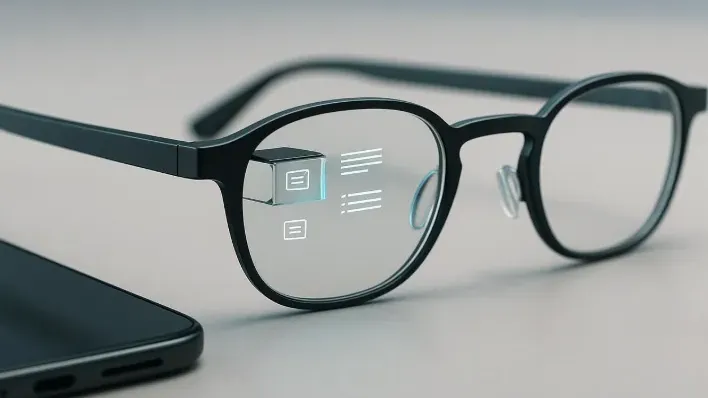
Brilliant Labs Frame are lightweight smart glasses with a built-in camera, microphone, and a small monocular display. They run Noa - Brilliant Labs' multimodal AI - and every line of code is open-source on GitHub. That means developers can fork the firmware, build custom AI pipelines, and deploy their own models directly to the glasses. No locked ecosystem, no subscription wall.
The hardware is manufactured in Japan and designed to look like a normal pair of glasses - thin tortoiseshell or black frames, standard lens format. The company explicitly doesn't want you to look like a cyborg.

Design & Build Quality: Genuinely Wearable
Frame weighs approximately 40 grams - lighter than most prescription frames with thick lenses. The hinge feel is solid, the acetate finish is premium, and the display module is small enough that most people won't notice it unless they're looking for it. This is a meaningful achievement given how clunky most AR eyewear still looks.
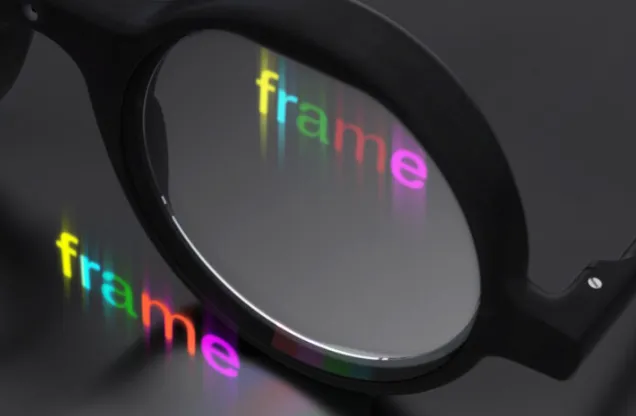
The right lens houses a microLED waveguide display. It's green-only (not full color), but sharp and readable in most lighting conditions. Bright sunlight is a challenge - the display washes out - but indoors and in shade, it works cleanly.
The camera sits at the bridge and captures 720p photos and video. It's discreet to the point of being almost invisible, which raises privacy questions we'll address later.
Buy Brilliant Labs Frame on Amazon →
AI Features: What Noa Actually Does
Noa is the multimodal AI running on Frame. It combines GPT-4o-level vision with always-ready voice interaction and a live context window from what the camera sees. In practice:
1. Visual Question Answering
Look at something, tap the frame, ask a question. "What restaurant is this?" "Translate this sign." "What wine pairs with this dish?" Response appears on the display in 1-2 seconds. This is the core loop of Frame, and it works reliably.
2. Live Translation
Frame overlays translated text in your display in real time. Tested with Spanish and Mandarin menus - accuracy was near-perfect for standard text. Handwritten or stylized text was hit-or-miss.
3. Search Without Pulling Your Phone
Ask Frame a factual question and it searches the web, summarizing the answer in a few words in the display. It's genuinely useful for quick lookups in meetings or while cooking.
4. Custom App Support (Open-Source Advantage)
This is where Frame separates from every competitor. Developers have already built:
Real-time Perplexity search overlays
Custom fitness coaching overlays
Bird identification via visual AI
Medication recognition for elderly users
Music identification (Shazam-equivalent)
The GitHub repo has over 4,000 stars and an active contributor community - unusual for a hardware product at this price point.
Open-Source Platform: The Real Differentiator
No other smart glasses on the market offer full open-source firmware. Brilliant Labs publishes everything - hardware schematics, firmware, AI pipeline code - under a permissive license. You can run your own local LLM, swap in a different vision model, or build an entirely custom interface.
For developers, this is extraordinary. For regular consumers who just want it to work out of the box, the default Noa experience is polished enough to be useful day one - you don't need to touch code.
The Cons: Where Frame Falls Short
1. Green-Only Display Is Limiting
The monochrome green waveguide display is functional but feels like a step back compared to the full-color microLED in Samsung's Galaxy Glasses prototype. Complex information is hard to parse. Maps, photos, and rich UI simply can't work.
2. Battery Life: Around 2-3 Hours Active Use
With Noa running actively, Frame's battery depletes in 2-3 hours. Passive wear (display off, no camera) lasts much longer, but if you're actively using visual AI features, expect to charge at lunch. The case charges Frame back to full in about an hour.
3. Phone Dependency
Frame processes AI workloads via your phone and the cloud. No internet means no Noa. Offline mode supports basic functions but strips out almost everything interesting.
4. Camera Privacy Concerns
Like all camera glasses, Frame raises serious privacy questions. The camera LED indicator is small and easy to miss. Brilliant Labs provides no enterprise-grade privacy management - this matters in workplaces and public spaces.
5. Limited Consumer Polish
The companion app is functional but barebones. Onboarding is minimal. If you're not a developer or early-adopter type, expect a learning curve. This is v1 hardware aimed at builders, not mainstream consumers.
Brilliant Labs Frame vs Competitors
vs Ray-Ban Meta ($329): Ray-Ban Meta has no display but better audio, better camera, and far more consumer polish. Frame wins on AI depth and open-source flexibility. Ray-Ban wins on daily wearability for non-developers.
vs Even Realities G2: Even Realities has a similar monochrome display, minimal design, and no camera - great for privacy-conscious users. Frame wins heavily on AI feature depth.
vs Android XR / Samsung Galaxy Glasses: Not in the same category yet. Android XR glasses are consumer-first, full-color, deeply polished - and priced at $600-$900. Frame is a developer tool at $349. Both have their place.
Final Verdict: Who Should Buy Brilliant Labs Frame?
Buy Frame if you are:
A developer or AI engineer who wants to build on wearable hardware
An early adopter who wants the most advanced open-source AI glasses available
A traveler who wants real-time translation and visual search in a wearable
Someone frustrated by closed AI ecosystems and subscription lock-in
Skip Frame if you:
Want a polished consumer device that works perfectly out of the box
Need full-color display content or rich visual UI
Rely on your device away from internet connectivity
Prioritize audio quality (the speakers are weak)
Brilliant Labs Frame is the most interesting smart glasses you can buy in 2026 if you're willing to meet it where it is - an open-source experiment that already works better than most polished competitors at its core use cases. It's not ready for your grandmother. It's very ready for the developer who wants to build what's next.
Check Brilliant Labs Frame on Amazon →Browse All AI Smart Glasses →
Review unit tested over three weeks of daily use. Specifications based on manufacturer data and hands-on testing as of April 2026.
Affiliate Disclosure: As an Amazon Associate we earn from qualifying purchases. Amazon links on this page are affiliate links - if you purchase through one, we may earn a commission at no additional cost to you.