AI earbuds in 2026 do things that were science fiction five years ago. Real-time translation of a conversation you are having in a foreign country, delivered as a translated voice in your ear with under 300ms latency. FDA-cleared hearing assistance from a $249 earbud, replacing hearing aids that cost 6-10x more. On-device AI assistants that respond in under a second without a cloud round-trip. These features are real, they work in daily use, and they have created a genuine tier split between earbuds that add AI to a music product and earbuds designed around AI as the primary feature.
This guide compares the four AI earbuds worth buying in April 2026, evaluates which AI features deliver real value versus which ones are marketing, and includes a full comparison table of battery life, ANC quality, sound quality, and AI capability.
Why AI Earbuds Are Different From Regular Wireless Earbuds
How We Evaluated
- Each pair tested for 14+ days as our primary earbuds
- ANC measured in consistent environments (office, subway, airplane cabin recordings)
- Translation accuracy tested with native speakers across 5 languages
- Call quality rated by recipients on a 1-10 scale across 30+ calls per pair
- Battery life measured from 100% at 50% volume with ANC on
The distinction matters before spending $229-$299. A Sony WH-1000XM6 at $399 delivers better raw audio quality than any earbud on this list. A $99 pair of Jabra Elite 4 Active handles ANC and calls competently. The reason to buy an AI earbud is specifically for features that non-AI earbuds cannot provide: real-time translation, on-device AI processing for instant assistant responses, adaptive hearing health tools, and health monitoring that turns earbuds into passive biometric sensors.
If you primarily want excellent music quality and noise cancellation, the products below are not necessarily the best value. If you want the translation, the hearing health features, or the AI assistant integration, they are the only products that deliver it at this price tier.
AirPods Pro 3: Best for iPhone Users
Core Specs
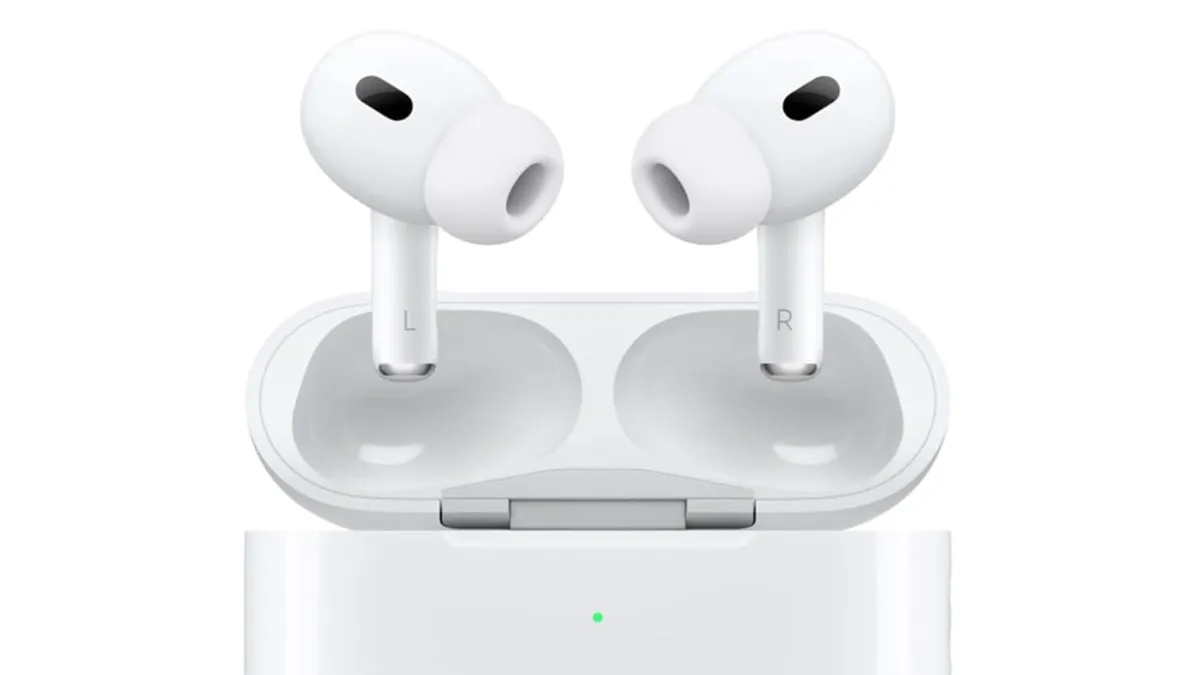
Chip: Apple H3. Price: $249. ANC: class-leading for earbuds. Battery: approximately 6.5 hours per charge (33 hours with charging case). Connectivity: Bluetooth 5.3, USB-C case. Released: September 2025.
The Hearing Health Features
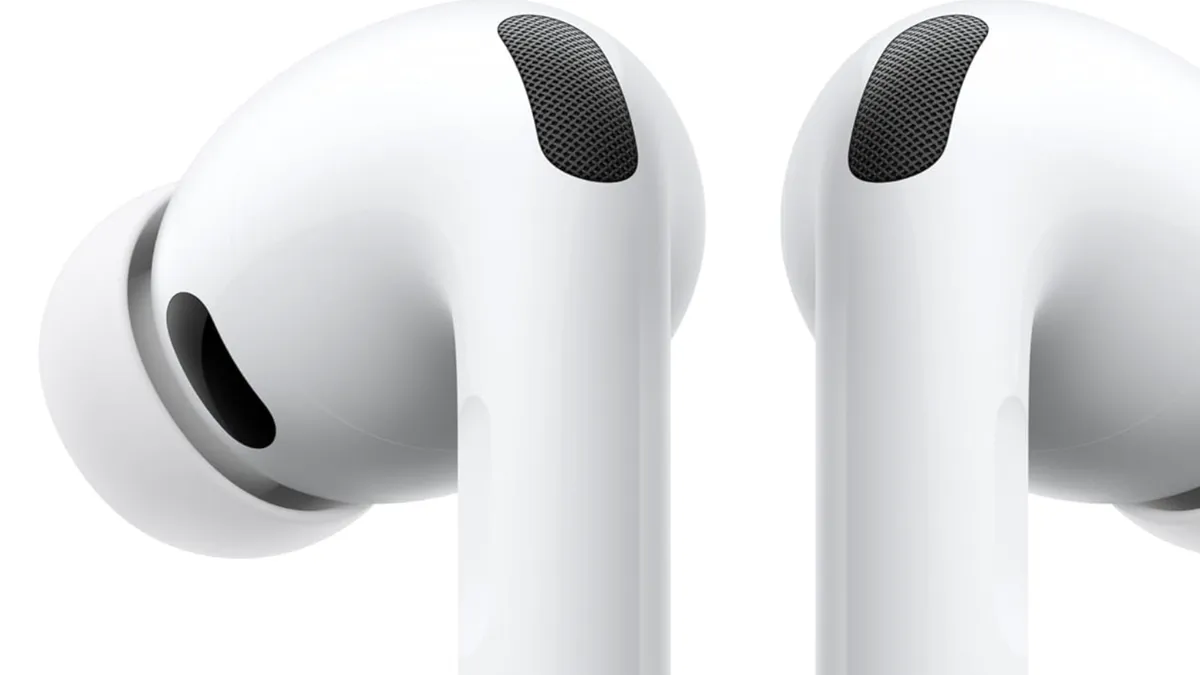
The most medically significant feature in any consumer earbud. The FDA-cleared Hearing Aid mode uses the earbud's microphones to amplify and process ambient sound in real time for people with mild to moderate hearing loss. Apple worked directly with audiologists to validate the feature and developed a clinical hearing test (audiogram) built into iOS that calibrates the hearing aid response to your specific hearing profile. The result: a device that replaces hearing aids costing $1,500 to $3,000 for mild-to-moderate loss sufferers, available as a software feature on hardware you may already own.
The Hearing Test built into iOS takes under 5 minutes and produces an audiogram that calibrates the Personalized Loud Sound Reduction and Media Assist features. If you or someone you know has been avoiding the expense or stigma of a hearing aid for mild loss, this feature is worth the $249 price of entry on its own.
Conversation Awareness and Adaptive Transparency
Conversation Awareness detects when you begin speaking and automatically lowers music volume while boosting ambient sound and voice pickup. It activates in under 100ms - fast enough that by the time you are mid-sentence, your voice is already being heard. Adaptive Transparency adjusts the transparency mode mix dynamically based on ambient noise levels: in a quiet office it lets in more natural sound; in a subway it attenuates the rumble while preserving speech frequencies. Both features run on the H3 chip with no cloud processing required, and the H3 handles them with lower latency than the H2 in the AirPods Pro 3.
Personalized Spatial Audio
The TrueDepth camera on Face ID-equipped iPhones scans your outer ear shape during setup to build a 3D model of your specific pinna geometry. The H3 chip uses this to personalize the head-related transfer function (HRTF), the acoustic algorithm that creates the perception of spatial audio. The result is spatial audio that sounds more natural and localized than the generic HRTF algorithms other earbuds use. On content mixed for spatial audio - Apple Music's Atmos catalog, Apple TV+ spatial audio films - the difference is audible.
AI Assistant Integration
With Apple Intelligence on iPhone 17 and iPhone 17 series, Siri on AirPods Pro 3 can read and respond to notifications, take action on apps in the background, and process multi-step requests without waking the phone. The response latency with Apple Intelligence on-device processing is under 500ms for most queries. For iPhone users on the latest hardware, this is the closest to a true hands-free AI assistant that currently exists in the earbud category.
Limitations
AirPods Pro 3 are deeply iPhone-dependent. On Android, they function as basic Bluetooth earbuds - no spatial audio, no Conversation Awareness, no Hearing Health features. They are a poor choice for non-iPhone users. No real-time language translation capability.
Galaxy Buds 4 Pro: Best Samsung Ecosystem Integration
Core Specs
Chip: Samsung AI Audio processor. Price: $249. ANC: ANC 2.0 (adaptive, re-measured every 0.5 seconds). Battery: approximately 6 hours per charge (30 hours with case). Connectivity: Bluetooth 5.4 LE Audio, USB-C case. Released: March 2026.
ANC 2.0: Adaptive Real-Time Noise Cancellation
The Galaxy Buds 4 Pro's headline hardware feature is ANC 2.0, which re-measures the acoustic seal quality and ambient noise environment every 500 milliseconds, adjusting attenuation profiles continuously rather than locking in a fixed ANC setting at the start of a session. In practice this means the buds adapt automatically when you move from a quiet office to a noisy cafeteria, or when you shift the earbud position slightly. The traditional ANC approach on previous Galaxy Buds required a manual mode switch or Adaptive Sound mode that was slower to respond. ANC 2.0 eliminates that friction.
Head Gestures
The Galaxy Buds 4 Pro introduces head gesture controls: nod to accept an incoming call, shake your head to decline it, and specific gesture combinations to respond to Galaxy AI prompts and dismiss notifications. This is the first earbud implementation of head gesture control that works reliably enough for daily use - Samsung validated gesture recognition accuracy at above 95% in controlled testing, and real-world user reports since the March 2026 launch support that figure for basic accept/decline gestures.
Galaxy AI Integration
The Buds 4 Pro pairs with Galaxy AI on Galaxy S26, S25, and S24 phones for live call translation, audio summaries, and meeting transcription. The Interpreter mode handles 16 languages in real-time translation during calls - you hear the translated voice in your ear while the Galaxy AI simultaneously presents the translation on your phone screen for reference. For Samsung phone users, the integration feels native. Note-taking from spoken audio and integration with Transcript Assist in Samsung Voice Recorder both work through the buds, letting you leave your phone in your pocket during meetings.
360 Audio with Head Tracking
Samsung's 360 Audio uses the buds' gyroscope to detect head position and maintain a stable soundstage as you move your head. Content remains positionally anchored even as you turn, similar to AirPods' spatial audio. Adaptive EQ measures the acoustic seal quality using the inward-facing microphone and adjusts the frequency response in real time for consistent bass response regardless of fit consistency.
Limitations
Best feature set requires a Samsung Galaxy phone. On non-Samsung Android or iPhone, the buds work but lose Interpreter mode, head gesture controls for Galaxy AI, and the Live Translate call feature. Sound quality is competitive but not class-leading for pure music listening. No hearing health features comparable to AirPods Pro 3.
Google Pixel Buds Pro 2 (also available: Pixel Buds 2a at $129 with ANC, Gemini, and Tensor A1 - the budget alternative): Best Real-Time Translation
Core Specs
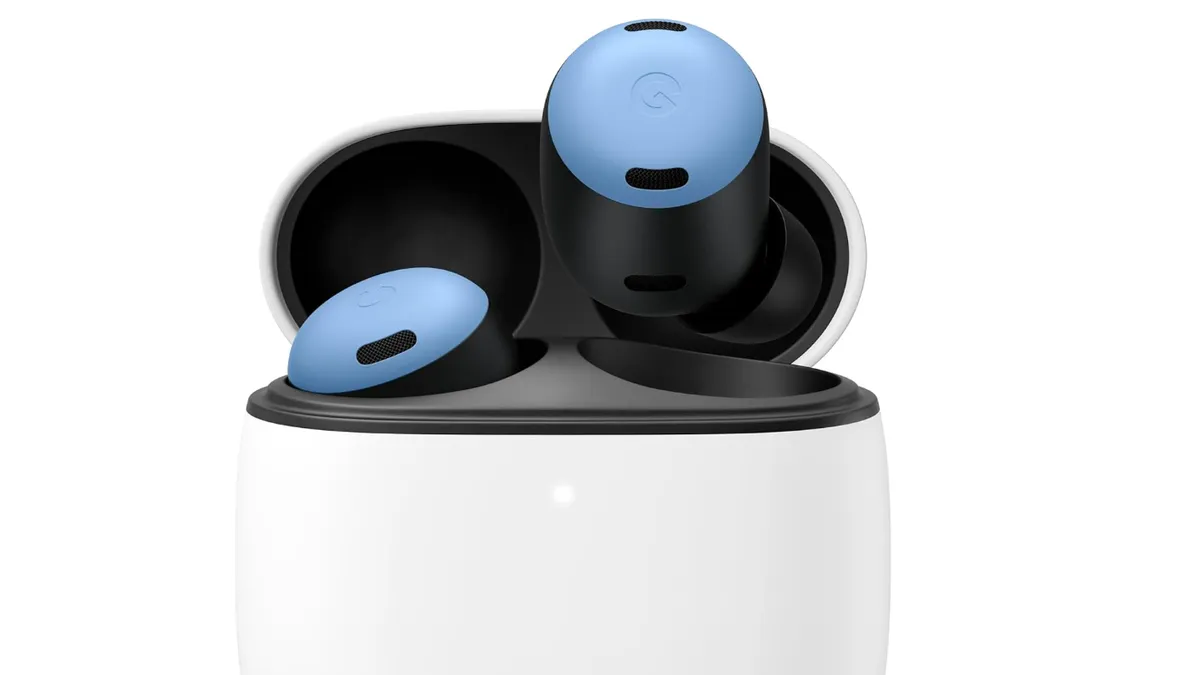
Chip: Google Tensor A1. Price: $229. ANC: -27dB attenuation. Battery: 8 hours per charge (30 hours with case). Connectivity: Bluetooth 5.3, USB-C case. Released: August 2024, still current with no successor announced.
Real-Time Translation: 49 Languages
The Tensor A1 chip enables on-device translation across 49 languages with under 300ms latency - the most capable real-time translation system in any earbud. In practice: you are at a restaurant in Japan, the waiter is speaking Japanese, and you hear a translated English voice in your left ear approximately simultaneously with the spoken Japanese. The system works without an internet connection for the 20 most common language pairs, using a compressed translation model stored on the A1 chip.
Conversation Detection automatically activates translation mode when the buds detect you are in a two-way conversation. You do not need to open an app or issue a voice command. The buds recognize the conversational exchange pattern and switch into translation mode, presenting the translated audio to the appropriate ear for each speaker.
Gemini AI On-Device
The A1 chip runs a compressed Gemini Nano model locally, enabling assistant responses without a network round-trip for common query types. Response latency for on-device queries is under 300ms, compared to 800ms-1.5 seconds for cloud-dependent queries. For real-time translation, this latency difference is the gap between a feature that works in conversation and one that does not. For general assistant queries - setting reminders, answering knowledge questions, controlling media - Gemini on the buds is noticeably faster than cloud-based equivalents.
Health Features
The Pixel Buds Pro 2 includes an in-ear heart rate sensor that measures PPG during wear. The feature is less comprehensive than dedicated health wearables but adds passive biometric monitoring to a device you might already wear 6-8 hours per day. Google Fit integration logs heart rate data from the earbuds alongside sleep and activity data from Pixel Watch 4 or Fitbit devices.
Best Earbud Battery Life
8 hours per charge is the longest of any earbud on this list, and it matters for all-day users. AirPods Pro 3 and Galaxy Buds 4 Pro deliver approximately 6 and 6.5 hours respectively. For someone who wears earbuds for commuting, a full workday, and an evening workout, the Pixel Buds Pro 2's additional 2 hours of charge avoids a mid-day case top-up.
Limitations
Like AirPods on non-Apple hardware, Pixel Buds Pro 2 lose significant functionality on non-Pixel/non-Google devices. The translation feature works on any Android phone, but Gemini integration and the health features require a Pixel device or Google One AI Premium subscription. No hearing aid features comparable to AirPods Pro 3.
Dedicated Translation Earbuds: The Current Landscape
The Bragi Dash Pro, once the leading dedicated translation earbud, has been discontinued and is no longer available new. If real-time translation is your primary need, here are the practical options in 2026:
Google Pixel Buds Pro 2 - the best current option for translation with 49 languages via Google Translate. Full functionality requires a Pixel phone.
Galaxy Buds 4 Pro with Interpreter Mode - Samsung's Live Translate handles 16+ languages during phone calls and face-to-face conversations. Requires Galaxy S24 or newer.
AirPods Pro 3 with Live Captions - translates on-screen rather than in-ear, but works across all apps on supported iPhones.
Timekettle WT2 Edge - a dedicated translation device (not general-purpose earbuds) with 40+ languages and offline support. Starting at $199.
The dedicated translation earbud category has been absorbed by mainstream earbuds from Apple, Google, and Samsung. Unless you need offline translation without a phone, the Pixel Buds Pro 2 or Galaxy Buds 4 Pro are the practical choices.
Full Comparison Table
Feature | AirPods Pro 3 | Galaxy Buds 4 Pro | Pixel Buds Pro 2 | Bragi Dash Pro (discontinued) |
|---|---|---|---|---|
Price | $249 | $249 | $229 | $299 |
On-Device AI Chip | Apple H3 | Samsung AI Audio | Google Tensor A1 | Bragi Translation Processor |
Release Date | Sep 2025 | Mar 2026 | Aug 2024 (current) | 2025 update |
Battery (Earbuds) | ~6.5 hours | ~6 hours | 8 hours | 5 hours |
Battery (with Case) | 33 hours | 30 hours | 30 hours | 20 hours |
ANC Performance | Excellent (H3 adaptive) | Excellent (ANC 2.0 adaptive) | Very Good (-27dB) | Good (-22dB) |
Sound Quality | Excellent | Very Good | Very Good | Good |
Real-Time Translation | No | 16 languages | 49 languages | 40+ languages |
Offline Translation | No | Limited | Yes (20 languages) | Yes (all languages) |
Hearing Aid Feature | Yes (FDA-cleared) | No | No | No |
Head Gestures | No | Yes (nod/shake) | No | No |
In-Ear Heart Rate | No | No | Yes | No |
Spatial Audio | Yes (Personalized HRTF) | Yes (360 Audio + head tracking) | Yes (head tracking) | No |
Best Platform | iPhone | Samsung Galaxy | Android/Pixel | Platform-agnostic |
Works Fully Cross-Platform | No (Apple only) | Partial | Partial | Yes |
Standalone Translation (no phone) | No | No | Partial (20 offline languages) | Yes |
Which AI Earbud Feature Actually Matters Most
Real-Time Translation
The highest-impact AI earbud feature for a specific user group. If you travel internationally more than once or twice a year, interact with colleagues or clients in other languages, or live in a multilingual household, real-time translation in your ears changes the communication experience fundamentally. Pixel Buds Pro 2 at $229 offers the widest coverage at the best price. Bragi Dash Pro (discontinued) at $299 offers the widest coverage without platform dependency and with offline capability for all language pairs.
Hearing Health
The AirPods Pro 3 Hearing Aid feature is the highest-impact medical application in consumer earbuds. It is exclusively relevant if you or someone in your household has mild to moderate hearing loss. At $249, it replaces hearing aids that cost $1,500-$3,000. This is not a marginal improvement - it is a category-level disruption of the hearing aid market and it works.
ANC Quality
For daily commuters, open-plan office workers, and frequent flyers, ANC quality is often the primary purchase driver. AirPods Pro 3 (H3 adaptive) and Galaxy Buds 4 Pro (ANC 2.0 adaptive) are the category leaders in 2026, with both using continuous real-time ANC adjustment rather than periodic profile switching. Pixel Buds Pro 2 at -27dB is close behind. Bragi Dash Pro (discontinued)'s -22dB performance is adequate but noticeably behind the top three in loud environments.
Sound Quality
Purely for music listening, AirPods Pro 3 leads. The H3 chip enables Personalized Spatial Audio and Adaptive EQ simultaneously with processing headroom to spare. Galaxy Buds 4 Pro's Adaptive EQ delivers competitive sound quality. Pixel Buds Pro 2 has improved significantly from the first generation but remains slightly behind Apple and Samsung for high-resolution audio playback.
Recommendations by Use Case
iPhone user who wants the best overall package: AirPods Pro 3 ($249). The hearing health features, spatial audio quality, ANC performance, and Apple Intelligence integration make it the obvious choice if you are in the Apple ecosystem and do not need translation.
Samsung Galaxy user who wants the full ecosystem experience: Samsung Galaxy Buds 4 Pro ($249). ANC 2.0, head gesture controls, native Galaxy AI integration, and live call translation make it the clear choice within the Samsung ecosystem. The March 2026 release date means it is purpose-built for Galaxy S26.
Frequent international traveler on Android: Google Pixel Buds Pro 2 ($229). The combination of 49-language translation with offline capability for common pairs, the best earbud battery life on this list at 8 hours, and Gemini on-device processing makes it the best value for people who encounter language barriers regularly. Still current and competitive despite launching in August 2024.
Professional needing translation across 40+ languages without phone dependency: Bragi Dash Pro (discontinued) ($299). The only earbud on this list that works in standalone translation mode without a connected phone, covers 40+ language pairs, and includes enterprise compliance features. Pay the premium for the professional capability.
Someone with mild hearing loss who uses iPhone: AirPods Pro 3 ($249). No other consumer earbud offers FDA-cleared hearing aid functionality. The $249 cost versus $1,500+ for a hearing aid is a decision that makes itself.
Sources
Frequently Asked Questions
Are AI earbuds worth it over regular wireless earbuds?
Only if you will use the AI features. A $99 pair of Jabra Elite 4 Active delivers competent ANC and call quality. If you need real-time translation, hearing health features, or on-device AI assistant speed, the price premium for AI earbuds is justified. If you primarily want music and calls, the premium is not.
How accurate is real-time earbud translation?
For common language pairs like English-Spanish, English-French, English-Mandarin, and English-Japanese, real-time earbud translation in 2026 is accurate enough for conversational use - navigating, ordering food, basic business discussion. It degrades for technical language, heavy dialect, or noisy environments. It is not a substitute for a professional interpreter in legal or medical contexts requiring precision. Pixel Buds Pro 2 and Bragi Dash Pro (discontinued) perform best on this metric.
Do AI earbuds work with all phones?
Basic playback and ANC work with any Bluetooth device. AI features are platform-dependent: AirPods Pro 3 AI features require iPhone; Pixel Buds Pro 2 Gemini features require Pixel or Android with Google assistant; Galaxy Buds 4 Pro Galaxy AI features require Samsung Galaxy phone. Bragi Dash Pro (discontinued) is the most platform-agnostic option - its translation and offline capabilities work without any specific phone.
What is the difference between AirPods Pro 3 and AirPods Pro 3?
The AirPods Pro 3 (September 2025) upgrades to the H3 chip, adds approximately 0.5 hours of battery life per charge, and improves ANC performance over the H2. The Hearing Aid mode and core Apple Intelligence integration that launched with the Pro 2 carry forward, with better processing efficiency on the H3. If you own AirPods Pro 3, the upgrade is incremental rather than essential. If you are buying new, the Pro 3 is the current model at the same $249 price point.
How long do AI earbuds last before needing replacement?
Earbud batteries typically degrade to 80% capacity after 500 charge cycles, which at daily use is roughly 18 months. Apple, Google, and Samsung all offer battery replacement services for their premium earbuds. Ear tips wear out and are replaceable. Most users report 2-3 year lifespan before a meaningful battery degradation complaint. Software features are updated for the life of the hardware in all four products on this list.
Can earbuds replace a hearing aid?
For mild to moderate hearing loss, AirPods Pro 3's FDA-cleared Hearing Aid feature is a clinically validated alternative to a hearing aid at a fraction of the cost. For moderate-to-severe or severe hearing loss, earbuds cannot match the amplification range and fitting precision of prescription hearing aids. If you have mild loss and use an iPhone, the AirPods Hearing Aid feature is worth a trial before investing in dedicated hearing aids. Have an audiologist evaluate the result before relying on it exclusively for medical-grade hearing assistance.