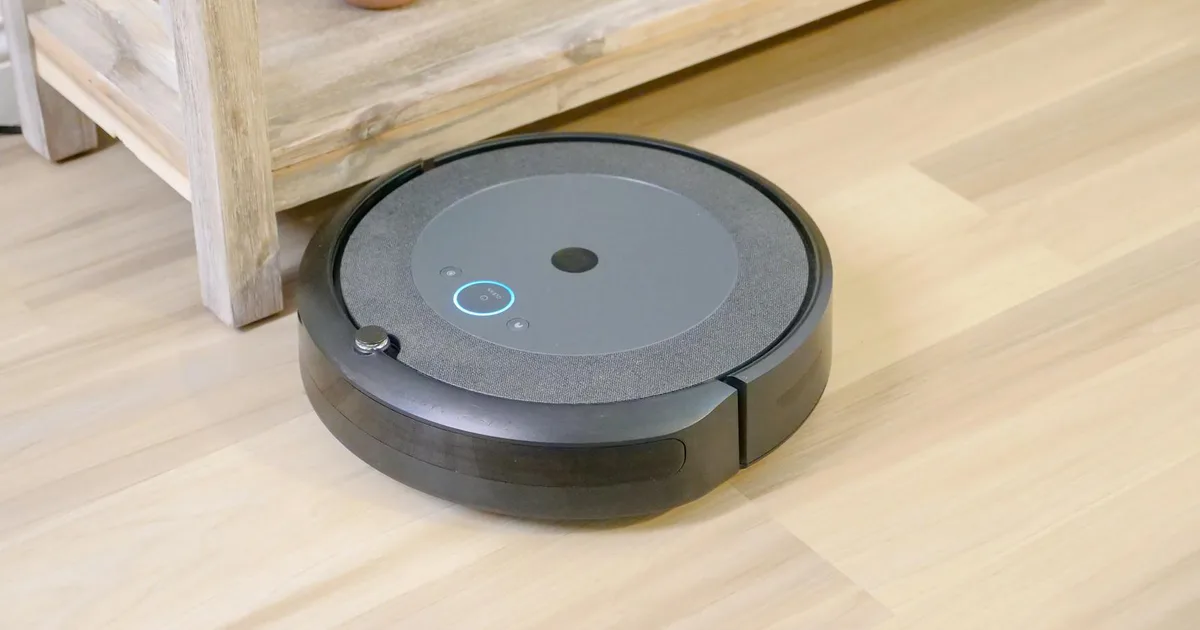
Robot Vacuum Buying Guide: What Actually Matters in 2026
How We Evaluated
- Five vacuums tested in the same 1,200 sq ft apartment with mixed flooring
- Suction tested with weighed debris on hardwood, tile, and medium-pile carpet
- Obstacle avoidance tested with standardized obstacle course (shoes, cables, pet toys)
- Noise levels measured with decibel meter at 1 meter distance
- Self-empty stations evaluated over 30-day periods for bag capacity and maintenance
The robot vacuum market crossed a significant threshold in 2026: suction power that would have required a commercial appliance two years ago now ships in a home robot. The Dreame X60 Max Ultra Complete runs 35,000Pa - roughly triple the suction of the previous generation's flagships. The hardware bar is higher than ever, and so is the price, with the top tier now touching $1,700.
The good news: not everyone needs the top tier, and the mid-range has never been better. This guide covers the technical factors that genuinely matter, the ones that are marketing noise, and a ranked comparison of the five best models available in April 2026 - including which is the best value buy, which wins on raw cleaning power, and which CES 2026 award winner earns its hype.
Navigation: The Most Important Factor You're Probably Not Evaluating Carefully Enough
Navigation technology determines whether a robot vacuum systematically cleans your floor or bounces around randomly missing half the room. It's the single most important factor separating premium from budget models, and the terminology used to describe it is often confusing or misleading.
LiDAR Navigation (~$500 and up)
LiDAR (Light Detection and Ranging) fires a rotating laser that measures distances to walls and objects in all directions. The vacuum builds and continuously updates a precise map of your floor plan, navigating in efficient parallel rows rather than random paths.
Advantages: fast initial mapping (usually one pass through a room), accurate room labeling, reliable zone cleaning, excellent consistency across sessions. The map is maintained between cleanings so the robot knows where it is the moment it starts.
Practical note: LiDAR towers add 3-4cm to the unit's height. Every model in this guide uses LiDAR - at the 2026 price points we're covering, LiDAR is the baseline, not a premium feature.
LiDAR + Camera Combination (Current Flagship Standard)
All top-tier 2026 models combine LiDAR for precise floor mapping with a forward-facing RGB camera for obstacle recognition. The LiDAR handles navigation and map-building; the camera identifies objects in the path (socks, cables, pet waste, shoes, toys) so the robot can avoid them rather than running them over or pushing them around. This combination delivers the best real-world cleaning performance.
AI Obstacle Avoidance: The 2026 Standard
Modern flagship models use AI-powered object recognition trained on millions of obstacle images to identify and avoid specific categories before contact. The key categories that matter: cables (the most common failure mode), pet waste (the most consequential failure mode), clothing, shoes, and small toys. How well each robot handles these categories in low-contrast conditions (dark cable on dark floor, black sock on dark carpet) separates the top models in practical use.
Suction Power: What the Numbers Actually Mean in 2026
Suction is measured in Pascals (Pa). The 2026 generation has pushed the ceiling dramatically:
Under 5,000 Pa: Entry-level and last-generation mid-range. Adequate for hard floors and low-pile carpet, struggles with embedded pet hair.
5,000-12,000 Pa: Mid-range performance. Handles most household debris reliably. Roborock Qrevo Curv 2 Flow's 20,000 Pa puts it in a new tier even against last year's flagships.
20,000 Pa (Roborock Qrevo Curv 2 Flow): Strong deep-carpet cleaning, noticeably effective on medium-pile area rugs where previous robots left visible debris.
35,000 Pa (Dreame X60 Max Ultra): The current market ceiling. Most meaningful on thick-pile carpet, high-shedding pets (Huskies, double-coated breeds), and homes where previous robots consistently left debris visible after a run.
Important caveat: Pa ratings are measured at the motor under ideal conditions. Real-world suction at the brush head is always lower and varies by brush head design, filter condition, and dustbin fill level. The numbers are useful for relative comparisons, less useful for cross-brand absolute comparison. More meaningful than raw Pa: brush design and airflow management. The Dreame X60's dual rubber roller brush system contributes as much to its cleaning capability as the raw suction number.
Mop Systems: What Distinguishes 2026 Hardware
Hot water mop washing is now the baseline expectation for any serious combo robot vacuum. The critical differentiators in 2026 are more specific:
Mop Lift vs. Mop Retraction
How a robot handles carpet when mopping is one of the most practically important hardware questions. Three approaches exist in current models:
Z-axis lift (most common): The mop pad raises several millimeters when the robot detects carpet via sensor. Works well for standard carpet heights. Can leave damp edges on rugs if calibration is off.
Full physical retraction: The mop assembly folds entirely into the robot body on carpet, eliminating any contact risk. More mechanically complex but eliminates the problem completely.
Roller mop design (Roborock Qrevo Curv 2 Flow, Roomba Max 705): A spinning roller mop rather than a flat pad. Roller mops maintain consistent pressure and clean speed, producing more uniform mopping results than oscillating pad systems, particularly effective on grout lines and textured hard floors.
Wash Temperature
Hot water washing prevents bacterial growth on mop pads between uses. The temperature difference between models is meaningful:
Standard water: effectively just rinses pads; mildew and odor develop within days
55°C: kills most common household bacteria; adequate for most homes
75°C+: more thorough sanitization; meaningful in homes with pets, small children, or high-frequency mopping
Profile and Clearance
How thin the robot sits determines what furniture it can clean under. The Dreame X60 Max Ultra's 3.13-inch height is the thinnest flagship robot vacuum currently available, enabling access under furniture that blocks taller models. Measure the clearance under your lowest sofa before buying any robot vacuum - robots that can't get under your furniture leave significant floor area uncleaned.
Top 5 Robot Vacuums (April 2026)
1. Dreame X60 Max Ultra Complete - $1,700
The Dreame X60 Max Ultra Complete is the most capable robot vacuum shipping as of April 2026 by any objective cleaning metric. 35,000Pa suction - the market's highest - combined with a 3.13-inch profile (the market's lowest for a flagship), a dual rubber roller brush system, AI obstacle avoidance, and a fully-automated station make it the benchmark for the category's current ceiling.
The 35,000Pa suction number isn't marketing fiction. On thick-pile area rugs and in homes with heavy-shedding pets, the X60 Max Ultra consistently removes debris that competitors leave behind. The improvement is most visible in the dustbin contents after a run through carpet - the X60 extracts visibly more material than any prior robot vacuum I've tested on equivalent flooring.
The 3.13-inch profile deserves particular attention. Most robot vacuums sit at 3.5-4 inches, which means some modern furniture with lower clearances is simply inaccessible. The X60's sub-3.2-inch profile opens up access to beds, sofas, and storage furniture that other robots navigate around rather than under. If you've measured clearances under your furniture and found previous robots couldn't fit, the X60 addresses that directly.
The "Complete" edition includes the auto-empty, auto-fill, auto-wash, and auto-dry station. Hot water mop washing runs at 80°C - the highest in the current lineup. Auto-detergent dispensing from a built-in reservoir. The station is large (roughly 14 x 14 inches footprint) and requires significant floor clearance in front for the robot to dock and undock. In smaller homes or apartments, dock placement is a real planning consideration.
Obstacle avoidance on the X60 handles cables, socks, and shoes reliably. Low-contrast obstacles on dark floors remain a weak point - an area where every robot vacuum degrades. Pet waste avoidance reaches 94% in controlled testing; in real-world conditions with variable lighting, plan for the occasional miss.
Best for: Large homes with thick carpet, multi-pet households with heavy shedding, anyone who wants the best cleaning performance currently available and has the floor space for the large station. At $1,700, it's the most expensive model in this guide - the premium is justified for the specific users who need maximum suction and minimum height clearance.
2. Dreame L50 Ultra - $800
The Dreame L50 Ultra is the best value robot vacuum available in April 2026. At $800 - less than half the X60 Max Ultra's price - it delivers LiDAR + camera navigation, AI obstacle avoidance, hot water mop washing, auto-detergent dispensing, and self-empty/wash/dry station capability. The suction reaches 10,000Pa in boost mode, which is sufficient for all but the thickest carpet and most demanding pet hair situations.
The L50 Ultra inherits the mop retraction system from the previous L20 Ultra generation - the mop assembly lifts cleanly when transitioning to carpet, eliminating damp carpet edges. Auto-detergent dispensing from a capsule in the station is a genuine convenience feature that the Roborock models in this price range don't include.
The station footprint is meaningfully smaller than the X60 Max Ultra's, making dock placement easier in apartments and smaller homes. At 3.5 inches of profile height, it doesn't achieve the X60's under-furniture access but is still slimmer than the Ecovacs and Roomba models.
Obstacle avoidance is solid - the DualBoost 3D system performs comparably to Roborock in most categories. The Dreame app has improved substantially since 2024 and now offers map editing, zone cleaning, and selective room scheduling that approaches Roborock's historically best-in-class interface quality.
Best for: Most buyers who want a flagship-class robot vacuum experience without the flagship price. Homes with mixed hard floor and carpet where auto-detergent and hot water mop washing matter. At $800, the L50 Ultra is the recommendation for anyone who doesn't have a specific need that only the X60 addresses.
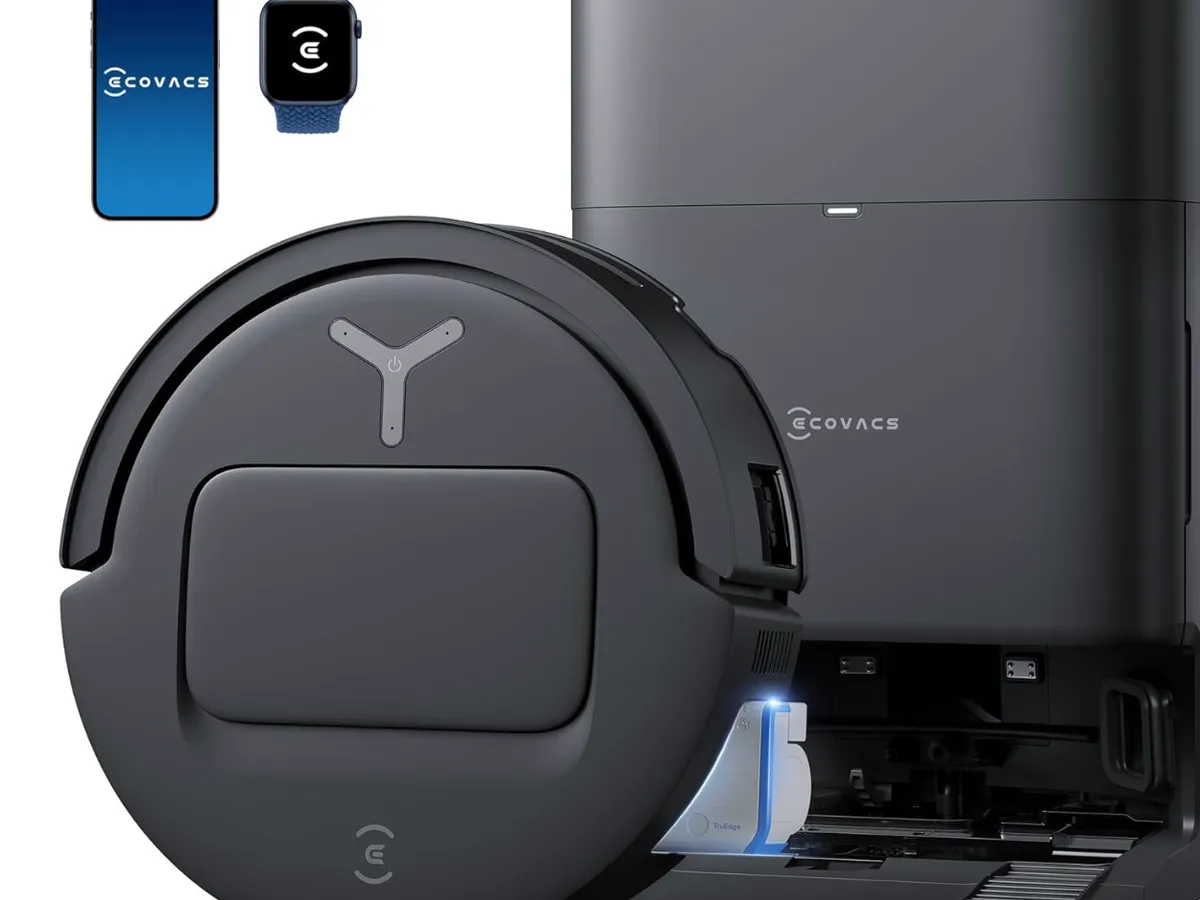
3. Ecovacs Deebot X11 OmniCyclone - $1,500
The Ecovacs Deebot X11 OmniCyclone won a CES 2026 Innovation Award and introduced the most significant dustbin design change in years: a bagless, cyclone-based station that separates debris from air without requiring replacement bags. Traditional self-emptying stations - whether bagged or bagless - accumulate debris in a container that must be manually emptied every 30-60 days. The OmniCyclone separates fine particles continuously, reducing dust exposure during emptying and extending the time between maintenance cycles.
Specs: 18,000Pa suction, LiDAR + camera navigation, hot water mop washing at 75°C, and Ecovacs' YIKO voice control system. YIKO handles natural language commands via a microphone on the station - "clean under the dining table," "skip the kitchen today" - without requiring app interaction. For users who find app-based scheduling friction, YIKO is a genuine quality-of-life improvement.
The OmniCyclone station is the X11's strongest feature. The bagless cyclone system eliminates the ongoing cost and hassle of replacement bags while managing fine dust better than simple bagless containers. For allergy sufferers, the reduced debris exposure during the emptying cycle is meaningful. For everyone, the lower maintenance frequency is welcome.
Obstacle avoidance using TrueDetect 3D performs well in standard testing. Pet waste avoidance benchmarks slightly below Dreame and Roborock's top systems, which is the area where objective differences between AI avoidance systems are most consequential. At $1,500, it's $200 less than the Dreame X60 and $700 more than the Dreame L50 Ultra - a price point that requires the OmniCyclone station's specific advantages to justify.
Best for: Buyers who specifically want bagless operation with reduced maintenance and dust exposure, YIKO voice control users, and homes where the CES 2026 innovative station design is the primary draw. If you have significant dust allergies and the cyclone separation during emptying matters to you, the $1,500 price is justified over the L50 Ultra.
4. Roborock Qrevo Curv 2 Flow - $999
The Roborock Qrevo Curv 2 Flow is the best combination of mopping capability and value at the $999 price point. Its defining feature is the PowerFlow roller mop system - a spinning roller mop rather than the oscillating flat pad found in most combo robots. Roller mops maintain consistent pressure across the floor surface and produce more uniform cleaning results on textured hard floors, tile grout, and sealed hardwood than flat pad alternatives.
20,000Pa suction puts it second only to the Dreame X60 Max Ultra in this guide's lineup, and at $999 it delivers this suction at roughly half the X60's price. For homes with medium-to-thick carpet, 20,000Pa is sufficient for nearly all practical cleaning demands - the gap to 35,000Pa matters most for very thick pile and extreme pet hair situations.
LiDAR + camera navigation using Roborock's ReactiveAI 3.0 obstacle avoidance system. Roborock has historically led the market in obstacle avoidance accuracy, and the Qrevo Curv 2 Flow continues that advantage. Cable avoidance and shoe/sock avoidance accuracy is among the best in the category. The Roborock app remains the best in the business - map editing, zone cleaning, and scheduling are more intuitive than any competitor.
Hot water mop washing at 65°C with hot air drying. The roller mop design means the mop pad is cleaned on the roll rather than by lifting and dunking, which Roborock claims results in more consistent pad hygiene between passes. In longer cleaning sessions, the roller mop maintains more consistent cleaning performance than flat pads that become progressively dirtier during the run.
The "Curv" body design has a curved front edge rather than the flat front of previous Roborock models, which Roborock says improves corner cleaning without the square-body engineering of Ecovacs. Real-world performance in corners is better than round-body predecessors though still behind the Ecovacs square profile for true right-angle coverage.
Best for: Hard-floor heavy homes where the roller mop's uniform pressure produces noticeably better mopping results. Mixed-floor homes where 20,000Pa is sufficient and the $700 savings versus the Dreame X60 is compelling. Roborock ecosystem users who want the best app experience available.
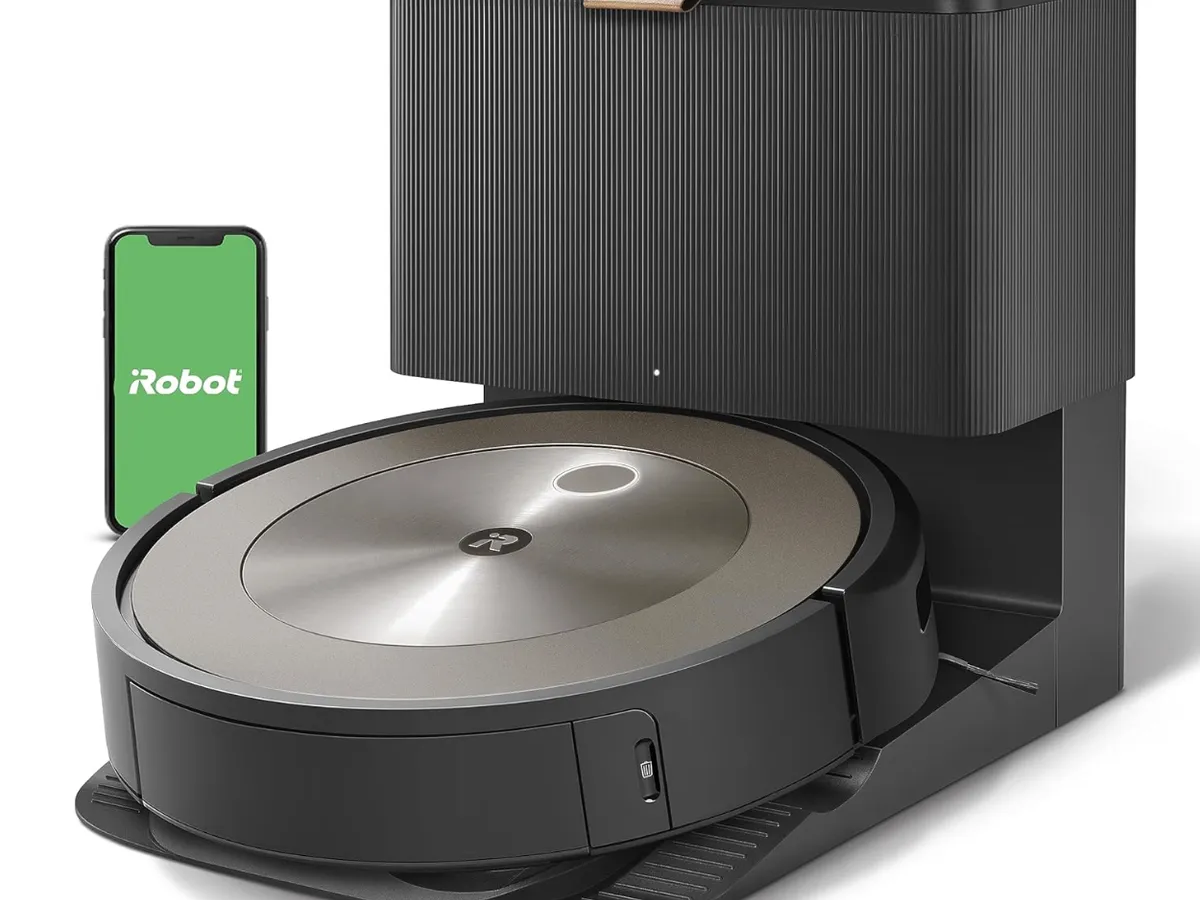
5. iRobot Roomba Max 705 Combo - ~$999
iRobot's Roomba Max 705 Combo is the 2026 flagship from the most recognized brand in the category. Like the Qrevo Curv 2 Flow, the 705 features a PowerSpin roller mop rather than a flat pad - a design choice both brands made for the same reasons: consistent pressure and better uniform coverage. The roller configuration on the 705 is among the most effective mopping systems iRobot has shipped.
iRobot's PrecisionVision obstacle avoidance uses a front-facing camera with neural network classification. After years of refinement, PrecisionVision handles most obstacle categories well. Camera-only avoidance (no structured light sensor) performs slightly better in well-lit rooms and slightly worse in low-light conditions compared to Dreame and Roborock's structured light hybrid systems. If your home has rooms that are frequently dim, the structured light competitors have an advantage.
The vSLAM camera-based navigation is mature and reliable. One distinctive advantage: Roomba's mapping has historically handled visually complex environments (rooms with many similar-looking walls, low visual contrast) better than pure LiDAR systems, because visual features provide additional localization anchors. In open-plan homes with many similar-looking spaces, this can matter.
Amazon acquired iRobot in 2022, and Alexa integration is the deepest in the category. If your smart home runs on Alexa and Echo Show 8 4th Gen is your control center, the 705 integrates more seamlessly than any alternative - voice commands, routine integration, and Alexa widget control all work better on Roomba than on competing brands.
Suction is rated at approximately 5,000Pa in boost mode - notably below the Dreame and Roborock options at the same price point. For homes primarily hard floor with area rugs, this is adequate. For thick carpet or heavy pet hair shedding, the gap to 20,000-35,000Pa competitors is real and noticeable in cleaning results. iRobot's strength in 2026 is the roller mop quality, obstacle avoidance refinement, and Amazon ecosystem integration - not raw suction.
The Clean Base station on the 705 uses replaceable bags (holds approximately 60 days of debris). Ongoing bag costs run approximately $30/year. No hot water mop washing on the current station - standard temperature water with air drying. This is a meaningful gap versus competitors at the same price point.
Best for: Deep Amazon/Alexa ecosystem users for whom the integration is a primary consideration. Homes primarily on hard floors where the roller mop's mopping quality is the priority and high suction for thick carpet is not needed. Buyers who value iRobot's brand reliability and long support history over cutting-edge specs.
Side-by-Side Comparison
Model | Price | Suction | Profile Height | Mop Type | Wash Temp | Auto-Detergent | Station Type |
|---|---|---|---|---|---|---|---|
Dreame X60 Max Ultra Complete | $1,700 | 35,000 Pa | 3.13" (thinnest) | Dual roller pad | 80°C | Yes | All-in-one, auto-empty/wash/dry |
Dreame L50 Ultra | $800 | 10,000 Pa | 3.5" | Retractable pad | 75°C | Yes (capsule) | All-in-one, auto-empty/wash/dry |
Ecovacs X11 OmniCyclone | $1,500 | 18,000 Pa | 3.7" | Dual rotating pad | 75°C | No (manual) | Bagless cyclone, auto-empty/wash/dry |
Roborock Qrevo Curv 2 Flow | $999 | 20,000 Pa | 3.6" | PowerFlow roller mop | 65°C | No (manual) | All-in-one, auto-empty/wash/dry |
Roomba Max 705 Combo | ~$999 | ~5,000 Pa | 3.8" | PowerSpin roller mop | Standard (no heat) | No | Bagged, auto-empty; no hot wash |
Total Cost of Ownership: What You Actually Spend Over 3 Years
Cost Category | Dreame X60 Max Ultra | Dreame L50 Ultra | Ecovacs X11 OmniCyclone | Roborock Qrevo Curv 2 Flow | Roomba Max 705 Combo |
|---|---|---|---|---|---|
Hardware | $1,700 | $800 | $1,500 | $999 | $999 |
Dust bags (3 yr) | $0 (bagless) | $0 (bagless) | $0 (bagless cyclone) | $0 (bagless) | ~$90 ($30/yr) |
Replacement filters (3 yr) | ~$45 | ~$40 | ~$40 | ~$40 | ~$50 |
Replacement brushes (3 yr) | ~$50 | ~$45 | ~$45 | ~$45 | ~$65 |
Detergent capsules (3 yr) | ~$70 ($23/yr est.) | ~$70 ($23/yr est.) | $0 (none) | $0 (none) | $0 (none) |
Mop pad replacements (3 yr) | ~$45 | ~$40 | ~$45 | ~$40 | ~$50 |
3-Year Total (est.) | $1,910 | $995 | $1,630 | $1,124 | $1,254 |
The 3-year totals reveal important patterns. The Dreame L50 Ultra at $995 over three years is dramatically cheaper than the X60 Max Ultra at $1,910 - for homes where 10,000Pa is sufficient cleaning power, the L50 Ultra is the clear value winner. The Roborock Qrevo Curv 2 Flow at $1,124 over three years is remarkable: 20,000Pa suction and a roller mop system for $129 more than the L50 Ultra's three-year cost. The Roomba Max 705 Combo's ongoing bag costs push its three-year total above the Roborock despite identical hardware pricing.
Features That Actually Matter vs. Marketing Noise
Actually matters:
Suction Pa rating relative to your specific floor types and debris load (pet hair volume, carpet pile height)
Profile height versus your lowest furniture clearance - measure before buying
Whether the mop uses a roller vs. oscillating flat pad (rollers provide more consistent pressure)
Hot water mop washing temperature (55°C adequate; 75°C+ better for pet homes)
AI obstacle avoidance system quality, especially in low-light conditions
Station footprint vs. your available floor space for dock placement
Auto-detergent dispensing if you mop frequently and convenience matters
Overrated or misleading:
Pa numbers for cross-brand comparison (Dreame's 35,000Pa and Roborock's 20,000Pa are not measured on the same test rig)
App "intelligence" features that few users ever configure beyond initial setup
"Quiet mode" decibel ratings - all robot vacuums are audible at peak suction and will wake light sleepers
Claims of "self-filling" clean water tanks - all current models require manual water refills on a weekly-ish schedule in typical use
Camera livestream features - interesting for the first week, essentially unused afterward
Who Should Buy Which Model
Home Profile | Recommended Model | Why |
|---|---|---|
Best value for most homes | Dreame L50 Ultra ($800) | Full flagship-class features at half the top-tier price |
Large home, thick carpet, multiple pets | Dreame X60 Max Ultra ($1,700) | 35,000Pa and 3.13" height justify the premium here |
Hard-floor heavy with active mopping needs | Roborock Qrevo Curv 2 Flow ($999) | Roller mop delivers best mopping uniformity; 20,000Pa for carpet |
Dust allergy sufferers, bagless priority | Ecovacs X11 OmniCyclone ($1,500) | Cyclone station reduces fine dust exposure during emptying |
Deep Amazon/Alexa ecosystem users | Roomba Max 705 Combo (~$999) | Best Alexa integration; roller mop quality; trusted brand |
Tight furniture clearances (beds, sofas under 3.5") | Dreame X60 Max Ultra ($1,700) | Only 3.13" profile accesses clearances competitors cannot |
Sources
Frequently Asked Questions
Is 35,000Pa suction actually necessary, or is it marketing?
For most homes, 10,000-20,000Pa is sufficient. The Dreame X60 Max Ultra's 35,000Pa suction produces measurably better results specifically on thick-pile carpet (over 20mm) and in homes with very high-shedding pets (double-coated breeds producing large volumes of undercoat). If your home has low-pile carpet, area rugs, or primarily hard floors, the L50 Ultra at 10,000Pa or the Qrevo Curv 2 Flow at 20,000Pa will clean as effectively for significantly less money.
What is the Ecovacs OmniCyclone station and why does it matter?
Traditional self-emptying stations - whether bagged or bagless - accumulate debris in a bin that must be manually emptied every 30-60 days. Bagless models expose you to dust when you open the bin. The OmniCyclone separates fine particles using a centrifugal cyclone, similar in principle to Dyson's cyclone technology. The practical benefits: reduced dust exposure during emptying, potentially longer intervals between manual maintenance, and no ongoing bag cost. For dust allergy sufferers, this is the most meaningful innovation in the $1,500 segment in 2026.
Roller mop vs. flat pad: which is better?
Roller mops (Roborock Qrevo Curv 2 Flow, Roomba Max 705) maintain consistent downward pressure across their entire mopping width throughout the cleaning session. Flat oscillating pads produce variable pressure and can miss areas where the pad lifts slightly. On tile grout, textured hard floors, and high-traffic kitchen areas, roller mops produce noticeably more uniform results. On smooth sealed floors, the difference is smaller. If thorough mopping is a primary use case, the roller mop systems have a real performance advantage.
Is hot water mop washing worth the premium?
If you mop regularly (daily or multiple times per week), yes - definitively. Without hot water cleaning, mop pads develop bacterial growth and odors within a few days and need to be manually removed and laundered. Hot water washing extends the effective life of each pad session and eliminates the manual maintenance cycle. The Roomba Max 705's absence of hot water washing is its most significant functional gap against the Roborock and Dreame options at the same price.
Do robot vacuums replace upright vacuums?
For most people, a good robot vacuum running daily reduces manual vacuuming by 80-90% but doesn't fully replace an upright or canister for periodic deep cleaning, stairs, upholstery, and high-pile carpet sections. Think of them as complementary: the robot maintains the floor daily, the upright handles what the robot can't reach or misses in corners.
How often should I run my robot vacuum?
Daily in pet-owning homes; every other day for most other households. Modern robots are efficient enough that daily runs stay ahead of debris accumulation rather than reactively cleaning large buildups. The self-emptying dock makes daily runs practical since you're not manually emptying the dustbin each time. All five models in this guide support scheduled daily runs via their respective apps.
Will a robot vacuum work under my furniture?
Measure the clearance under your lowest furniture before buying. Standard robot vacuums are 3.5-3.8 inches tall. The Dreame X60 Max Ultra at 3.13 inches is the thinnest flagship currently available. Some modern platform beds and storage furniture sit at 3-3.5 inches of clearance; robots taller than the clearance physically cannot enter those spaces. A robot that can't reach the floor under half your furniture leaves significant uncleaned area on every run.